

Arizona Desert Tarantula
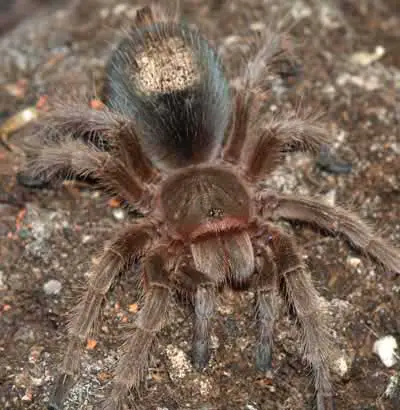
In spite of its reputation, the tarantula is a relatively docile creature. Some find them beautiful and fascinating spiders and even make them pets. Others are frozen with fear at the mere sight of one. You would really have to harass a tarantula to provoke it to bite. Its venom is weak making its bite harmless to people. So there is not much to fear of this hairy arachnid.
Worldwide, there are hundreds of tarantula species and some can have some pretty potent, deadly venom, but the Arizona tarantula which is also known as the "desert tarantula", "western tarantula" and "Arizona blonde tarantula", is mostly harmless to humans. Now if you were a scorpion or a cockroach, you may have reason for concern because its venomous bite will overcome most insects and some small rodents.
Tarantula Characteristics
The male tarantula has a much shorter lifespan than the female. Once he reaches adulthood, he spends much of his time searching for a mate. If he is lucky, he survives crossing roads and being openly exposed to his enemies. Once he finds a mate, he has to worry about the lady of his life making him a meal. If he survives all that, he only survives a few months after mating. On the other hand, the female tarantula can live up to 25 years. Hardly seems fair.
The Arizona species reach a body size of about 3 to 4 inches. She is a bit bigger and stockier than he is. She is a lighter shade of browns and tans while he is thinner with more black hair covering his body with reddish color hair on his abdomen. Besides having enough venom to subdue its prey, they also have some "urticating" hairs on their backs. They are tipped with pointed pointing barbs. When contact is made by a predator, these hairs penetrate the attacker. Because the tips a barbed, hard to remove and are at minimum an irritant, some predators will instinctively try to avoid the tarantula.
Diet, Prey, Predators and Habitat
The Arizona tarantula is a nocturnal hunter. They feed upon grasshoppers, scorpions, smaller spiders, little lizards and arthropods. Their enemies and predators include larger lizards, snakes, birds and large animals like foxes and coyotes. Although the venom of the tarantula is relatively weak, it is strong enough to kill it typical prey. Like most spiders, the tarantula has no teeth. Their venom not only kills its prey, it serves the purpose of digesting by liquefying its prey. Since it cannot chew, it sucks-up its liquefied meal.
The tarantula primarily lives in the desert areas but can exist in almost all areas of Arizona. They build deep burrows in conducive soil and line the opening with silk webbing to help prevent "cave-ins". The webbing often catches its prey, permitting it to skip a night of hunting. If the proper soil is not available, they will burrow into rocks, logs and sometimes cactus. They do not venture too far away from their burrows, but the male will become more adventurous during the mating season which is generally June, July and September. During the winter months, they go into an inactive state of semi-hibernation. They will plug-up their burrows with dirt and small rocks to help prevent invasion by its predators. They survive during the winter on stored fat reserves.
Tarantula Mating
The male tarantula matures at about 10-12 years old. When they reach maturity in a summer mating season they begin the search for females. When they discover the burrow of a mature female he will let her know he is calling by rustling the burrow webbing and tapping. If receptive, she will signal her okay to enter. Since he is smaller and she possesses venom that is deadly to him, he approaches cautiously. While depositing his sperm, he protectively holds her with a spur located behind his knee. Upon completion, he lets go and makes a rapid retreat because the female often makes him a meal. She lays eggs in the burrow and the hatched young will remain for a while and then disperse to begin a life on their own. Typically, the sperm-donating male will usually only survive a few months after mating.
More Reading
Desert Tarantula Video
Arizona Animals