
Arizona Venomous Animals
Venomous or Poisonous Arizona Animals?
There is a difference between “venomous” and “poisonous”. Venom is injected with a bite or sting while poisons are ingested or absorbed. Therefore some snakes, Gila Monsters, scorpions, spiders, bees, wasps, and similar are considered venomous as opposed to certain plants and chemicals which are poisonous. There are some insects and animals that are poisonous when ingested but there are none in Arizona.
Arizona Venomous Animals
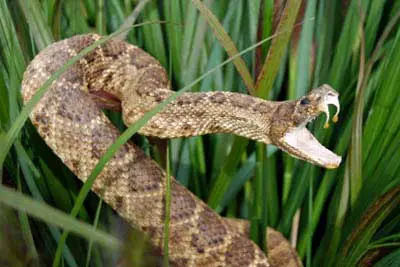
Arizona is home to many venomous creatures. But most reside in the Southwest desert regions. Rarely will they be encountered at the high elevations of Northern or Northeastern Arizona although Timber Rattlesnakes do inhabit those areas. Although venom can cause serious and dangerous medical problems, the dangers are not nearly as horrifying as portrayed. There have been few deaths attributed to venomous animals in Arizona.
Most species of venomous animals use their venom primarily for subduing and killing prey and also use that weapon as a defense when threatened. A bite or sting from most venomous animals result in nothing more than a physical discomfort than a serious medical emergency. But some species do have powerful venom that could be dangerously life threatening particularly for babies, the elderly and the unhealthy.
Venomous Spiders in Arizona
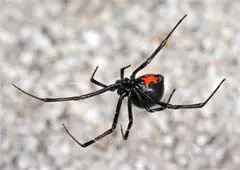
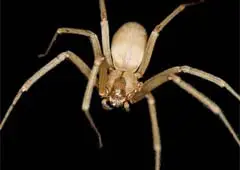
Only the Black Widow and Brown Recluse Spider can pose serious danger. They will avoid human contact and will only bite when threatened. Although each can cause serious pain, there have been few recorded deaths by either species. If you believe you've been bitten by a black widow or brown recluse, seek emergency treatment.
Black widows are prevalent in just about all states including Arizona. The species found in Arizona are a very shiny black color with a pronounced bright red "hour glass" shaped narking on its underbelly. The widow has a plump, round abdomen attached directly to its head. More about Black Widow Spiders.
The brown recluse was once thought to only inhabit southern and mid-western states. But 11 species have been identified with some species now inhabiting parts of Arizona, New Mexico, Utah and Southern California. Those found in Arizona are often referred to as the "Arizona Brown Recluse" or "Desert Recluse". Colors can range from dark brown to sandy brown with all varieties identifiable by a darker brown violin-shaped marking on their backs.
The Arizona Desert Tarantula can appear very frightening but only has very mild venomous barbed hairs on their abdomens. They "cast" those hairs only when threatened as a defensive mechanism. There is no reason to fear tarantulas. Just don't bother them when discovered in the wild.
Arizona Scorpions
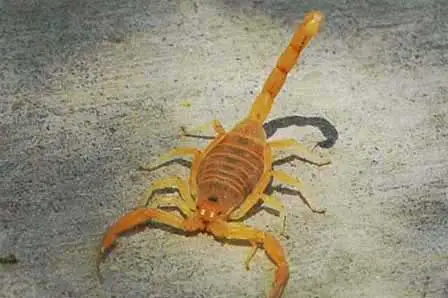
All scorpions are venomous to varying degrees. Scorpions sting with a barb at the end of its tail to inject venom. There are many species of scorpions located primarily in the desert regions of Arizona. With most varieties, the painful sting is not much more than that of a bee sting.
The only type of scorpion in Arizona considered to be a serious threat is the "Bark Scorpion" which also happens to be the smallest of the species. Although recorded deaths from its sting are extremely rare, its sting is considered serious. If stung, seek emergency treatment. Infants, young children and the unhealthy are most vulnerable to scorpion venom.
Read more about Bark Scorpions.
Venomous Snakes in Arizona
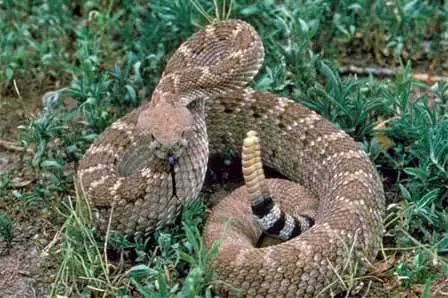
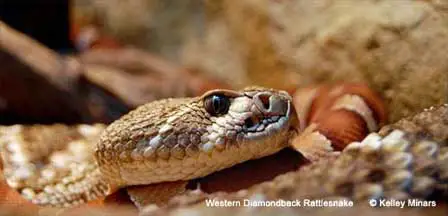
Rattlesnakes. There are 13 species of rattlesnakes in Arizona. Venom toxicity varies among the species. Rattlesnakes have folding, hollow fangs which inject venom deep into its victim. Diamondback Rattlesnakes are responsible for most rattlesnake bites in Arizona probably because it is the most encountered.
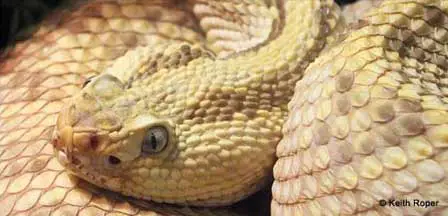
The Mohave Rattlesnake is the most venomous of the rattlesnakes. Rattlesnake bites are not uncommon, but very few deaths have been recorded. However, the rattlesnake bite is typically very painful and the victim must seek immediate medical attention.
Coral Snakes. Although venomous, the Coral Snake poses little threat. Although related to the cobra family, the Coral snake injects very little venom. Considered a small snake, it rarely exceeds 15 to 18 inches long. It is quite colorful with rings of red, black and yellow. Its colorization is very similar to the non-venomous Scarlet King Snake. Here's how you can tell the difference. The Coral Snake has a black nose that touches yellow. The king snake has a red-tipped nose that touche black.
Arizona Gila Monster
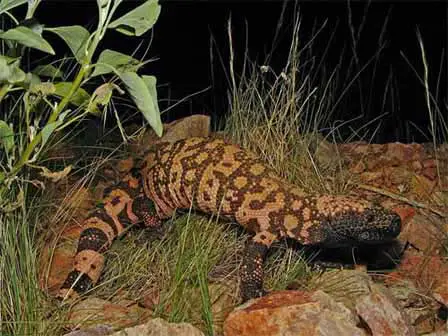
The Gila Monster is the only venomous lizard in the USA. It is also the largest lizard in the country. Reaching a length of up to 2 feet weighing a maximum of 5 pounds it is quite colorful. The Gila has a prominent black body with patterns of bright orange, yellow and pink. They are naturally lethargic and spend more than 95% of their lives in underground burrows.
Consider yourself lucky is you see one of these beautiful animals. They are rarely seen and considered a threatened species. Bites from Gila monsters are very uncommon. Its venom is fairly mild, yet can be very painful requiring medical treatment. Unlike rattlesnakes that inject venom, a Gila Monster latches on to victims and chew to create open wounds. Neurotoxins are emitted through grooves within their teeth.
Arizona Centipede
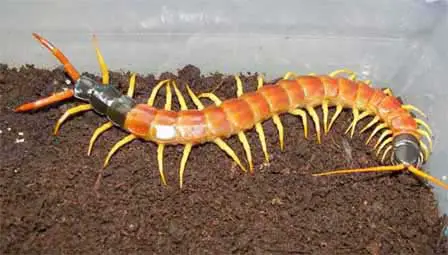 Arizona Giant Desert Centipede. Creative Commons
There are many species of centipedes and two varieties inhabit Arizona. They are long and flat with many body segments. Each body segment has a pair of legs, hence the name "centipede". They are venomous but some more so than others. Their sting is not considered life threatening but can cause severe pain and if you suspect you've been bitten, seek medical assistance.
There two types that inhabit Arizona, primarily in the desert regions. The most common is the desert centipede and the other is the "Giant Arizona Centipede" which can reach a length of up to 8 inches. It is a reddish color with a blackish head. Both varieties have a set of claws at each end which is used to penetrate the skin while injecting venom.
Read more about the Arizona Giant Centipede
Centipede bites and treatment
Centipedes versus Millipedes
If You Suspect Being A Victim
Information provided on the Arizona Leisure website is provided only for informational purposes only. Do not use this information to diagnose bites or stings, or as suggested treatment. If you suspect or have been bitten or stung by a venomous animal, seek emergency treatment or contact your medical provider.
Arizona Poison Control Center
(602) 635-3226 (Banner Health)
1-800-222-1222 American Poison Control Center)
Arizona Animals