Walnut Canyon Ancient Cliff Dwellings At Walnut Canyon National Monument
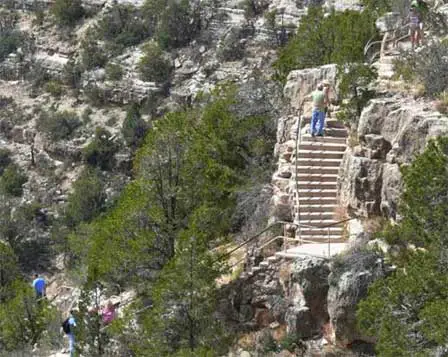 Walnut Canyon Island Trail Stairway
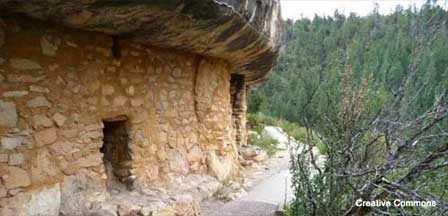
Stand at the Walnut Canyon observation point and gaze across these canyon walls and imagine what life was like for the ancient Sinagua Indians that that once lived in the cliff dwellings at Walnut Canyon. For reasons that are a mystery, they left Walnut Canyon about 800 years ago. Take a hike along Rim or Island Trails and enter some of cliff dwellings and see many others nestled into the alcoves of the canyon walls.
Much like the Grand Canyon to the northwest, Walnut Canyon was formed by 60 million years of water flowing first as a gentle creek across the plateau, then etching and carving its way through steep passes. Deep gorges formed in the sandstone, limestone, and other ancient desert rock some 20 miles long and 400 feet deep.
The cliff walls of Walnut Canyon are smooth in many places from centuries of buffeting winds while fossils of marine life cling to other parts of the steep canyon, left by receding waters of an ancient sea. Today the canyon is covered with pine forests and encompasses 3,600 acres and is over six miles long.
The ledges formed by the winding Walnut Creek left natural alcoves that were perfect for sheltering native peoples from the wind and snow that reaches the Monument's higher elevations. Sometime between 1100 and 1250, over 100 people lived in Walnut Canyon.
The Sinagua Indians grew crops along the canyon's rim and along the walls. Walnut Creek, the life blood of the community, continued to flow down the canyon floor, creating a unique community of ancient cliff dwellers whose homes, gathering places and graves can be still be seen today by visitors to this historic national monument.
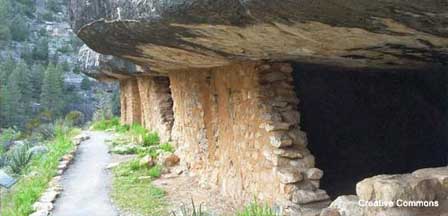
Walnut Canyon Cliff Dwellings and It's People
Visitors wanting a short, easy stroll through the park can enjoy the self-guided Rim Trail along the canyon's upper edge. You will wander through pine forests as you make your way toward the canyon rim, passing scenic overlooks and the ruins of a pithouse and pueblo.
Because of the relatively flat terrain, early settlers grew crops of corn, squash and beans in this part of the canyon and the area continues to provide a colorful wildflowers against the rocky backdrop of the steep canyon walls. You can expect to cover the 0.7 mile round-trip stroll in about 30 minutes. While the whole trail is easy to navigate, the beginning part is fully paved and accessible for those with limited mobility.
For those hoping to see the cliff dwellings up close, opt for the more strenuous Island Trail. Just a one mile round-trip, this hike descends more than 185 vertical feet. You climb back out of the canyon the same way, so take your time and plan on spending at least an hour during this hike.
Although completely paved with several sets of stairs, this trail can be difficult due to the 7,000 foot elevation. Hikers will be rewarded with up close views of 25 cliff dwellings along the route, with even more located just a glance away, across the canyon.
Park Ranger Interpretive Programs
In addition to the self-guided tours within Walnut Canyon National Monument, the park also offers two ranger-guided hikes during the summer months. The Ledge Hike is a three-hour strenuous hike along the canyon's many cliffs and gorges.
It is offered the first and last Saturday of each month, beginning at 10:00 AM. Although a bit challenging, there is no better way to experience up close and personal the true Walnut Canyon. The Ranger Cabin Walk is an easy, two-hour hike offered the first Sunday of each month at 10:00 AM.
Walnut Canyon National Monument was created in 1904 to help protect Walnut Canyon from pillagers and vandals, the Ranger Cabin remains a stunning example of early 20th century log architecture set among still pristine ponderosa pines. Reservations are required for both hikes, and can be made by contacting the Visitor Center at (928) 526-3367.
Discovering The Ancient Cliff Dwellings
Discovery Packs are available at the Walnut Canyon Visitor Center and offer exciting tools to enhance the Monument experience. Find public binoculars inside for enjoying cross canyon views of the cliff dwellings and a magnifying lens for close up examination of ancient pottery, stonework and archaeological remains.
There are field guides explaining the plants, flowers and landscape that remain. Drawing paper and pencils are available to capture your visual impressions. Use your Discovery Pack to enhance your visit to the Monument, leaving the buildings and ruins undisturbed for others to visit, study and enjoy for the next 1,000 years.
At the end of your visit, just return the Discovery Pack to the Visitor Center, taking your Field Journal home as a reminder of the exciting things you saw along the way. There is no charge for borrowing a Discovery Pack.
How To Get To Walnut Canyon National Monument
Walnut Canyon National Monument is located about 7.5 miles east of Flagstaff, Arizona. Take Interstate 40 East from Flagstaff. Exit at Exit 204 and proceed 3 miles to the canyon entrance.
The parking area is limited in length so use extra caution when towing vehicles. The are no campgrounds in Walnut Canyon but the Bonito Campground is located across from the nearby Sunset Crater Volcano Monument Visitor Center. Call (928) 526-0866 for camp information.
More Information and Nearby Indian Ruins
Walnut Canyon National
Monument Visitor Center
(928) 526-3367
Indian Ruins In Arizona
Arizona Indian Ruins
Canyon de Chelly
Casa Grande Ruins
Montezuma Castle
Map & Directions Montezuma Castle
Montezuma Well
Palatki Indian Ruins
Pueblo Grande
Walnut Canyon
Wupatki Ruins
Flagstaff High Country
Enjoy Cool Flagstaff
Flagstaff Arizona
Map & Directions
Weather & Climate
Miles to Arizona Cities
Picture Gallery
Distance To Attractions
About Flagstaff AZ
Lakes Near Flagstaff
Blue Ridge Reservoir
Upper Lake Mary
Mormon Lake
Kinnikinick Lake
Ashurst Lake
Flagstaff Fishing
Scenic Drives
Oak Creek Canyon
Arizona Route 66
Peaks Loop Drive
Schultz Pass Road
Snowbowl Scenic Drive
Things To Do
Scenic Railways
Cliff Castle Casino
Snow Skiing
Flagstaff Camping
Flagstaff Golfing
Flagstaff Museums
Area Attractions
Lake Powell
Wupatki Ruins
San Francisco Peaks
Grand Canyon
Walnut Canyon
Humphreys Peak
Meteor Crater
Sunset Crater
Historic Downtown
Arizona Snowbowl
Lowell Observatory
Arboretum of Flagstaff
Where To Stay
Cabin Rentals
RV Parks & Campgrounds
Bed and Breakfast
Conifer House
Aspen Inn
England House
Flagstaff Articles
Kids Snow Play
Dress For Flagstaff
Nearby Cities
Williams Arizona