White Mountains Arizona Vacation & Travel Guide
Updated by AZ Leisure Staff Writers on
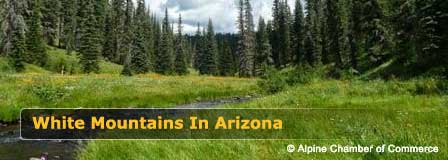
The White Mountains of Arizona reveal a side of the state many first-time visitors do not expect. This high-country region of eastern Arizona is filled with ponderosa pine, spruce, fir and aspen forests, alpine meadows, mountain lakes and clear-running streams. Elevations rise from forested communities such as Show Low and Pinetop-Lakeside to mountain country above 9,000 feet, creating cooler summers, colorful autumns and snowy winters.
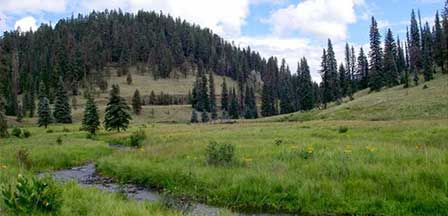
The White Mountains are one of Arizona's premier destinations for summer escapes and year-round outdoor recreation. Show Low and Pinetop-Lakeside provide the region's largest concentrations of lodging, restaurants and visitor services, while Greer, Alpine, Springerville and other smaller communities offer quieter mountain settings. The surrounding Apache-Sitgreaves National Forest, tribal lands, mountain lakes and extensive trail systems provide opportunities for fishing, boating, camping, hiking, wildlife viewing and winter sports.
- Why Visit The White Mountains
- Things To Do
- Best Lakes
- Towns & Communities
- Weather & Elevation
- Best Time To Visit
- Best Places To Visit
- FAQ
Why Visit The White Mountains Arizona?
The White Mountains are a four-season Arizona destination. Spring brings wildflowers and flowing streams, summer attracts visitors escaping the desert heat, autumn colors the forests with golden aspens, and winter brings snow to the highest elevations. Hiking, fishing, camping, mountain biking, wildlife viewing and scenic drives draw outdoor travelers throughout much of the year.
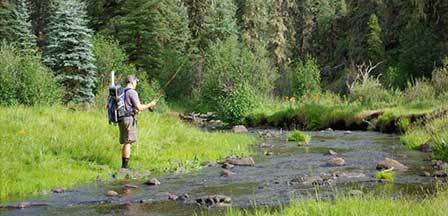
High elevations are one of the defining features of the region, with mountain terrain rising above 11,000 feet near Mount Baldy. Summer temperatures are considerably cooler than the desert valleys around Phoenix, while numerous lakes and streams support fishing, boating and camping. In winter, Sunrise Park Resort provides downhill skiing, snowboarding and other mountain recreation.
Top Things To Do In The White Mountains Arizona
The White Mountains offer one of the most diverse outdoor recreation regions in Arizona, with activities ranging from mountain lakes and forest trails to scenic drives and winter sports. Whether visiting for a weekend or an extended vacation, there is no shortage of ways to explore the region.
- Fishing mountain lakes: Fish for trout and other species at Big Lake, Fool Hollow Lake, Hawley Lake, Crescent Lake and many smaller high-country waters.
- Hiking forest trails: Explore mountain trails through pine and aspen forests, open meadows and scenic overlooks.
- Camping & RV travel: Find developed campgrounds and RV destinations throughout the White Mountains and surrounding national forest.
- Boating & kayaking: Enjoy paddling and boating on lakes throughout the region, subject to individual lake regulations.
- Wildlife viewing: Watch for elk, mule deer, bald eagles and other wildlife throughout the high country.
- Winter recreation: Ski, snowboard and enjoy snow activities at Sunrise Park Resort.
Best Lakes In The White Mountains Arizona
The White Mountains are home to some of the best fishing and recreation lakes in Arizona, offering cool water, forest scenery and easy access for camping and boating.
- Big Lake: A high-elevation lake known for trout fishing, boating, camping and cool summer temperatures.
- Fool Hollow Lake: A family-friendly recreation lake near Show Low with fishing, camping, boating and picnic facilities.
- Hawley Lake: A scenic mountain lake on White Mountain Apache tribal land surrounded by high-country forest.
- Crescent Lake: A quieter high-elevation fishing lake surrounded by open meadows and forest country.
- Luna Lake: An eastern White Mountains lake near Alpine offering fishing, wildlife viewing and mountain scenery.
White Mountains Arizona Towns & Communities
The White Mountains region includes a mix of vibrant small towns and quiet alpine retreats, each offering a unique experience for visitors.
- Show Low: The region's largest commercial hub with lodging, restaurants, shopping and year-round visitor services.
- Pinetop-Lakeside: A popular mountain resort community surrounded by forests, lakes and recreation trails.
- Greer: A small alpine community known for mountain cabins, trout streams and high-elevation scenery.
- Alpine: A remote high-country community near forests, trails and the Coronado Trail Scenic Byway.
- Springerville: An eastern Arizona community near Round Valley and the northern end of the Coronado Trail.
- Heber-Overgaard: A forest community along Highway 260 popular for cabins, camping and outdoor recreation.
Popular White Mountains Towns
Show Low Arizona. Show Low is one of the primary commercial and tourism centers of the White Mountains. Located at an elevation of more than 6,000 feet, the community provides extensive lodging, dining, shopping and visitor services. Show Low's unusual name comes from an often-told local story involving early settlers C.E. Cooley and Marion Clark, who reportedly used a card game to decide which man would remain in the settlement.
According to the story, the low card won and Cooley turned up the two of clubs. The city's principal street, Deuce of Clubs, commemorates that event and has become part of Show Low's identity.
Pinetop-Lakeside. The neighboring communities of Pinetop and Lakeside developed in the late 1800s and incorporated together as Pinetop-Lakeside in 1984. Located southeast of Show Low, the community is one of the White Mountains' primary vacation centers, with cabins, resorts, restaurants, shops and easy access to lakes and forest recreation.
Pinetop-Lakeside is surrounded by high-country forest and lies near both the Apache-Sitgreaves National Forest and White Mountain Apache tribal lands. The Hon-Dah Resort Casino nearby offers lodging, gaming, dining, entertainment and RV accommodations.
Greer Arizona. Greer is a small high-elevation community surrounded by forests, meadows and mountain streams. Its cool summer temperatures, cabin lodging and access to outdoor recreation make it a favorite retreat for Arizona residents escaping the desert heat.
The Little Colorado River and nearby mountain lakes provide fishing opportunities, while surrounding forest roads and trails offer hiking, wildlife viewing and scenic drives. Elk and deer are frequently seen throughout the Greer area.
Springerville Arizona. Springerville lies in Round Valley near the eastern edge of the White Mountains. Founded in the late 1800s, the community serves as a gateway to mountain recreation, nearby lakes and the Coronado Trail Scenic Byway, which winds south through some of Arizona's most remote high-country scenery.
Alpine Arizona. Alpine is one of Arizona's highest-elevation communities and is surrounded by the Apache-Sitgreaves National Forest. Visitors come for quiet mountain scenery, cabins, hiking, fishing, wildlife viewing and access to the winding Coronado Trail Scenic Byway.
Snowflake/Taylor. Snowflake and Taylor are neighboring communities northwest of Show Low. Snowflake was founded in 1878 and was named for early settlers Erastus Snow and William J. Flake. At elevations near 5,600 feet, the towns sit in a transition area between open high-desert country to the north and forested mountain terrain to the south.
Hannagan Meadow. Located along the Coronado Trail south of Alpine, Hannagan Meadow is one of the highest and most remote recreation areas in eastern Arizona. Its elevation of roughly 9,100 feet brings cool summers and frequent winter snow, supporting hiking, camping, horseback riding, mountain biking, cross-country skiing and snowshoeing.
Payson Arizona. Payson is not part of the White Mountains proper, but it is a popular high-country stop between the Phoenix area and communities farther east. Payson and the surrounding Mogollon Rim offer pine forests, hiking, fishing, camping and mountain lakes, making the area a natural companion destination for White Mountains travelers.
Why The White Mountains Are Cooler Than Phoenix
One of the main reasons visitors travel to the White Mountains is the cooler high-elevation climate. Many communities sit between roughly 6,000 and 8,500 feet, while surrounding mountain terrain climbs even higher. During summer, daytime temperatures are often substantially cooler than Phoenix and other low-desert communities, creating more comfortable conditions for hiking, fishing, camping and sightseeing.
Key Climate Differences
Elevation and Temperature
The higher elevation of the White Mountains results in significantly cooler temperatures than Phoenix, making the region one of Arizona’s top summer destinations.
Cooler Summer Days
Summer highs are generally mild and comfortable, providing ideal conditions for outdoor activities throughout the day.
Crisp Mountain Evenings
Nights in the White Mountains often cool into the 40s and 50s, offering a stark contrast to the warm desert nights of Phoenix.
Seasonal Variety
Unlike the desert, the White Mountains experience all four seasons, including mild summers, colorful fall foliage, and snowy winters.
Outdoor Comfort and Accessibility
The cooler climate allows for extended time outdoors, making it easier to explore lakes, trails, and scenic areas across the region.
Best Time To Visit The White Mountains Arizona
- Spring: Mild temperatures, wildflowers and great conditions for hiking and exploring forest roads.
- Summer: Peak season due to cooler temperatures, making it a perfect escape from Phoenix heat.
- Fall: Crisp air and colorful foliage, especially in higher elevations like Greer and Alpine.
- Winter: Snow transforms the region into a winter destination with skiing at Sunrise Park Resort.
Best Places To Visit In The White Mountains
The White Mountains region is filled with scenic destinations, small mountain towns, and outdoor recreation areas that are easy to explore from a central base. Visitors can explore popular communities like Show Low and Pinetop-Lakeside, discover alpine retreats such as Greer and Alpine, or spend time at scenic mountain lakes including Big Lake and Fool Hollow Lake. From forest-lined shorelines and hiking trails to scenic drives along the Mogollon Rim, the area offers a wide variety of places to visit. Use the map below to explore key locations across the White Mountains, including towns, lakes, and nearby attractions that make this one of Arizona’s top mountain vacation destinations.

View this map of the White Mountains and information about towns, lakes, scenic destinations and travel directions.
White Mountains Distance Guide
White Mountains Arizona FAQ
Where are the White Mountains in Arizona?
The White Mountains are located in eastern Arizona, primarily across Apache and Navajo counties. The region includes high-elevation forests, mountain communities, lakes, streams and portions of the Apache-Sitgreaves National Forest and White Mountain Apache tribal lands.
How far are the White Mountains from Phoenix?
Driving time from the Phoenix area varies by destination, but Show Low and Pinetop-Lakeside are generally about three to four hours away. Greer, Alpine and other eastern communities require additional driving time.
What are the best towns to visit in the White Mountains?
Popular White Mountains communities include Show Low, Pinetop-Lakeside, Greer, Alpine, Springerville and Heber-Overgaard. Show Low and Pinetop-Lakeside offer the most visitor services, while Greer and Alpine provide quieter high-elevation settings.
What are the best lakes in the White Mountains?
Popular lakes include Big Lake, Fool Hollow Lake, Hawley Lake, Crescent Lake, Luna Lake, Show Low Lake and several smaller mountain waters.
Is the White Mountains area cooler than Phoenix?
Yes. Because much of the region lies thousands of feet higher than Phoenix, summer temperatures are generally much cooler, particularly in higher-elevation communities such as Greer and Alpine.
What can you do in the White Mountains during summer?
Summer activities include fishing, hiking, camping, boating, kayaking, wildlife viewing, horseback riding, mountain biking and scenic drives through the forests and mountain communities.
What is there to do in the White Mountains during winter?
Winter recreation includes skiing and snowboarding at Sunrise Park Resort, along with snow play, cross-country skiing and snowshoeing when conditions permit.
Can you visit the White Mountains year-round?
Yes. The White Mountains are a four-season destination, although individual campgrounds, forest roads, lakes and recreation facilities may have seasonal closures or limited winter access.
What is the highest area in the White Mountains?
Mount Baldy is one of the dominant high points of Arizona's White Mountains, with surrounding mountain terrain rising above 11,000 feet.
Where should first-time visitors stay?
Show Low and Pinetop-Lakeside offer the largest selection of lodging, restaurants and services. Greer and Alpine are good choices for visitors who prefer smaller communities and a more secluded mountain setting.
Beautiful White Mountains In Arizona
White Mountains
Map & Directions
Little Colorado River
Weather & Climate
Alpine Arizona
Heber/Overgaard
Pinetop-Lakeside
Payson Arizona
About Show Low
Snowflake/Taylor
Springerville Arizona
Greer Arizona
Popular Area Lakes
Rainbow Lake
White Mountains Lakes
Big Lake
Hawley Lake
Show Low Lake
Crescent Lake
Woodland Lake
Luna Lake
Becker Lake
Fool Hollow Lake
Lyman Lake