
Arizona Horned Toad (Horned Lizard)
Last updated on .
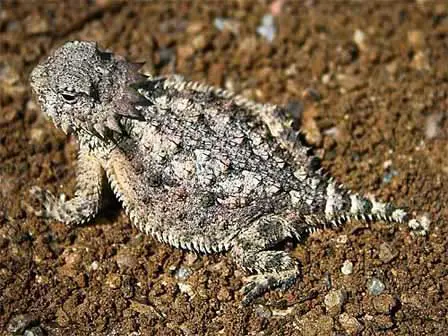 Regal Horned Lizard. Creative Commons
Horned lizard, often called a horned toad or horny toad, is one of Arizona’s most unusual desert reptiles. Despite the nickname, it is not a toad but a spiny lizard known for its flattened body, horned head, and remarkable camouflage. Several species live in Arizona, especially in desert and grassland habitats where they feed on ants and other insects. These fascinating reptiles are harmless to people and are a memorable sight for wildlife watchers exploring Arizona’s outdoors.
Horned Toad Facts
The "horned toad" is not a toad. It's really a lizard that is known by many names such as horn toads, horned lizards and horny toads. They look rather frightening and evil with pointy thorn-like projections all over their body. But these creatures are docile and completely harmless. Their prehistoric appearance often makes them look like miniature dragons. Maybe they are. Ancient artifacts that are thousands of years old have been discovered inscribed with images of the horned lizard.
Horny toads are relatively small lizards but their fierce appearance is a defensive benefit against some predators. Hawks, owls and snakes could be a bit apprehensive about eating something that looks so dangerous. When threatened they will inflate their bodies and hiss making them appear larger and even more frightening. Some species can even shoot a stream of blood from the corners of their eyes. A hungry coyote may well have second thoughts about having a horny lizard for dinner.
Characteristics of The Arizona Horny Toad
Depending upon species, of which there are many, adults range in size from about 3 to 7 inches. They all share the common physical traits of dragon-like appearance with wide flattened bodies covered with spines and pointed horns. Their tails are short, yet broad at the base. The body has the appearance of being covered with natural body armor.
Why Arizona Horned Lizards Matter
Like gila monsters, the diet of horned lizards consists of ants and small insects which fall victim to very fast flick of a sticky tongue. Upon emerging from shallow burrows in early morning, they must bask in the sun to reach a specific body temperature before foraging for food.
As ground heat increases during the day the lizard seeks shade under bushes. In the evening they use their nose and spiny sides to wiggle (dig) into loose soil or sand to cover themselves about 2 to 3 inches deep. They hibernate in late fall and emerge during spring.
Horny toads mate in late April and lay clutches of up 45 eggs during late summer. Tiny hatchlings break free from their eggs in a few weeks and immediately begin hunting. Only about half reach adulthood since they are so vulnerable to predators. It is interesting that mothers of the young do not provide parental protection of care. Average life span is 5 to 8 years.
Where to See Horned Toads In Arizona
Arizona horned toads are most often found in open desert areas, sandy flats, grasslands, and lightly vegetated terrain where they can blend into the soil. Good places to look include parts of the Sonoran Desert, Mojave Desert, lower elevations near Tucson and Phoenix, and some higher country areas in northern Arizona depending on species. Warm mornings and spring through early fall are often the best times to spot them basking or slowly moving in search of ants. Always observe from a distance and never collect wild reptiles.
Habitat of The Horned Lizard
There are 14 recognized species of horned lizards that inhabit the west from Arkansas to the Pacific Coast. Six species are unique to the Sonoran and Mohave Deserts of Arizona, Southeastern California and Northern Mexico. Those that thrive in the state of Arizona are often called "Desert Horned Lizards" which include Roundtail, Flattail and Regal horned lizards.
While most live in the desert regions they also exist at high elevations including pine-forested areas. Some inhabit the Grand Canyon, in and around Lake Powell, and areas in the Colorado River Basin. Tarantulas often share common desert habitat.
Their numbers have diminished over the last several decades. If you come across a horned toad, just enjoy observing this interesting creature. Don't touch them and by all means do not consider taking them home as pets which is prohibited by the Arizona Game and Wildlife Department.
Other Sources of Information
Arizona Animals