Laughlin Nevada Weather
Updated by AZ Leisure Staff Writers on
Laughlin, Nevada has a hot, dry desert climate along the Colorado River, with extremely hot summers, mild winters and very little annual rainfall. Summer daytime temperatures regularly exceed 100°F, while late fall through early spring brings much more comfortable weather for sightseeing, boating, golf and other outdoor activities.
Use the current Laughlin weather forecast together with the average monthly temperatures and seasonal information below to help choose the best time for your visit. Weather can vary from long-term averages, particularly during summer heat waves, winter cold spells and periods of monsoon thunderstorms.
- Current Weather
- Climate Overview
- Average Temperatures
- Weather By Season
- Rainfall
- Best Time To Visit
- Weather Tips
- FAQ
Current Laughlin Nevada Weather
Laughlin Nevada Climate Overview
Laughlin sits at approximately 600 feet elevation in the Mojave Desert along the Colorado River. According to NOAA's 1991–2020 climate normals, Laughlin has an average annual high temperature of about 87°F, an average annual low of about 61°F and only about 5.35 inches of precipitation per year.
Summers are extremely hot. Normal June through September daytime highs range from about 102°F to nearly 110°F, and July and August nighttime lows average above 80°F. Winters are much milder, with January averaging about 65°F during the day and 45°F at night.
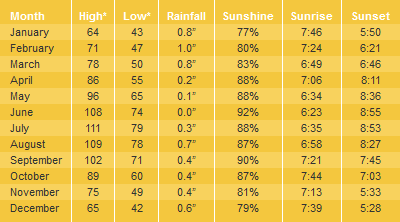
Average Monthly Temperatures In Laughlin
- January: Average high 64.5°F; average low 44.6°F
- February: Average high 69.2°F; average low 46.6°F
- March: Average high 77.4°F; average low 51.2°F
- April: Average high 85.7°F; average low 57.4°F
- May: Average high 95.4°F; average low 66.3°F
- June: Average high 105.5°F; average low 74.7°F
- July: Average high 109.8°F; average low 81.9°F
- August: Average high 108.4°F; average low 81.3°F
- September: Average high 101.9°F; average low 73.8°F
- October: Average high 88.7°F; average low 61.3°F
- November: Average high 74.1°F; average low 50.6°F
- December: Average high 63.5°F; average low 43.8°F
Laughlin Weather By Season
- Winter: December through February brings mild afternoons and cool nights. Daytime highs generally average in the 60s, making winter one of the most comfortable seasons for outdoor activities.
- Spring: March and April are warm and generally pleasant, while May begins the transition into intense summer heat. Spring is popular for boating, golf and Colorado River recreation.
- Summer: June through September is extremely hot. Normal July highs approach 110°F, and overnight temperatures may remain above 80°F. Outdoor activities are safest during the cooler early-morning hours.
- Fall: October brings a major break from summer heat, and November typically offers mild daytime temperatures and cool evenings. Fall is one of the best seasons for outdoor recreation.
Rainfall In Laughlin Nevada
Laughlin receives very little precipitation, averaging approximately 5.35 inches per year according to NOAA's 1991–2020 climate normals. February is normally the wettest month at about 1.16 inches, followed by January at about 1.02 inches. May and June are normally the driest months, averaging only about 0.04 inch each.
Although annual rainfall is low, summer thunderstorms can produce brief heavy rain, gusty winds, lightning and localized flash flooding. Never drive through a flooded roadway or enter desert washes when storms threaten.
Summer Heat In Laughlin
Laughlin is one of the hottest communities in Nevada. NOAA climate normals show that June averages about 25 days at or above 100°F, July averages about 30 days and August averages about 29 days. Even September averages more than 21 days reaching 100°F or higher.
Historically, Laughlin has experienced temperatures well above 120°F. Visitors during summer should take extreme heat seriously, limit strenuous midday activity, drink water frequently and never leave children or pets unattended in parked vehicles.
Best Time To Visit Laughlin Nevada
Late fall through early spring generally provides the most comfortable weather for visiting Laughlin. November through March offers mild daytime temperatures well suited to walking, sightseeing, golf and Colorado River recreation, although winter nights can become cool.
April and October are also excellent shoulder-season months. Summer remains popular for boating and water recreation, but temperatures above 100°F are normal and visitors should plan most outdoor activity for early morning or evening.
Laughlin Weather & Travel Tips
- Carry drinking water year-round and increase fluid intake during hot weather.
- Plan summer outdoor activities for early morning whenever possible.
- Use sunscreen, sunglasses and lightweight protective clothing because desert sun exposure is intense.
- Never leave children or pets inside a parked vehicle, even for a short period.
- Check the forecast for thunderstorms and strong winds before boating on the Colorado River.
- Avoid washes, low-water crossings and flooded roads during heavy rain.
- Bring a light jacket during winter because evening and overnight temperatures can become cool.
Laughlin & Colorado River Planning Resources
- Laughlin Nevada Guide
- Bullhead City Arizona
- Bullhead City Weather
- Lake Mohave
- Colorado River Towns & Recreation
Frequently Asked Questions About Laughlin Nevada Weather
What Is The Weather Like In Laughlin Nevada?
Laughlin has a hot, dry desert climate with extremely hot summers, mild winters and very little annual rainfall.
What Is The Hottest Month In Laughlin?
July is normally the hottest month. NOAA's 1991–2020 climate normals show an average July high of about 109.8°F and an average low of about 81.9°F.
How Hot Does Laughlin Get In The Summer?
Normal summer daytime temperatures regularly exceed 100°F. June averages about 105.5°F, July about 109.8°F and August about 108.4°F for daily high temperatures.
What Is The Coldest Month In Laughlin?
December and January are the coolest months. January averages approximately 64.5°F during the day and 44.6°F at night.
Does Laughlin Get Much Rain?
No. Laughlin averages only about 5.35 inches of precipitation per year, although occasional thunderstorms can produce brief heavy rain and localized flash flooding.
Does It Snow In Laughlin Nevada?
Snow is extremely rare in Laughlin. NOAA's 1991–2020 climate normals report essentially no measurable normal snowfall at the Laughlin weather station.
What Is The Best Time To Visit Laughlin?
November through March generally offers the most comfortable temperatures for sightseeing and outdoor activities. April and October are also pleasant shoulder-season months.
Is Laughlin Too Hot To Visit In Summer?
Summer visits are possible, particularly for casino, resort and water recreation, but temperatures above 100°F are normal. Outdoor activities should be planned carefully around the heat.
Are Summer Nights Hot In Laughlin?
Yes. July and August normal nighttime lows average above 80°F, so significant heat can continue well after sunset.
When Does Laughlin Get The Most Rain?
Based on NOAA's 1991–2020 normals, February is normally the wettest month, followed by January. Summer thunderstorms can also produce short periods of locally heavy rain.
Along The Colorado River
Colorado River Lakes
Lake Powell
Lake Mead
Lake Mohave
Lake Havasu