Arizona White Mountains
Last updated on .
Most people do not expect Arizona to be like this. The landscape of the White Mountains of Arizona is very similar to that found in the Pacific Northwest or Canada. The Arizona White Mountains area of Northeast Arizona is mountain country. Thick forests of spruce, oak and aspen trees, Streams that meander through meadows of wildflowers bounding with wildlife.
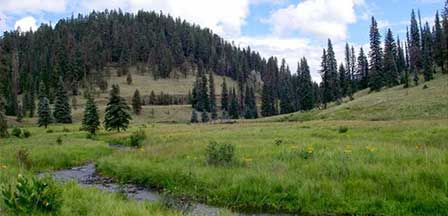
The White Mountains of eastern Arizona offer one of the state’s most scenic and diverse vacation regions, combining high-elevation forests, clear mountain lakes, and welcoming small towns across a broad alpine landscape. Spanning parts of Apache and Navajo counties, the region supports a population of roughly 170,000 residents, with steady growth driven largely by tourism, seasonal residents, and outdoor recreation industries . Visitors come to explore scenic areas such as the Apache-Sitgreaves National Forest, where dense ponderosa pine forests, meadows, and lakes create a cool and refreshing environment. Popular towns like Show Low and Pinetop-Lakeside serve as convenient hubs for lodging and dining, while destinations such as Greer and Alpine offer quieter, higher-elevation retreats surrounded by streams, hiking trails, and wildlife. Throughout the region, lakes like beautiful Big Lake and popular Fool Hollow Lake provide opportunities for fishing, boating, and relaxing in a mountain setting, making the White Mountains one of Arizona’s top destinations for summer vacations, outdoor adventure, and year-round recreation.
Why Visit the White Mountains Arizona
The White Mountains is a four-season wonderland. Intoxicating beauty in all seasons. A beauty that feeds the adrenalin of the adventurous who thirst for the fresh aroma of the great outdoors. Emerging wildflowers come springtime. Cool summers that entice bikers, hikers and golfers. Golden colors of autumn that crescendo into cold winters covered with snow.
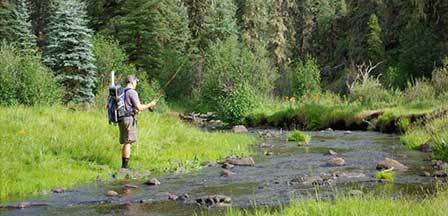
High elevation peaks rising to over 11,000 feet. Temperatures that average 25 to 35 degrees cooler than the desert regions to the south. A collection of mountain lakes in every direction offering fishing and camping areas. Hiking deep into wilderness areas. Even a ski resort that rivals many. All this just a three-hour drive from Phoenix and Scottsdale.
Top Things To Do in the White Mountains Arizona
The White Mountains offer one of the most diverse outdoor recreation regions in Arizona, with activities ranging from mountain lakes and forest trails to scenic drives and winter sports. Whether visiting for a weekend or an extended vacation, there is no shortage of ways to explore the region.
- Fishing mountain lakes: Dozens of lakes offer trout fishing, including Big Lake, Fool Hollow Lake and Woods Canyon Lake near Payson.
- Hiking forest trails: Explore hundreds of miles of trails through pine forests, alpine meadows and scenic overlooks.
- Camping & RV travel: Campgrounds throughout the Apache-Sitgreaves National Forest provide cool summer camping.
- Boating & kayaking: Many lakes allow non-motorized and limited motor boating.
- Wildlife viewing: Elk, deer, eagles and other wildlife are commonly seen throughout the region.
- Winter recreation: Skiing, snowboarding and snow play are available at Sunrise Park Resort.
Top Lakes in the White Mountains
The White Mountains are home to some of the best fishing and recreation lakes in Arizona, offering cool water, forest scenery and easy access for camping and boating.
- Big Lake: One of Arizona’s premier trout fishing lakes, known for boating, camping and summer recreation.
- Fool Hollow Lake: A popular family-friendly lake near Show Low with camping, fishing and picnic areas.
- Woods Canyon Lake: A scenic Mogollon Rim lake surrounded by cliffs, offering fishing, kayaking and hiking.
- Sunrise Lake: Located near Sunrise Park Resort, known for fishing and mountain scenery.
- Crescent Lake: A quieter lake ideal for fishing and relaxing in a peaceful setting.
White Mountains Towns & Communities
The White Mountains region includes a mix of vibrant small towns and quiet alpine retreats, each offering a unique experience for visitors.
- Show Low: The largest town in the region with shopping, dining and lodging.
- Pinetop-Lakeside: A popular resort area surrounded by forests and lakes.
- Greer: A scenic alpine village known for trout streams and mountain cabins.
- Alpine: A high-elevation destination with breathtaking scenery and quiet surroundings.
- Springerville: Gateway to the Coronado Trail and eastern White Mountains.
- Heber-Overgaard: A peaceful forest community popular for cabins and camping.
Popular White Mountains Towns
Show Low Arizona. The tourism capital of the White Mountains. Created in 1870. Sets at an elevation of 6,331 feet and located about 175 miles from Phoenix and about 195 miles from Tucson. How it got its name Show Low. Two adversarial residents, C.E. Cooley and Marion Clark mutually agreed that one had to move out of the settlement.
A game of cards would decide who would leave the area. Each was dealt a card and the low card would win. Cooley turned up the two of clubs. True to his word, Clark moved. Cooley, owner of a local ranch ultimately named the area "Show Low". Its main street is now named "Deuce of Clubs".
Pinetop-Lakeside. The twin communities of Pinetop and Lakeside were respectively founded in the 1880s and 1890s. The two settlements were incorporated as a single town in 1984. Located just 12 miles from Show Low, Pinetop-Lakeside share the role as the center of tourism of the White Mountains area.
They are surrounded by the vast White Mountains, the Apache-Sitgreaves National Forest, and the White Mountain Apache Indian Reservation. The Hon-Dah Casino Resort, a short drive away and features gambling, hotel rooms, entertainment and an RV park.
Greer Arizona. Greer is alpine beauty. An incredible haven of year-round activity and outdoor adventure. A vacationer's getaway and favorite escape for the desert dwellers seeking the cool temperatures in Greer AZ where high daily temperatures average 77 degrees from May to September.
Pine-scented air. Over 630 miles of trout streams. A beckoning 22 trout lakes within 30 miles of Greer AZ. The shimmering Little Colorado River snakes through incredible landscape perfect for hiking. Daily sightings of elk and deer are commonplace.
Springerville Arizona. Springerville AZ lies toward the eastern end of the White Mountains in an area known as Round Valley. Founded in 1879, it sprouted from Springer's Trading Post from which it got its name. The historic scenic Coronado Trail begins at Springerville as it winds 120 miles south to Clifton, Arizona.
Alpine Arizona. Located just south of Springerville, Alpine matches its name with a "Swiss-like" setting. Its major attraction is serene beauty. Vacationers are greeted by amazing panoramas of mountain slopes covered with thick forests. Views are simply captivating making it the perfect place to spend the day, a week, or a month.
Snowflake/Taylor. The two towns are so close to each other, most consider them the same community. Founded in 1878, Snowflake was named after its founders, Apostle Eratus Snow and Mormon land agent William Flake. The twin towns set at an elevation of about 5,600 feet and are bordered by the Mogollon Rim and the White Mountains. Snowflake and Taylor is an area of great contrast - barren desert to the north and mountain ranges to the south.
Hannagan Meadow. Hannagan Meadow is approximately 22 miles south of Alpine, located on the historic Coronado Trail. Anchor of the area is the Hannagan Meadow Lodge, which has been operating cabins and a bed-and-breakfast under U.S. Forest Service permit since 1926.
Because of its high elevation at 9100 feet, Hannagan Meadow frequently has both the first and last snow each year in Arizona. Outdoor recreation includes horseback riding, hiking, fishing, camping, hunting, cross-country skiing, snowmobile touring, snowshoeing and mountain biking.
Hannagan Meadow has a rich Eastern Arizona, beginning in 1926 with a huge two-day celebration for the dedication of the Coronado Trail. It is the site of the Mexican Gray Wolf Endangered Species Reintroduction program which was instituted in 1997.
Payson Arizona. Payson AZ actually is not in the White Mountains but is a popular getaway destination about midway between the Phoenix area and the White Mountains. It shares the similar landscape beauty with White Mountains. Payson is an outdoor adventure paradise with an abundance of remote mountain lakes, hiking trails, fishing and camping.
Why the White Mountains Are Cooler Than Phoenix
One of the biggest reasons visitors travel to the White Mountains is the significant difference in climate compared to the desert regions of central Arizona. Thanks to elevations ranging from approximately 6,000 to over 9,000 feet, the White Mountains offer a much cooler and more comfortable environment, especially during the summer months. While Phoenix often experiences extreme heat with temperatures exceeding 100°F, the White Mountains typically remain 20 to 30 degrees cooler, with daytime highs in the 70s and 80s. This elevation-driven climate creates a refreshing escape for outdoor recreation, allowing visitors to enjoy hiking, fishing, camping, and sightseeing without the intense desert heat.
Key Climate Differences
Elevation and Temperature
The higher elevation of the White Mountains results in significantly cooler temperatures than Phoenix, making the region one of Arizona’s top summer destinations.
Cooler Summer Days
Summer highs are generally mild and comfortable, providing ideal conditions for outdoor activities throughout the day.
Crisp Mountain Evenings
Nights in the White Mountains often cool into the 40s and 50s, offering a stark contrast to the warm desert nights of Phoenix.
Seasonal Variety
Unlike the desert, the White Mountains experience all four seasons, including mild summers, colorful fall foliage, and snowy winters.
Outdoor Comfort and Accessibility
The cooler climate allows for extended time outdoors, making it easier to explore lakes, trails, and scenic areas across the region.
Best Time to Visit the White Mountains
- Spring: Mild temperatures, wildflowers and great conditions for hiking and exploring forest roads.
- Summer: Peak season due to cooler temperatures, making it a perfect escape from Phoenix heat.
- Fall: Crisp air and colorful foliage, especially in higher elevations like Greer and Alpine.
- Winter: Snow transforms the region into a winter destination with skiing at Sunrise Park Resort.
Best Places to Visit in the White Mountains
The White Mountains region is filled with scenic destinations, small mountain towns, and outdoor recreation areas that are easy to explore from a central base. Visitors can explore popular communities like Show Low and Pinetop-Lakeside, discover alpine retreats such as Greer and Alpine, or spend time at scenic mountain lakes including Big Lake and Fool Hollow Lake. From forest-lined shorelines and hiking trails to scenic drives along the Mogollon Rim, the area offers a wide variety of places to visit. Use the map below to explore key locations across the White Mountains, including towns, lakes, and nearby attractions that make this one of Arizona’s top mountain vacation destinations.
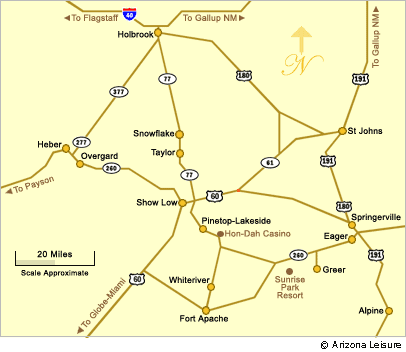
View this map of the White Mountains and information about towns, lakes, scenic destinations and travel directions.
White Mountains Distance Guide
White Mountains Arizona FAQs
Where are the White Mountains in Arizona?
The White Mountains are located in eastern Arizona, spanning Apache and Navajo counties and extending into parts of the Apache-Sitgreaves National Forest.
How far are the White Mountains from Phoenix?
The White Mountains are approximately a 3 to 3.5 hour drive from the Phoenix area, depending on the destination town.
What are the best lakes in the White Mountains?
Top lakes include Big Lake, Woods Canyon Lake, Fool Hollow Lake, Crescent Lake and Sunrise Lake.
Is the White Mountains area cooler than Phoenix?
Yes, temperatures are typically 20 to 30 degrees cooler due to higher elevations ranging from 6,000 to over 9,000 feet.
Can you visit the White Mountains year-round?
Yes, the region offers year-round recreation including hiking, fishing and camping in summer, and skiing and snow activities in winter.
Beautiful White Mountains In Arizona
White Mountains
Map & Directions
Little Colorado River
Weather & Climate
Alpine Arizona
Heber/Overgaard
Pinetop-Lakeside
Payson Arizona
About Show Low
Snowflake/Taylor
Springerville Arizona
Greer Arizona
Popular Area Lakes
Rainbow Lake
White Mountains Lakes
Big Lake
Hawley Lake
Show Low Lake
Crescent Lake
Woodland Lake
Luna Lake
Becker Lake
Fool Hollow Lake
Lyman Lake