

Arizona Bat Species
Updated by AZ Leisure Staff Writers on
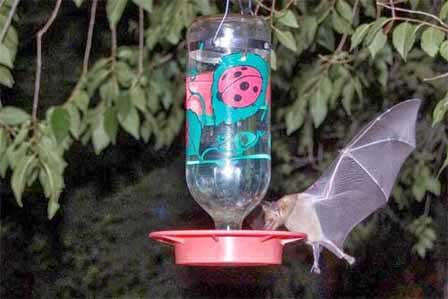 © Ken Bosma
Arizona is home to 29 confirmed bat species, one of the richest bat communities in the United States. These nocturnal mammals occupy habitats ranging from Sonoran Desert valleys and riparian corridors to mountain forests, caves and urban neighborhoods. Most Arizona bats feed on insects, while several nectar-feeding species pollinate agaves, saguaros and other night-blooming desert plants. This guide explains the bats found in Arizona, why they are ecologically important, where and when they may be observed, and how to respond safely when a bat is found near a home or on the ground.
Arizona Bat Facts
- Arizona has 29 confirmed bat species.
- Bats are the only mammals capable of sustained powered flight.
- Most Arizona bat species feed primarily on insects.
- Nectar-feeding bats help pollinate agaves, saguaros and other desert plants.
- Bats are not blind and use both vision and echolocation.
- Many species roost in caves, mines, rock crevices, trees, bridges and buildings.
- Some Arizona bats migrate, while others remain in the state throughout the year.
- Female bats commonly gather in maternity colonies during spring and summer.
- Arizona bats are protected by state law and should not be captured, harmed or disturbed.
Why Bats Matter in Arizona
Bats perform essential ecological work throughout Arizona. Most of the state's species feed primarily on insects, including moths, beetles, flies and mosquitoes. By consuming large numbers of night-flying insects, bats help maintain natural ecological balance and can benefit farms, forests, gardens and residential areas.
Arizona is also home to nectar-feeding bats that visit agaves, saguaros and other night-blooming plants. As a bat reaches into a flower for nectar, pollen collects on its head and fur and is transferred to other blossoms. This relationship helps desert plants reproduce while providing bats with food along seasonal migration routes.
Bats use echolocation to navigate and locate prey in darkness. They produce high-frequency sounds and interpret the returning echoes to identify insects, vegetation, water and other objects. Bats are not blind; many have vision comparable to that of other mammals and use both sight and echolocation.
Different Arizona bats use different feeding strategies. Some capture insects while flying, some glean prey from leaves or the ground, and others hover near flowers to drink nectar. Pallid bats are especially well known for feeding on ground-dwelling prey, including beetles, centipedes and scorpions.
Bat Safety and Rabies Precautions
Bats generally avoid people and are highly beneficial, but no wild bat should be handled with bare hands. A small percentage of bats may carry rabies, and a bite or scratch can be difficult to notice. Keep children and pets away from any bat that is on the ground, active during unusual daylight conditions or unable to fly.
What to Do If You Find a Bat on the Ground
- Do not touch or pick up the bat with bare hands.
- Keep children, dogs and other pets away from the area.
- Do not attempt to feed, treat or relocate the bat yourself.
- Contact local animal control, your county health department or the Arizona Game and Fish Department for instructions.
- If a person or pet may have touched the bat, do not release it unless directed by health or animal-control officials because testing may be necessary.
What to Do After Possible Contact
If a bat bites or scratches someone, or if saliva may have contacted broken skin, the eyes, nose or mouth, wash the affected area thoroughly with soap and water and contact a medical professional or county health department immediately. A veterinarian should be contacted promptly when a pet may have been exposed.
A bat found in a room with a sleeping person, unattended child or someone unable to reliably describe contact should also be reported to public-health officials. Do not assume that no exposure occurred simply because no bite mark is visible.
Where Do Bats Live in Arizona?
Arizona bats occupy nearly every major habitat in the state. Suitable roosts provide shelter from predators, stable temperatures and access to nearby food and water. Depending on the species and season, bats may roost alone or form colonies containing hundreds or thousands of animals.
- Desert areas: Rock crevices, caves, abandoned mines, cliffs, bridges and buildings
- Riparian corridors: Trees, bridges and rocky areas near rivers, washes, ponds and wetlands
- Mountain forests: Tree cavities, loose bark, caves, cliffs and forest structures
- Canyons and rocky terrain: Narrow cracks, cliff faces, caves and sheltered ledges
- Urban areas: Bridges, roof spaces, wall openings, palm trees and other protected structures
- Agricultural areas: Barns, bridges, trees and roosts near fields where insects are abundant
Roosts are especially sensitive during the maternity season, generally from May through September, when females may leave flightless young behind while they forage. Bat exclusions and building repairs should not be attempted during this period without professional guidance.
Where and When to See Bats in Arizona
The best time to watch bats is during the first hour after sunset on a warm, calm evening. Look over open water, desert washes, riparian corridors, fields and clearings where flying insects gather. Bats often make repeated passes over ponds, lakes and streams as they drink and hunt.
- Riparian areas along the Verde, Salt, Gila, San Pedro and Colorado river corridors
- Ponds, lakes and wetlands where bats can drink and feed on insects
- Desert washes and open spaces near Tucson and southern Arizona
- Mountain lakes, meadows and forest edges near Flagstaff and the White Mountains
- Bridges and overpasses where bats may emerge from narrow crevices at dusk
- Public wildlife-viewing and educational bat events conducted by wildlife organizations
Observe bats quietly from a respectful distance. Do not enter caves, abandoned mines or restricted roosting areas, and never shine bright lights directly into a colony. Disturbance can cause bats to abandon important resting or maternity sites.
Common Myths About Bats
- Myth: Bats are blind. Bats can see and also use echolocation to navigate and find food.
- Myth: Bats are rodents. Bats belong to the mammalian order Chiroptera and are not rodents.
- Myth: Bats intentionally fly into people's hair. Bats are agile fliers and normally avoid people.
- Myth: Every bat carries rabies. Only a small percentage of wild bats are infected, but all direct contact should be treated seriously.
- Myth: Bats are aggressive. Most bats avoid humans and bite primarily when frightened, trapped or handled.
- Myth: Bats serve no useful purpose. Arizona bats control insects and help pollinate important desert plants.
- Myth: A bat seen near a house is attacking people. It is usually hunting insects attracted to water, vegetation or outdoor lighting.
Bats Around Homes and Buildings
A bat that enters a house is often lost rather than aggressive. Keep people and pets out of the room, close interior doors and open an exterior door or unscreened window after dark so the bat can leave. Turn off indoor lights and allow the animal time to find the opening.
If a colony is roosting in an attic, wall or roof space, do not seal the entrance while bats are inside. Improper exclusion can trap animals in the building or separate mothers from their young. Contact a qualified wildlife-control professional or the Arizona Game and Fish Department for guidance. Exclusions should generally be avoided during the maternity season from May through September.
Should You Install a Bat House?
A properly designed bat house may provide an alternative roost, but installation does not guarantee occupancy and should not replace necessary repairs to a building. Place bat houses where they receive suitable warmth, have an unobstructed flight path and are protected from frequent human disturbance. Never handle or move bats into a bat house yourself.
Many people misunderstand bats because of myths and movie stereotypes. They often think them egregious, their minds filling with thoughts of Halloween and Dracula at the mere mention of them. Of course the ballyhoo of scariness surrounding bats is all a ruse, brought on by too many campfire stories and Hollywood movies. Bats are not rodents, they're not blind and they don't get tangled in people's hair. Truth be told, these interesting, mysterious creatures of the night play an extremely important and necessary role in our state's ecology.
Bat Species Found in Arizona
Arizona has 29 confirmed bat species. The list includes insect-eating, nectar-feeding and migratory bats adapted to deserts, grasslands, forests, mountains, caves and riparian habitats.
- Ghost-faced bat (Mormoops megalophylla)
- California leaf-nosed bat (Macrotus californicus)
- Mexican long-tongued bat (Choeronycteris mexicana)
- Lesser long-nosed bat (Leptonycteris yerbabuenae)
- Mexican long-nosed bat (Leptonycteris nivalis)
- Yuma myotis (Myotis yumanensis)
- Cave myotis (Myotis velifer)
- Little brown myotis (Myotis lucifugus)
- Long-eared myotis (Myotis evotis)
- Southwestern myotis (Myotis auriculus)
- Fringed myotis (Myotis thysanodes)
- Long-legged myotis (Myotis volans)
- California myotis (Myotis californicus)
- Western small-footed myotis (Myotis ciliolabrum)
- Silver-haired bat (Lasionycteris noctivagans)
- Canyon bat (Parastrellus hesperus)
- Big brown bat (Eptesicus fuscus)
- Western red bat (Lasiurus blossevillii)
- Southern yellow bat (Dasypterus ega)
- Hoary bat (Aeorestes cinereus)
- Spotted bat (Euderma maculatum)
- Allen's big-eared bat (Idionycteris phyllotis)
- Townsend's big-eared bat (Corynorhinus townsendii)
- Pallid bat (Antrozous pallidus)
- Mexican free-tailed bat (Tadarida brasiliensis)
- Pocketed free-tailed bat (Nyctinomops femorosaccus)
- Big free-tailed bat (Nyctinomops macrotis)
- Greater western mastiff bat (Eumops perotis)
- Underwood's mastiff bat (Eumops underwoodi)
Nectar-Feeding Bats and Desert Pollination
Arizona's nectar-feeding bats are specially adapted to reach flowers that open at night. Their elongated snouts and tongues allow them to drink nectar from agaves, saguaros and other desert plants. Pollen collects on the bats as they feed and is transferred between flowers during nightly foraging.
The lesser long-nosed bat migrates between Mexico and the southwestern United States and is an important pollinator of agaves and saguaros. The Mexican long-tongued bat also consumes nectar and pollen and may visit hummingbird feeders in southern Arizona. In 2025, wildlife officials confirmed the Mexican long-nosed bat in southeastern Arizona, increasing the state's known bat diversity to 29 species.
These bats depend on connected flowering habitats along their migration routes. Protecting native agaves and allowing some plants to flower can provide valuable food for migrating pollinators.
Frequently Asked Questions About Arizona Bats
How many bat species live in Arizona?
Arizona has 29 confirmed bat species. The total increased when the Mexican long-nosed bat was confirmed in southeastern Arizona.
What is the most common bat in Arizona?
There is no single species that is most common in every part of the state. Frequently encountered species include canyon bats, Mexican free-tailed bats, big brown bats and several species of myotis, depending on the habitat and elevation.
Are bats in Arizona dangerous?
Bats normally avoid people and are not aggressive. However, they are wild animals and should never be handled with bare hands. Any possible bite, scratch or direct contact should be reported promptly to a medical professional or county health department.
Do Arizona bats carry rabies?
A small percentage of bats can carry rabies. Because it is impossible to determine whether a bat is infected simply by looking at it, people and pets should avoid direct contact with all bats.
What should I do if I find a bat on the ground?
Keep children and pets away and do not touch the bat. Contact local animal control, your county health department or the Arizona Game and Fish Department for instructions, especially when contact with a person or pet may have occurred.
When is the best time to see bats in Arizona?
Bats are easiest to observe on warm evenings from spring through early fall. Watch during the first hour after sunset near ponds, streams, desert washes, bridges and open areas where insects are active.
Where do Arizona bats sleep during the day?
Depending on the species, bats may roost in caves, abandoned mines, rock crevices, tree cavities, beneath loose bark, under bridges or inside protected spaces in buildings.
Do bats in Arizona hibernate?
Some Arizona bats enter hibernation or periods of reduced activity during colder months. Others migrate to warmer regions, while certain species may remain active during suitable winter weather.
What do Arizona bats eat?
Most Arizona bats eat insects such as moths, beetles and flies. Nectar-feeding species consume nectar and pollen from agaves, saguaros and other flowering plants. Pallid bats may also capture scorpions and other ground-dwelling prey.
Do bats pollinate saguaro cactus flowers?
Yes. Nectar-feeding bats, particularly lesser long-nosed bats, visit and pollinate saguaro flowers as well as flowering agaves and other desert plants.
Are bats protected in Arizona?
Yes. Arizona bats are protected and may not be collected, harmed or killed. Roost exclusions should be performed responsibly and should not trap bats or separate mothers from their young.
Should I put a bat house in my yard?
A well-designed bat house may provide additional roosting habitat, but occupancy is not guaranteed. It should be installed in an appropriate sunny location with a clear flight path and should not be used as a reason to handle or relocate bats.
Arizona Bat Information and Assistance
- Arizona Game and Fish Department: Living With Bats
- Arizona Department of Health Services: Rabies Information
- U.S. Fish and Wildlife Service: Mexican Long-Nosed Bat
Arizona Animals