Painted Desert Arizona: Colorful Badlands & Scenic Views
Updated by AZ Leisure Staff Writers on
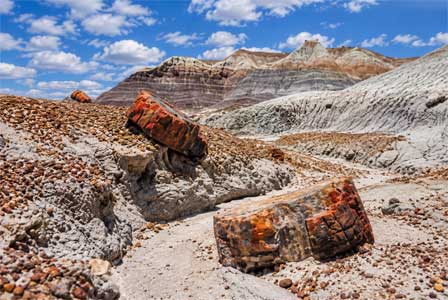
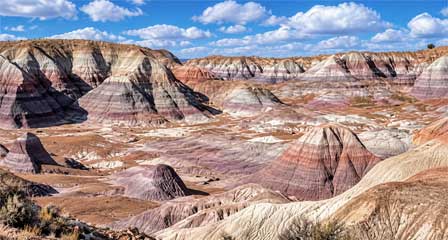
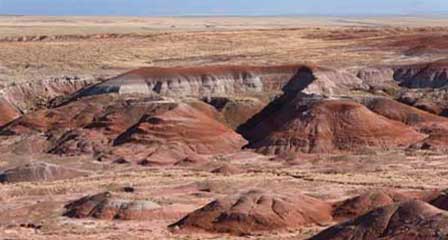
Arizona's Painted Desert is a spectacular landscape of colorful badlands, sculpted hills and sweeping high-desert vistas across the Colorado Plateau. Layers of red, pink, orange, lavender, blue-gray and tan rock create some of the most distinctive scenery in the Southwest. The most accessible overlooks are found in the northern portion of Petrified Forest National Park, where a paved scenic drive provides outstanding views of the surrounding formations.
Stretching across northeastern Arizona from the Little Colorado River region toward Petrified Forest National Park, the Painted Desert offers much more than colorful scenery. Visitors can explore ancient geology, hiking trails, historic Route 66 landmarks, archaeological sites and the remarkable deposits of petrified wood found throughout the national park. This guide covers the best places to visit, scenic drives, maps, seasonal conditions and practical tips for planning a trip.
- Painted Desert Quick Facts
- Why The Desert Is Colorful
- Where Is The Painted Desert?
- Best Things To Do
- Scenic Drive & Overlooks
- Painted Desert Inn
- Historic Route 66
- Best Time To Visit
- Visitor Tips
- Map & Directions
- Photo Gallery
- FAQ
Painted Desert Arizona Quick Facts
- Location: Northeastern Arizona on the Colorado Plateau
- Best-known protected area: Petrified Forest National Park
- Main access: Interstate 40 at Petrified Forest National Park's north entrance
- Landscape: Colorful badlands, mesas, buttes and high-desert grasslands
- Primary geology: Late Triassic Chinle Formation within Petrified Forest National Park
- Geologic age: More than 200 million years
- Popular activities: Scenic driving, hiking, photography, history and geology
- Historic site: Painted Desert Inn National Historic Landmark
- Historic highway: Route 66 once crossed what is now Petrified Forest National Park
- Park road: Approximately 28 miles from the north entrance to the south entrance
Why Is The Painted Desert So Colorful?
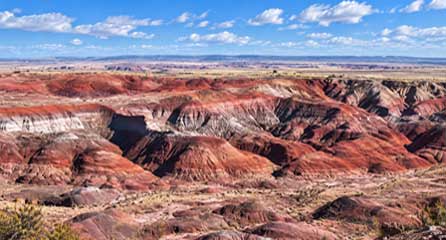
Much of the Painted Desert scenery within Petrified Forest National Park is formed from the Chinle Formation, a sequence of sedimentary rocks deposited by ancient river systems more than 200 million years ago during the Late Triassic Period. Erosion has exposed layers of mudstone, sandstone and other sediments, creating the region's distinctive badlands, mesas and sculpted hills.
The colors reflect differences in minerals and the chemical conditions under which ancient soils and sediments formed. Iron-bearing minerals produce many of the red and reddish-brown layers, while different groundwater and oxygen conditions contributed to green, blue-gray and other hues.
Best Things To Do In The Painted Desert
- Painted Desert Overlooks: Stop at viewpoints along the northern section of Petrified Forest National Park.
- Painted Desert Inn: Visit the restored National Historic Landmark overlooking the colorful badlands.
- Blue Mesa: Drive the loop road or hike among blue, purple and gray formations.
- Puerco Pueblo: Walk a short trail to an Ancestral Puebloan site and nearby petroglyphs.
- Historic Route 66: See the former highway alignment and historic roadside interpretation inside the park.
- Photography: Changing sunlight, clouds and weather continually alter the colors of the badlands.
- Hiking: Explore established trails and designated backcountry routes throughout Petrified Forest National Park.
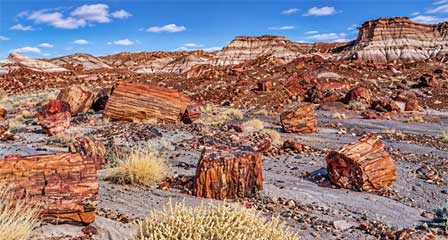
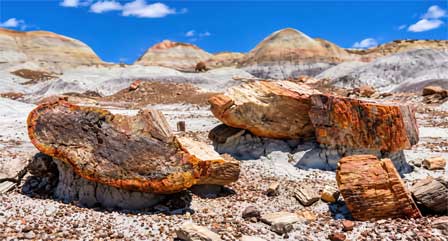
- Petrified Wood: Continue south through the park to see some of its largest concentrations of fossilized trees.
Where Is The Painted Desert?
The Painted Desert extends across northeastern Arizona, but the most accessible concentration of scenic overlooks is within the northern portion of Petrified Forest National Park. The park's north entrance is reached from Interstate 40 at Exit 311, east of Holbrook.
The Painted Desert Community Complex is located just inside the north entrance of Petrified Forest National Park. Visitor services and facility availability may change because of construction, maintenance or seasonal operations. Check the National Park Service visitor information for current facilities, operating hours and conditions before traveling.
The broader western portion of the Painted Desert can also be seen from highways and viewpoints around Cameron, Tuba City and the Little Colorado River region.
Painted Desert & Petrified Forest Scenic Drive
Petrified Forest National Park protects some of the Painted Desert's most accessible scenery along with extensive deposits of petrified wood, fossils and more than 13,000 years of documented human history. The main park road extends approximately 28 miles between Interstate 40 at the north entrance and U.S. Highway 180 at the south entrance.
Travelers can combine Painted Desert overlooks with stops at Painted Desert Inn, the historic Route 66 alignment, Puerco Pueblo, Newspaper Rock, Blue Mesa, Agate Bridge, Jasper Forest, Crystal Forest and Rainbow Forest. Driving the entire road without stops takes about one hour, but several hours are recommended for sightseeing and short walks.
Planning Your Painted Desert Scenic Drive
For a convenient introduction to the Painted Desert, enter Petrified Forest National Park from Interstate 40 at Exit 311. The northern portion of the park road passes several overlooks with expansive views of red, pink and lavender badlands. Painted Desert Inn at Kachina Point is a worthwhile stop for its historic architecture and panoramic scenery.
Continue south to explore the historic Route 66 alignment, Puerco Pueblo, Newspaper Rock and the colorful formations at Blue Mesa. Farther south, the park features petrified-wood sites including Crystal Forest and Rainbow Forest. Visitors can follow the road to the south entrance at U.S. Highway 180, or reverse the route when entering from the south.
Allow at least several hours for the full drive with sightseeing stops, and more time if you plan to hike. Park entrance hours vary seasonally, so confirm current access and road conditions before your visit.
Human History Of The Painted Desert
People have lived in and traveled through this region for more than 13,000 years. Petrified Forest National Park protects hundreds of archaeological and historic sites, including ancestral Puebloan villages, petroglyphs, historic transportation routes and structures associated with later ranching, tourism and highway travel.
Puerco Pueblo was occupied by ancestral Puebloan people between approximately A.D. 1200 and 1400, while Agate House was occupied around A.D. 1100–1150. Later transportation history includes the Beale Wagon Road, railroad development and historic Route 66.
Painted Desert Inn National Historic Landmark
Painted Desert Inn began as Herbert Lore's Stone Tree House, built by the early 1920s and formally registered in 1924. The National Park Service purchased the property in 1936, and architect Lyle Bennett designed a major Pueblo Revival transformation that was constructed by Civilian Conservation Corps workers between 1937 and 1940.
The Fred Harvey Company operated the inn after World War II, and architect Mary Colter contributed interior design improvements during that period. The building later faced possible demolition but was preserved, restored and eventually designated a National Historic Landmark in 1987.
Today Painted Desert Inn functions as a museum and historic visitor attraction rather than a hotel. Visitors should verify operating conditions before traveling.
Historic Route 66 Through The Painted Desert
Petrified Forest National Park is the only national park in the National Park System that contains a preserved segment of the historic Route 66 alignment. A line of old telephone poles and a 1932 Studebaker mark the former highway corridor inside the park.
Route 66 travelers once stopped at Painted Desert Inn for meals, lodging, souvenirs and views across the desert. Today the historic highway adds another layer of transportation history to a landscape already rich in geology, archaeology and paleontology.
Best Time To Visit The Painted Desert
- Spring: Comfortable temperatures and changing weather create excellent conditions for hiking, sightseeing and photography.
- Summer: Daytime temperatures can be hot and thunderstorms can develop quickly, so carry water and monitor weather forecasts.
- Fall: Cooler temperatures and generally comfortable conditions make fall excellent for scenic driving and hiking.
- Winter: Cold temperatures, wind and occasional snow can transform the landscape and create dramatic photography conditions.
Painted Desert Visitor Tips
- Allow several hours if combining Painted Desert overlooks with Petrified Forest attractions.
- Check current Petrified Forest National Park hours before arriving.
- Petrified Forest National Park operates on Mountain Standard Time year-round, like most of Arizona.
- Bring drinking water in every season.
- Expect strong sun, wind and rapidly changing weather.
- Never remove petrified wood, fossils, rocks, artifacts or other natural or cultural resources.
- Stay on designated trails where required and respect closed areas.
- Use designated overlooks and parking areas for photography stops.
- Confirm current visitor center services, park access and facility availability with the National Park Service before traveling.
- Allow extra time for Painted Desert Inn, Blue Mesa, Route 66 and Puerco Pueblo.
Painted Desert Map & Directions
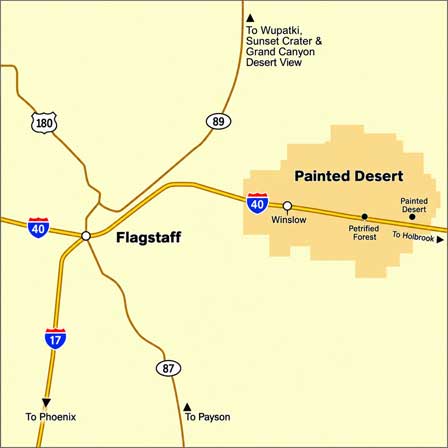
The easiest access to the Painted Desert within Petrified Forest National Park is from Interstate 40 at Exit 311 east of Holbrook. The park road continues south for approximately 28 miles and connects with U.S. Highway 180.
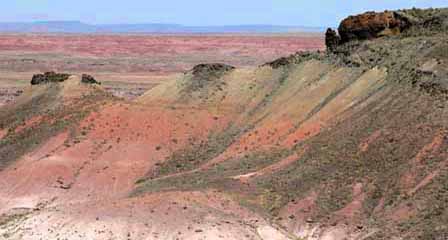
Painted Desert & Petrified Forest Photo Gallery
Painted Desert Arizona FAQ
Where Is The Painted Desert In Arizona?
The Painted Desert extends across northeastern Arizona, with some of the easiest and most dramatic public viewpoints located within Petrified Forest National Park east of Holbrook.
Is The Painted Desert Part Of Petrified Forest National Park?
Part of the Painted Desert is protected within Petrified Forest National Park, particularly in the northern portion of the park. The broader Painted Desert extends well beyond the park boundaries.
Why Is The Painted Desert So Colorful?
The colors come from mineral-rich sedimentary layers and different chemical conditions that affected ancient soils and sediments. Erosion has exposed red, pink, purple, blue-gray and other layers across the badlands.
How Old Are The Rocks In The Painted Desert?
Many of the colorful formations visible within Petrified Forest National Park belong to the Chinle Formation and were deposited more than 200 million years ago during the Late Triassic Period.
What Are The Best Things To See In The Painted Desert?
Popular stops include Painted Desert overlooks, Painted Desert Inn, Blue Mesa, historic Route 66, Puerco Pueblo, Newspaper Rock and the petrified-wood areas farther south in the park.
How Long Does It Take To Visit The Painted Desert?
A quick visit to several northern overlooks can take about one to two hours, while several hours or most of a day is better for driving through Petrified Forest National Park and visiting its major attractions.
Is Painted Desert Visitor Center Open?
Visitor center access and services at Petrified Forest National Park may change because of construction, maintenance or seasonal operations. Check the National Park Service website for current information about the Painted Desert Community Complex and available visitor facilities.
Can You Drive Through The Painted Desert?
Yes. Petrified Forest National Park has a paved 28-mile road connecting its Interstate 40 north entrance with U.S. Highway 180 at the south end.
Does Route 66 Go Through The Painted Desert?
Historic Route 66 once crossed what is now Petrified Forest National Park, and remnants of the original alignment can still be seen inside the park.
Can You Take Petrified Wood From The Painted Desert?
No. Removing petrified wood, rocks, fossils, artifacts or other natural and cultural objects from Petrified Forest National Park is prohibited.
More Painted Desert & Petrified Forest Information
- Petrified Forest National Park
- Magic In The Painted Desert
- Ancient People Of Petrified Forest
- Petrified Forest Map & Directions
- Petrified Forest & Painted Desert Photos
- Arizona Route 66 Attractions