Arizona Black Bears: Habitat, Distribution & Facts
Updated by AZ Leisure Staff Writers on
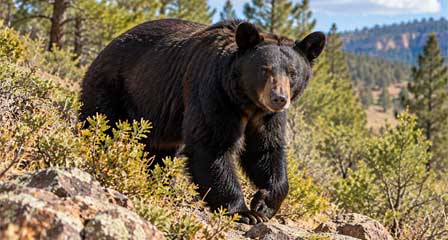
Black bears are Arizona's only living bear species and are part of the American black bear population, Ursus americanus. Found primarily in the forested mountains and woodlands of northern, central and eastern Arizona, they inhabit areas ranging from the Mogollon Rim and White Mountains to isolated mountain ranges farther south. Arizona black bears are generally shy and avoid people, but their search for food can occasionally bring them near cabins, campgrounds and rural communities. Learn where black bears live in Arizona using the approximate distribution map below, along with information about their size, diet, behavior, cubs, winter denning and important bear-safety precautions.
- Characteristics & Behavior
- What Black Bears Eat
- Winter Denning & Cubs
- Arizona Bear Habitat Map
- Black Bear Quick Facts
- If You See A Black Bear
- Avoid Attracting Bears
- Black Bear FAQ
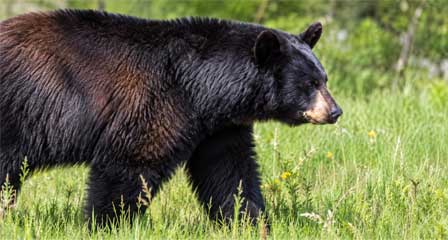
The American black bear is the most widespread bear species in North America and the only bear species currently found in Arizona. Despite their name, Arizona black bears may have black, brown, cinnamon or dark-blond fur. Adults are generally 5 to 6 feet long and stand approximately 3 to 3.5 feet tall at the shoulder when on all four feet. Arizona bears commonly weigh between about 125 and 400 pounds, with adult males usually larger than females.
Characteristics and Behavior
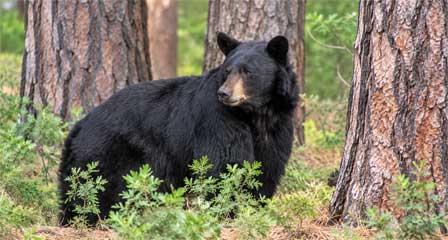
Black bears are generally solitary animals, except for mothers with cubs, breeding pairs and temporary gatherings where food is abundant. They are intelligent, curious and equipped with an excellent sense of smell. Although usually most active around dawn and dusk, they may also travel during daylight or become more active at night near human settlements. Black bears are capable climbers, strong swimmers and surprisingly fast runners. They generally avoid encounters with people but may investigate campsites or cabins when food and garbage are accessible.
What Arizona Black Bears Eat
Black bears are omnivores, but much of their diet consists of plant material. Depending on the season, they eat grasses, roots, flowers, berries, seeds, acorns, cactus fruit and other vegetation. They also consume insects, fish, carrion and occasionally young deer, elk or other animals. Bears eat heavily during late summer and fall to build the fat reserves needed during winter denning.
Hibernation and Black Bear Cubs
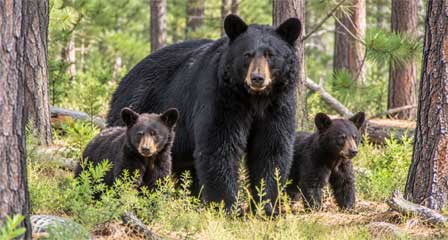
Most Arizona black bears den from approximately November through March. During this period, their body temperature, heart rate and metabolism decrease, although they remain more alert than many animals considered deep hibernators. Cubs are usually born in December or January while the mother is in her winter den. Litters commonly contain two cubs, although larger litters occur. The cubs generally emerge during April and remain with their mother through the following winter before separating during their second spring.
Where Black Bears Live in Arizona
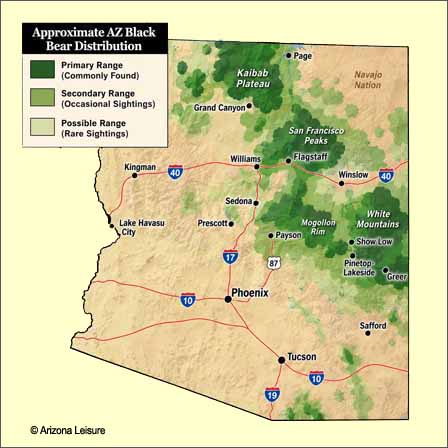
This Arizona black bear distribution map illustrates the approximate areas where black bears are commonly found, occasionally observed or may travel throughout the state. The greatest concentrations generally occur in the forested mountains of northern, central and eastern Arizona, including the Mogollon Rim, White Mountains and several isolated mountain ranges. Bear locations and seasonal movements can vary with weather conditions, temperatures, rainfall, drought, food availability and the time of year. During warmer months or periods of limited food and water, bears may travel beyond their usual habitats into lower elevations and surrounding communities. The map is intended as a general wildlife reference, not an exact boundary of black bear territory or a guarantee of bear sightings.
Arizona black bears are primarily associated with elevations from approximately 4,000 to 10,000 feet. Their habitats include ponderosa pine and mixed-conifer forests, pinyon-juniper woodland, oak woodland, chaparral, riparian corridors and some desert-scrub environments. Notable bear country includes the White Mountains, the Mogollon Rim near Payson, the Mazatzal Mountains, the Pinaleño Mountains and other forested ranges in northern, central and eastern Arizona.
Bears may travel considerable distances during drought, wildfire or seasonal food shortages. These movements sometimes bring them into communities, campgrounds and lower-elevation areas where they would not normally remain. Accessible garbage, pet food, birdseed, grills and other attractants can encourage a passing bear to return.
Arizona Black Bear Quick Facts
Scientific name: Ursus americanus.
Size: Adults are generally 5 to 6 feet long and approximately 3 to 3.5 feet tall at the shoulder when standing on all four feet.
Weight: Arizona black bears commonly weigh approximately 125 to 400 pounds, with males generally larger than females.
Color: Fur may be black, brown, cinnamon or dark blond.
Diet: Black bears are omnivores that eat grasses, roots, berries, seeds, acorns, cactus fruit, insects, carrion and occasional animal prey.
Arizona range: Primarily the forested mountains, woodlands, chaparral and riparian areas of northern, central and eastern Arizona.
Habitat elevation: Most commonly found from approximately 4,000 to 10,000 feet.
Life span: Black bears may live for more than 20 years in the wild.
Activity: Usually most active around dawn and dusk but may become nocturnal near human food sources.
Movement: Black bears can run, swim and climb trees. They may travel long distances in search of food or new territory.
Social behavior: Usually solitary except for mothers with cubs, breeding pairs and temporary gatherings at feeding areas.
Reproduction: Cubs are generally born during December or January and remain with their mother until their second spring.
Arizona population: Black bears occur throughout suitable mountain and woodland habitats in Arizona. Population estimates and management information are maintained by the Arizona Game and Fish Department.
Seasonal Black Bear Activity In Arizona
Arizona black bear activity changes throughout the year with temperature, weather conditions and the availability of natural foods. During spring, bears emerge from winter dens and begin searching for grasses, roots and other early-season food sources. Summer activity often increases as bears forage for vegetation, insects and fruit, while hot weather may encourage movement during cooler morning, evening and nighttime hours.
During late summer and fall, black bears feed heavily to build fat reserves before winter denning. Drought or shortages of berries, acorns and other natural foods may cause bears to travel farther and occasionally enter campgrounds or residential areas. In winter, most bears spend extended periods in dens, although some may remain active during mild weather or when food is available. These seasonal changes help explain why black bear sightings can occur outside the primary habitat areas shown on the Arizona distribution map.
What To Do If You See a Black Bear
If you notice a bear before it sees you, do not approach it. Quietly move away and change your route. If the bear notices you, remain calm, face the animal and back away slowly while giving it room to leave. Never run from a black bear. If the bear approaches, stand upright, make yourself look larger and make loud noises. Bear spray may be used if the animal continues approaching. If a black bear attacks, fight back rather than playing dead.
How To Avoid Attracting Black Bears
- Never intentionally feed a bear or leave food where it can reach it.
- Store garbage in a secure building or bear-resistant container.
- Do not keep food, scented products or trash inside a tent.
- Feed pets indoors and remove uneaten pet food.
- Clean grills thoroughly and store them in a secure location.
- Keep dogs leashed when hiking in bear country.
- Make noise when hiking so nearby bears have time to leave.
- Remove or secure bird feeders when bears are active nearby.
Frequently Asked Questions About Arizona Black Bears
Are there black bears in Arizona?
Yes. The American black bear is the only bear species currently found in Arizona. Black bears live primarily in the forested mountains, oak woodlands, chaparral and riparian areas of northern, central and eastern Arizona.
Where are black bears most common in Arizona?
Black bears are most commonly found along the Mogollon Rim, in the White Mountains, the Mazatzal Mountains, the Pinaleño Mountains and other forested ranges across central and eastern Arizona. They generally favor elevations between approximately 4,000 and 10,000 feet.
Are Arizona black bears always black?
No. Despite their name, Arizona black bears may have black, dark-brown, cinnamon or occasionally dark-blond fur. Color alone should not be used to identify the species.
What do Arizona black bears eat?
Arizona black bears are omnivores, but much of their diet consists of plant material. They eat grasses, roots, berries, seeds, acorns, cactus fruit and other vegetation, along with insects, carrion, fish and occasional animal prey.
Do black bears hibernate in Arizona?
Most Arizona black bears enter winter dens from approximately November through March. Their metabolism and heart rate slow considerably, although they remain more alert than animals that experience deep hibernation. Some bears may remain active longer during mild winters or where food is readily available.
When are black bear cubs born in Arizona?
Black bear cubs are usually born during December or January while the mother is in her winter den. The cubs typically emerge during April and remain with their mother through the following winter before separating during their second spring.
Are Arizona black bears dangerous?
Black bears usually avoid people, but any bear can become dangerous when surprised, threatened, protecting cubs or conditioned to associate people with food. Visitors should never approach, surround or feed a black bear.
What should I do if I see a black bear?
Remain calm, face the bear and slowly back away while giving it a clear route to leave. Do not run or approach the animal. If the bear moves closer, stand upright, make yourself look larger and make loud noises. If a black bear attacks, fight back rather than playing dead.
How can campers avoid attracting black bears?
Store food, garbage and scented products in a secure building, vehicle or bear-resistant container. Keep food out of tents, clean grills after use, feed pets indoors and never intentionally leave food for wildlife.
Can black bears climb trees and swim?
Yes. Black bears are strong swimmers and capable climbers. They can also run quickly over short distances, which is why people should never attempt to outrun or chase a bear.
Wildlife information: Black bear distribution, behavior, population management and safety recommendations may change over time. For official wildlife information and current guidance, visit the Arizona Game and Fish Department before hiking, camping or traveling in bear country.
Arizona Animals