Javelinas In Arizona: Facts, Habitat & Safety
Updated by AZ Leisure Staff Writers on
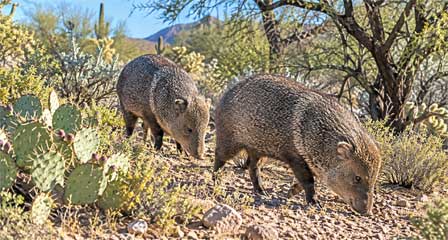
Javelinas are among Arizona's most recognizable wild animals and are frequently seen in desert communities throughout the central and southern parts of the state. Also known as collared peccaries, they may resemble small wild pigs but belong to a different animal family. These social mammals travel in herds, feed primarily on desert vegetation and are especially well adapted to Arizona's arid landscape. This guide covers how to identify javelinas, where they live, what they eat, their behavior and what to do when you encounter one near your home or while exploring Arizona.
- Javelina Quick Facts
- How To Identify A Javelina
- What Javelinas Eat
- Herds & Social Behavior
- Reproduction & Young
- Where Javelinas Live In Arizona
- When Javelinas Are Most Active
- Are Javelinas Dangerous?
- What To Do If You See A Javelina
- Keeping Javelinas Away From Your Home
- Arizona Javelina FAQ
Arizona Javelina Quick Facts
- Common name: Javelina or collared peccary
- Scientific name: Pecari tajacu
- Animal type: Hoofed mammal in the peccary family
- Typical adult weight: About 40 to 65 pounds
- Herd size: Commonly two to more than 20 animals
- Primary foods: Cactus, roots, fruits, seeds, beans, flowers and other vegetation
- Arizona range: Most common in central and southern Arizona
- Senses: Strong sense of smell and relatively poor eyesight
- Activity: Most active during cooler parts of the day
How To Identify A Javelina
Javelinas have compact bodies covered with coarse, grizzled black, gray and brown hair. A pale band of hair across the shoulders creates the "collar" that gives the collared peccary its name. Adults have short legs, small ears, a pig-like snout and prominent canine teeth.
Although javelinas resemble wild pigs, they are members of the peccary family rather than the pig family. Their canine teeth point more vertically than the curved tusks of true pigs, and adults generally weigh no more than about 60 to 65 pounds.
Javelinas also have scent glands that produce their characteristic musky odor. Because their eyesight is relatively poor, smell plays an important role in recognizing herd members, communicating and detecting their surroundings.
Javelina vs. Wild Pig: What's The Difference?
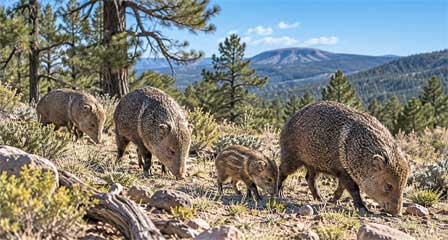
Although javelinas are often mistaken for wild pigs, they are collared peccaries and belong to a different animal family. Javelinas are generally smaller and more compact than feral pigs, have a distinctive pale collar across the shoulders and have relatively straight canine teeth rather than the longer curved tusks associated with wild hogs.
Javelinas are native to the Americas and are a natural part of Arizona's wildlife. Feral pigs are descendants of domestic or introduced swine and are not the same animal as Arizona's native javelina.
What Do Arizona Javelinas Eat?
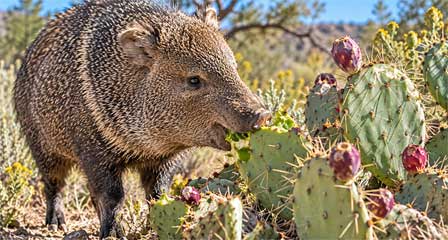
Javelinas are primarily plant eaters. Their natural diet includes prickly pear cactus pads and fruit, roots, flowers, mesquite beans, agave, jojoba nuts and other desert vegetation. They may occasionally eat insects, eggs or other available food.
Prickly pear cactus is particularly important because javelinas can eat both the pads and fruit despite the plant's spines. In developed areas they may also be attracted to garbage, pet food, bird seed and other human-provided food sources, which can create conflicts with people and pets.
Javelina Herds & Social Behavior
Javelinas are highly social animals that normally live and travel in herds. Arizona Game and Fish reports groups ranging from two to more than 20 animals. Herd members cooperate in defending territory, avoiding predators, regulating body temperature and maintaining social relationships.
Scent is particularly important within the herd. Javelinas have scent glands on their backs and around the face, and animals may rub against one another as part of scent marking and social recognition.
Young javelinas remain with the herd, where the presence of several adults provides added protection from predators such as mountain lions, coyotes and bobcats.
Javelina Reproduction & Young
Javelinas can breed during different times of the year rather than having one narrowly defined Arizona breeding season. Females generally give birth to small litters. Newborn javelinas have reddish or cinnamon-colored coats, which make them look noticeably different from the grizzled gray, brown and black coats of adults.
Young javelinas remain closely associated with the herd as they grow. Staying within the group provides protection from predators and allows young animals to become part of the herd's established social structure.
Where Javelinas Live In Arizona
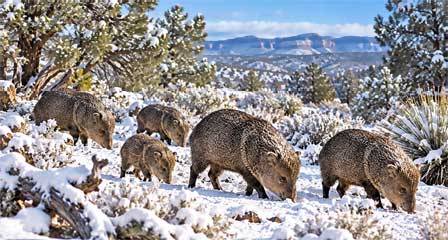
Javelinas are common throughout much of central and southern Arizona. They occur around Phoenix and Tucson and may also be found farther north, including portions of the Sedona area and occasionally near Flagstaff.
Their natural habitat includes desert washes, saguaro and palo verde country, desert scrub, grasslands and oak woodlands. They often use washes and areas of dense vegetation for cover and travel corridors.
Although javelinas are most closely associated with Arizona's warm Sonoran Desert, they also inhabit higher-elevation grasslands, chaparral and oak woodlands. In colder areas, they may encounter winter snow and often seek sheltered locations with vegetation, rocky cover and dependable food sources. Their ability to use different habitats helps explain sightings in communities such as Sedona and occasionally near Flagstaff.
As Arizona communities have expanded into desert habitat, javelinas have also become familiar visitors to neighborhoods bordering washes, open desert and undeveloped land. Sightings in residential areas do not necessarily mean an animal is aggressive or in distress.
When Are Javelinas Most Active?
Javelina activity changes with temperature and season. During hot weather they are most active during cooler periods such as early morning, evening and nighttime. During cooler weather they may also be active during daylight hours.
In summer, javelinas often spend the hottest part of the day resting beneath large trees, in caves, beneath rocky overhangs or in other shaded locations before becoming active again as temperatures fall.
Are Javelinas Dangerous?
Javelinas generally avoid confrontation with people, but they are wild animals and should never be approached, cornered or fed. Their canine teeth can cause serious injuries if an animal feels threatened.
Problems are more likely when javelinas become accustomed to people because food has been intentionally or unintentionally provided. Dogs can also trigger defensive behavior because javelinas may perceive them as predators.
Enjoy javelinas from a safe distance and always give a herd a clear route to move away.
What To Do If You See A Javelina
- Stay calm and keep your distance
- Do not approach, corner or attempt to touch the animal
- Never offer food or water
- Keep dogs leashed and away from the herd
- Give the animals an open escape route
- Bring small pets indoors when javelinas are nearby
- Do not place yourself between adults and young
- If a javelina approaches, make yourself appear larger and discourage it from remaining near people without moving closer to it
Most encounters can be avoided by allowing javelinas space and removing the food sources that encourage them to remain around people.
Javelinas And Dogs
Dogs can make javelina encounters more dangerous because javelinas may perceive them as predators. Keep dogs leashed when walking in areas where javelinas are present, and never allow a dog to chase, corner or approach a herd. If javelinas enter your yard, bring pets indoors and allow the animals time and space to leave.
How To Keep Javelinas Away From Your Home
Javelinas frequently enter residential areas because they find food, water or shelter. Reducing those attractants is usually the most effective way to prevent repeated visits.
- Never intentionally feed javelinas
- Keep garbage in secure containers
- Bring pet food indoors
- Clean up spilled bird seed and fallen fruit
- Protect gardens and attractive landscaping when practical
- Keep dogs supervised and leashed around javelinas
- Close access beneath decks, sheds or other possible resting areas
- Remove unnecessary water and food sources that encourage wildlife to remain
Feeding wildlife can cause animals to lose their natural caution around people and may increase property damage and safety problems for both people and pets.
Official Arizona Javelina Information
- Javelina Species Information - Arizona Game & Fish Department
- Living With Javelina - Arizona Game & Fish Department
Arizona Javelina Video
Arizona Javelina FAQ
Are javelinas pigs?
No. Although javelinas resemble small wild pigs, they are collared peccaries and belong to a different animal family.
Where do javelinas live in Arizona?
Javelinas are common throughout much of central and southern Arizona, including the Phoenix and Tucson areas. They also occur around Sedona and are occasionally found as far north as Flagstaff.
What do javelinas eat?
Javelinas eat primarily plant material, including prickly pear cactus, roots, fruit, flowers, mesquite beans, agave and other desert vegetation. They may occasionally eat insects or eggs.
Are javelinas dangerous?
Javelinas normally avoid confrontation, but they are wild animals with strong canine teeth and can defend themselves when threatened, cornered or confronted by dogs.
Do javelinas attack people?
Attacks on people are uncommon, but conflicts can occur when javelinas become habituated to human food, feel trapped or perceive a person or dog as a threat. Always give them space.
Why do javelinas smell bad?
Javelinas have scent glands that produce a strong musky odor. Scent plays an important role in communication, recognition and territorial behavior.
How big do Arizona javelinas get?
Adult javelinas typically weigh several dozen pounds. Arizona Game and Fish lists adult males at about 65 pounds and females at about 50 pounds.
How many javelinas live in a herd?
Arizona Game and Fish reports herds ranging from two to more than 20 animals.
When are javelinas most active?
Javelinas are most active during cooler periods. During hot Arizona summers they are commonly active in the early morning, evening and nighttime and rest in shade during the hottest part of the day.
What should I do if I see a javelina?
Stay at a safe distance, do not feed or approach it, keep dogs away and give the animal a clear route to leave.
Why do javelinas come into Arizona neighborhoods?
Neighborhoods can provide easy access to garbage, pet food, bird seed, landscaping, water and other attractants. Removing these food sources helps discourage repeat visits.
Should I feed javelinas?
No. Feeding javelinas encourages them to lose their natural caution around people and can increase property damage and dangerous encounters involving people and pets.
Are javelinas native to Arizona?
Yes. Collared peccaries are native to the Americas and javelinas are a natural part of Arizona's wildlife, particularly in desert, grassland and other habitats across central and southern Arizona.
What should I do if I encounter javelinas while walking a dog?
Keep your dog leashed and move away from the javelinas without approaching or cornering them. Give the herd a clear escape route and never allow a dog to chase or confront a javelina.
Arizona Animals
Wildlife Creatures
Javelinas In Arizona
Wildlife in Arizona
Bobcats (Wildcats)
Black Bear
Venomous Animals
Pronghorn Antelope
Coyotes
Ringtail Cat
Arizona Badger
Mountain Lions
Arizona Elk
Bald Eagle
Desert Bighorn Sheep
White Tail Deer
Golden Eagle