Grand Canyon National Park
Reviewed and updated by AZ Leisure Staff Writers on .
Grand Canyon National Park in northern Arizona protects one of the world's most extraordinary canyon landscapes, encompassing about 278 river miles of the Colorado River and more than 1.2 million acres. Visitors can explore the year-round South Rim, the more remote seasonal North Rim, historic Grand Canyon Village, scenic overlooks, hiking trails, the Colorado River and Desert View Drive. Whether you are planning a few hours of sightseeing or a multi-day hiking, camping or rafting adventure, understanding the park's distances, elevations, seasons and services will help you make the most of a Grand Canyon visit.
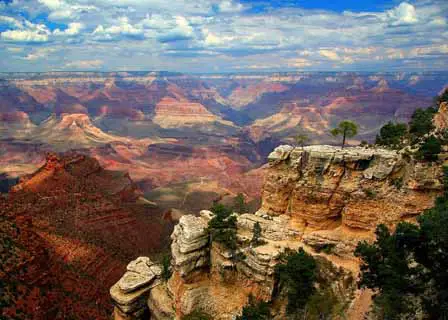 Bright Angel Trail Grand Canyon. © Mike Koopsen
- Grand Canyon Quick Facts
- Best Things To Do
- South Rim vs North Rim
- South Rim
- North Rim
- Desert View Drive
- Best Time To Visit
- Planning Your Visit
- Grand Canyon Safety
- FAQ
Grand Canyon National Park Quick Facts
- Location: Northern Arizona
- Park size: Approximately 1.2 million acres
- Colorado River through the park: Approximately 278 river miles
- Average canyon width: About 10 miles rim to rim
- Maximum width: Approximately 18 miles
- Average depth: About one mile
- South Rim elevation: Approximately 7,000 feet
- North Rim elevation: Approximately 8,000 feet
- South Rim: Open year-round
- North Rim: Seasonal access with operating conditions that vary by year
Why Visit Grand Canyon National Park?
The Grand Canyon combines immense scale, colorful geology, dramatic elevation changes and thousands of years of human history in one remarkable landscape. Visitors can experience the park from easily reached rim overlooks or descend into the canyon on trails that reveal completely different environments as elevation changes.
The park also lies within the ancestral homelands of 11 present-day Tribal communities whose cultural and historical connections to Grand Canyon continue today. Scenic viewpoints, historic buildings, ranger programs, Indigenous cultural demonstrations, hiking, camping, rafting, wildlife viewing and stargazing provide many different ways to experience the park.
Best Things To Do At Grand Canyon National Park
- Explore The South Rim: Visit Mather Point, Yavapai Point, Grandview Point and other major overlooks.
- Walk The Rim Trail: Follow sections of the South Rim Trail for scenic canyon views without descending far below the rim.
- Hike Into The Canyon: Explore portions of the Bright Angel Trail or South Kaibab Trail while matching your route to your experience and weather conditions.
- Drive Desert View Drive: Follow the scenic road east from Grand Canyon Village to major overlooks and Desert View Watchtower.
- Watch Sunrise Or Sunset: Experience changing light and color from overlooks along both rims.
- Explore Grand Canyon Village: Visit historic buildings, museums, visitor services and shuttle-accessible overlooks.
- Camp At The South Rim: Choose from Mather Campground, Trailer Village and Desert View Campground.
- Raft The Colorado River: Take a permitted or professionally guided Grand Canyon rafting trip.
- Ride The Grand Canyon Railway: Travel by historic train from Williams to the South Rim.
- Visit The North Rim: Experience higher elevations, quieter viewpoints and a more remote side of the canyon when access is available.
How Big Is The Grand Canyon?
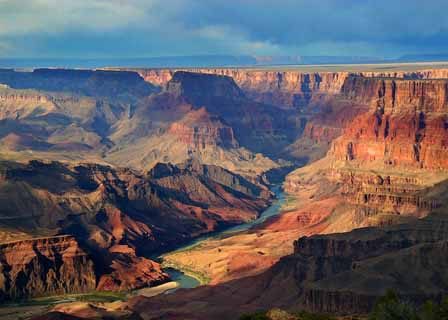
Grand Canyon National Park covers more than 1.2 million acres. The canyon averages about 10 miles wide from rim to rim and reaches approximately 18 miles across at its widest points. Near Grand Canyon Village, the vertical distance from rim to river is roughly one mile.
The North and South Rims may appear close across the canyon, but traveling between them by road requires a drive of more than 200 miles. A rim-to-rim hike is also a major backcountry undertaking rather than a shortcut; many backpackers plan several days for the journey.
The Colorado River flows through approximately 278 miles of Grand Canyon National Park. Long commercial river trips through the canyon can require roughly two weeks or longer.
South Rim vs North Rim - Which Should You Visit?

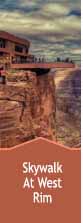
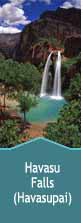
Click for area details
Grand Canyon National Park's two principal visitor areas are the South Rim and North Rim. The South Rim is the more developed and accessible choice, with year-round entrance access, lodging, campgrounds, restaurants, museums, visitor centers and free shuttle buses. The North Rim is approximately 1,000 feet higher, more remote and seasonal, with fewer visitor services.
Grand Canyon West is not part of Grand Canyon National Park; it is located on Hualapai Tribal lands and includes the Grand Canyon Skywalk. Havasu Canyon and Havasupai Falls are on Havasupai Tribal lands and are also outside Grand Canyon National Park.
Grand Canyon South Rim
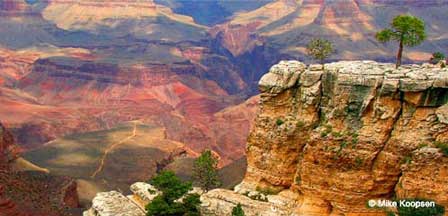
The Grand Canyon South Rim is the park's most developed visitor area and is open throughout the year. Grand Canyon Village includes lodging, restaurants, museums, historic buildings, campgrounds and shuttle stops, while the main Grand Canyon Visitor Center provides access to parking and the free South Rim shuttle system.
Private vehicles can reach many areas of Grand Canyon Village, although parking can be difficult during busy periods. The free shuttle buses provide convenient transportation between visitor areas, scenic overlooks and trailheads.
East of Grand Canyon Village, Desert View Drive follows the rim for 23 miles to Desert View and the East Entrance, providing access to multiple overlooks and picnic areas.
Desert View Drive And East Entrance
Desert View Drive is the primary scenic road open to private vehicles along the South Rim. The 23-mile route connects Grand Canyon Village with Desert View and the park's East Entrance and includes developed overlooks, picnic areas and roadside pullouts.
At the eastern end of the drive, visitors can explore Desert View Point, Desert View Watchtower, visitor services and nearby cultural resources. The East Entrance is open year-round unless temporarily closed because of weather or other conditions.
Grand Canyon North Rim
The Grand Canyon North Rim sits approximately 1,000 feet higher than the South Rim and offers a cooler, more remote visitor experience. Scenic roads lead to Point Imperial, Cape Royal and other overlooks, while hiking trails explore forested rim country and descend toward the inner canyon.
North Rim vehicle access is seasonal, and services are much more limited than at the South Rim. Visitors should always check current National Park Service conditions before making the long drive to the North Rim.
2026 visitor note: The North Rim reopened on May 15, 2026 following the Dragon Bravo Fire. Selected scenic drives, viewpoints and trails are open, and the North Rim Campground reopened June 1. However, overnight lodging is not available inside the park during the 2026 season, and several trails and services remain unavailable or limited.
Best Time To Visit Grand Canyon National Park
Spring - March Through May
- Cool to mild South Rim temperatures make sightseeing and hiking comfortable.
- Snow and freezing temperatures are still possible at higher elevations.
- North Rim vehicle access normally remains closed until the seasonal opening.
Summer - June Through August
- All major South Rim visitor services are generally operating.
- Rim temperatures are much cooler than the inner canyon, where dangerous heat can develop.
- July and August bring an increased chance of afternoon thunderstorms and lightning.
Fall - September Through November
- Cooling temperatures can provide excellent conditions for sightseeing and hiking.
- Fall weather may vary from warm afternoons to freezing nights and early snow.
- North Rim services wind down as the seasonal closure approaches.
Winter - December Through February
- The South Rim remains open year-round.
- Snow can create spectacular scenery but also icy roads and trails.
- The North Rim is normally inaccessible to vehicles during winter.
Planning Your Grand Canyon Visit
- Choose Your Rim First: Most first-time visitors select the South Rim because it has the widest range of services and year-round access.
- Allow Enough Time: One full day provides a useful introduction, while two or three days allow more viewpoints, hikes and historic sites.
- Check Current Conditions: Review weather, road closures, trail conditions and drinking-water availability before hiking.
- Use The Shuttle: On the South Rim, park once and use free shuttle buses to reduce traffic and parking problems.
- Reserve Early: Lodging and campgrounds can fill well in advance during popular travel periods.
- Plan For Elevation: South Rim elevations average about 7,000 feet and North Rim elevations about 8,000 feet.
- Do Not Underestimate The Canyon: Hiking down is easier than returning to the rim, particularly during hot weather.
Grand Canyon Safety Tips
- Stay behind railings and well back from unprotected cliff edges.
- Carry adequate drinking water and food when hiking.
- Do not attempt to hike from the rim to the Colorado River and back in one day.
- Expect inner-canyon temperatures to be much warmer than conditions at the rim.
- Watch for lightning and thunderstorms during the summer monsoon season.
- Wear appropriate footwear for steep, rocky and sometimes icy trails.
- Check current trail closures and drinking-water status before starting a hike.
- Keep wildlife wild and never feed or approach animals.
- Adjust your itinerary when heat, snow, ice or storms make conditions unsafe.
Frequently Asked Questions About Grand Canyon National Park
Where is Grand Canyon National Park?
Grand Canyon National Park is located entirely within northern Arizona. The South Rim is commonly reached through Williams, Flagstaff and Tusayan, while the North Rim is reached from Highway 89A and Jacob Lake.
Is the South Rim open year-round?
Yes. The South Rim and its South and East entrances are open 24 hours a day throughout the year, although individual roads or facilities can be temporarily affected by weather or maintenance.
Which rim is best for a first visit?
The South Rim is generally the easiest choice for first-time visitors because it has the greatest concentration of viewpoints, lodging, campgrounds, restaurants, museums, visitor services and shuttle transportation.
Is the North Rim open in 2026?
Yes. The North Rim reopened for the 2026 season on May 15. Services remain limited while recovery from the Dragon Bravo Fire continues, and no overnight lodging is available inside the park on the North Rim during 2026.
How large is the Grand Canyon?
Grand Canyon National Park covers more than 1.2 million acres. The canyon averages about 10 miles wide, reaches up to approximately 18 miles across and averages roughly one mile deep.
How long should you spend at the Grand Canyon?
One full day provides time for several major viewpoints, but two or three days allow a more relaxed visit with hiking, scenic drives, museums, sunrise or sunset viewing and additional park areas.
Can you drive along the Grand Canyon?
Yes. Desert View Drive is a 23-mile scenic road open to private vehicles between Grand Canyon Village and Desert View. Other South Rim areas use a combination of private-vehicle access and free shuttle transportation.
Is Grand Canyon West part of Grand Canyon National Park?
No. Grand Canyon West is located on Hualapai Tribal lands outside Grand Canyon National Park. It includes the Grand Canyon Skywalk.
Are Havasu Falls inside Grand Canyon National Park?
No. Havasu Falls and Supai Village are located on Havasupai Tribal lands outside the jurisdiction of Grand Canyon National Park.
Do you need reservations to visit Grand Canyon National Park?
A general park reservation is not normally required for sightseeing, but entrance fees apply and reservations are strongly recommended for lodging, campgrounds and many commercial or backcountry activities.
Grand Canyon National Park Information
Grand Canyon National Park
P.O. Box 129
Grand Canyon, Arizona 86023
General Information: 928-638-7888
Check the National Park Service website before traveling for current entrance information, road conditions, trail closures, shuttle schedules, weather alerts and visitor-service updates.
The Spectacular Grand Canyon
Related Grand Canyon Interest
Grand Canyon National Park
Average Temperatures South Rim
Bright Angel Trail
Desert View Watchtower
Grand Canyon Camping
Grand Canyon Desert View Map
Grand Canyon Pictures By Koopsen
Grand Canyon Mule Ride
Grand Canyon Rafting
Grand Canyon South Rim Trail
Grand Canyon Winter Pictures By Koopsen
Grandview Point South Rim
Havasu Falls Pictures
Havasupai Indians
Lipan Point South Rim
Mather Point South Rim
Moran Point South Rim
Navajo Point South Rim
North Rim Map
Robert Body Grand Canyon Pictures
Shoshone Point South Rim
South Rim Grand Canyon Directions
South Rim Hours & Entrance Fees
Grand Canyon Summer Hiking
Trail Of Time South Rim
West Rim Map
Yaki Point Grand Canyon
Yavapai Point Geology Museum