
Montezuma Well Near Sedona & Camp Verde Arizona
Updated by AZ Leisure Staff Writers on
Montezuma Well is a separate unit of Montezuma Castle National Monument near Rimrock and Camp Verde, Arizona, about 11 miles from the cliff dwellings at Montezuma Castle. The spring-fed limestone sinkhole is surrounded by ancient cliff dwellings, pueblo ruins, a prehistoric irrigation canal and a desert oasis ecosystem unlike almost anywhere else in Arizona.
People have lived around Montezuma Well for thousands of years. The Southern Sinagua built dwellings along the rim and used the Well's dependable water to irrigate crops, while other Indigenous communities also have deep historical and cultural connections to this landscape. Today the site remains culturally significant to several associated tribes.
Visitors can explore the Well from a short loop trail, descend spur trails toward the swallet and outlet, see prehistoric dwellings and irrigation features, and experience a remarkable aquatic ecosystem fed by approximately 1.5 million gallons of new water each day.
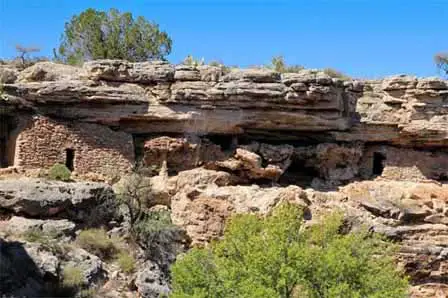 Indian Ruins Along The Rim Above The Well. © Perry Quan
Montezuma Well Arizona Quick Facts
- Park unit: Montezuma Castle National Monument
- Location: Near Rimrock and Camp Verde, Arizona
- Distance from Montezuma Castle: Approximately 11 miles
- Drive from Montezuma Castle: About 20 minutes
- Feature: Spring-fed limestone sinkhole
- Daily water input: Approximately 1.5 million gallons
- Main trail: Approximately 0.3-mile loop
- Historic features: Cliff dwellings, pueblo ruins and prehistoric irrigation canal
- Admission: Free
- Current hours: 9:00 AM to 4:45 PM
- Typical visit: About 45 minutes
About Montezuma Well
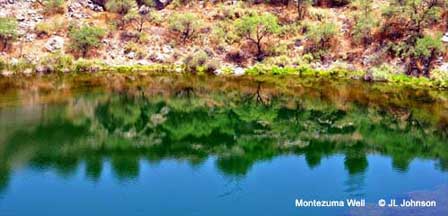
Montezuma Well is a naturally formed limestone sinkhole supplied continuously by groundwater. The Well formed when underground limestone collapsed approximately 12,000 to 15,000 years ago, creating the circular basin seen today.
Groundwater originating in the surrounding region moves slowly through underground rock before rising through vents at the bottom of the Well. Approximately 1.5 million gallons of new water enter the Well each day, creating a remarkably stable aquatic environment in Arizona's otherwise dry Verde Valley.
Water, The Swallet & Montezuma Well's Unique Ecosystem
Water does not simply collect inside Montezuma Well. It exits through a swallet, travels through a narrow underground cave and reappears approximately 150 feet away at the outlet near Beaver Creek. Early farmers directed this dependable flow into an irrigation canal that supplied agricultural fields in the Verde Valley.
The Well's water contains unusually high concentrations of dissolved carbon dioxide and naturally occurring arsenic. Because oxygen levels are extremely low, fish cannot survive in the Well. In the absence of fish, several highly specialized species evolved here, including five species that NPS says occur nowhere else on Earth.
Those unusual water conditions make Montezuma Well both an archaeological site and an important natural laboratory for studying isolated aquatic ecosystems.
Ancient Ruins & Indigenous History
People have lived in and traveled through the Verde Valley for thousands of years. Archaeologists use the term Southern Sinagua for many of the people who lived and farmed around Montezuma Well during the centuries before European contact, although NPS notes that we do not know what these communities called themselves.
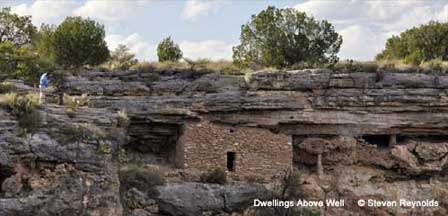
By the 1100s, cliff dwellings were being constructed around the Well, eventually totaling more than 30 rooms along the rim. Pueblo villages, a pit house and irrigation features also remain within the site.
By the early 1400s, many residents had migrated to other communities. The dwellings were no longer permanently occupied, but the landscape was not forgotten. Hopi, Zuni, Yavapai and Western Apache communities continue to recognize cultural and ancestral connections to Montezuma Well.
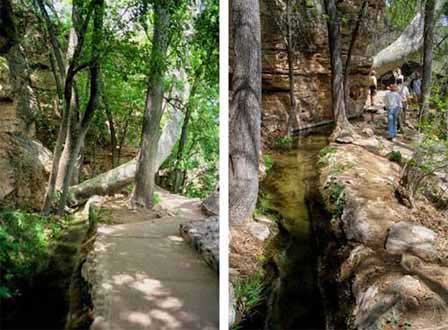
The prehistoric irrigation system at Montezuma Well demonstrates how effectively early farmers used the site's dependable water source. Southern Sinagua farmers cultivated crops such as corn, beans, squash and cotton, directing water through canals to agricultural fields near Beaver Creek.
Portions of the historic irrigation route remain visible today, and mineral deposits carried by the Well's water have hardened sections of the ancient ditch over time.
Montezuma Well Trails & Things To See
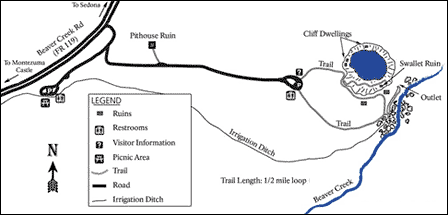
- Main Well Loop: Approximately 0.3 mile with views of the Well and archaeological features.
- Well Overlook: Main viewpoint across the spring-fed sinkhole and surrounding limestone rim.
- Cliff Dwellings: Ancient rooms are visible along portions of the Well's rim.
- Swallet Trail: Descends toward the cave where water leaves the Well.
- Outlet Trail: Leads toward Beaver Creek and the point where Well water re-emerges.
- Prehistoric Irrigation Canal: View portions of the water system used by early farmers.
- Pit House & Pueblo Remains: Archaeological features represent different periods of occupation.
- Picnic Area: Shaded picnic facilities are available near the Well.
Montezuma Well Hours & Admission
Montezuma Well is currently open daily from 9:00 AM to 4:45 PM, with closures on Thanksgiving Day, Christmas Day and New Year's Day. Hours can change, so check current National Park Service information before traveling.
There is no entrance fee to visit Montezuma Well. Restrooms and picnic facilities are available at the site. The main Montezuma Castle Visitor Center, museum and bookstore are located at Montezuma Castle approximately 11 miles away.
Montezuma Well Accessibility
The main Well loop is approximately 0.3 mile, but reaching the overlook requires stairs and uneven stone surfaces. NPS currently identifies 54 stairs on the main loop, including 43 stairs between the ranger station area and the Well overlook.
The Swallet and Outlet trails involve additional stairs and steep grades and are not wheelchair accessible. A mostly level section of trail near the restrooms is accessible to wheelchairs and strollers, but it does not provide a view of the Well.
Montezuma Well Trail Map
Directions To Montezuma Well Arizona
From Interstate 17, take Exit 293 and travel east through McGuireville and Rimrock. Follow signs approximately four miles to the Montezuma Well entrance.
Montezuma Well is approximately 11 miles from Montezuma Castle and normally about a 20-minute drive between the two sites. The regular visitor route is paved.
Be cautious when using GPS navigation because some systems may suggest unpaved Forest Service roads. NPS recommends that RVs, buses, low-clearance vehicles and most passenger vehicles remain on the paved route.
Montezuma Well Visitor Tips
- Allow about 45 minutes to explore the main Well loop and overlooks.
- Wear sturdy walking shoes because the trail includes stairs and uneven stone surfaces.
- Carry drinking water, especially during late spring and summer.
- Plan summer visits for earlier in the day because Verde Valley temperatures can exceed 100°F.
- Stay on designated trails to protect archaeological sites and sensitive habitat.
- Watch for rattlesnakes during warmer months and give wildlife plenty of space.
- Use the paved route from I-17 Exit 293 rather than relying blindly on GPS shortcuts.
- Combine Montezuma Well with Montezuma Castle if you have time; the two sites are approximately 20 minutes apart.
- Remember that admission to Montezuma Well is free even though Montezuma Castle charges an entrance fee.
More Ancient & Historic Sites In Arizona
- Montezuma Castle National Monument
- Arizona Ancient Ruins
- Canyon de Chelly
- Casa Grande Ruins
- Palatki Heritage Site
- Pueblo Grande
- Walnut Canyon National Monument
- Wupatki National Monument
Montezuma Well Arizona FAQ
What Is Montezuma Well?
Montezuma Well is a spring-fed limestone sinkhole and archaeological site that forms a separate unit of Montezuma Castle National Monument near Rimrock and Camp Verde, Arizona.
Is Montezuma Well The Same As Montezuma Castle?
No. Montezuma Well and Montezuma Castle are separate locations within the same National Monument. They are approximately 11 miles apart and about a 20-minute drive from one another.
Is There An Entrance Fee For Montezuma Well?
No. Montezuma Well is currently free to visit.
What Are The Hours For Montezuma Well?
Montezuma Well is currently open from 9:00 AM to 4:45 PM. It is closed on Thanksgiving Day, Christmas Day and New Year's Day.
How Long Does It Take To Visit Montezuma Well?
Most visitors spend approximately 45 minutes exploring the main Well loop, overlooks and archaeological features.
How Much Water Flows Into Montezuma Well?
Approximately 1.5 million gallons of new groundwater enter Montezuma Well every day.
Are There Fish In Montezuma Well?
No. High levels of dissolved carbon dioxide create very low oxygen conditions that prevent fish from surviving in the Well.
Who Built The Ruins At Montezuma Well?
Archaeologists identify many of the people who built dwellings around Montezuma Well as Southern Sinagua. Other Indigenous communities also lived in the Verde Valley, and several tribes continue to maintain cultural and ancestral connections to the site.
Is The Montezuma Well Trail Wheelchair Accessible?
The main overlook requires stairs and uneven surfaces and is not wheelchair accessible. A relatively level portion of trail near the restrooms can be accessed by wheelchair, but it does not provide a view of the Well.
How Do You Get To Montezuma Well?
Take Interstate 17 to Exit 293 and follow signs approximately four miles through McGuireville and Rimrock to the Montezuma Well entrance.