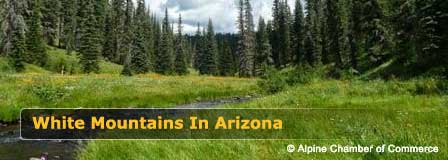
White Mountains Arizona Weather & Climate
Reviewed and updated by AZ Leisure Staff Writers on
Weather in Arizona's White Mountains varies considerably with elevation, season and location. Communities such as Show Low, Pinetop-Lakeside, Greer, Alpine, Heber and Springerville experience cooler conditions than Arizona's low deserts, with pleasant summer temperatures, summer thunderstorms, cold winter nights and periodic snowfall. Use the community weather reports below for current conditions, then review the seasonal climate information to help plan hiking, fishing, camping, sightseeing, skiing and other White Mountains activities.
- Current Weather By Town
- White Mountains Climate
- Weather By Season
- Summer Monsoon
- Winter Snow & Weather
- Elevation & Temperature
- Weather Planning Tips
- FAQ
Current Weather In Arizona's White Mountains
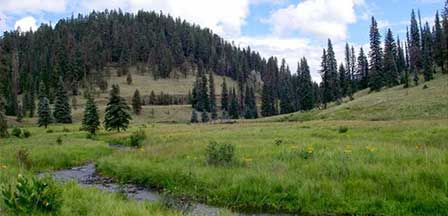
Weather conditions can vary significantly from one White Mountains community to another because of differences in elevation, terrain and storm patterns. Check the individual weather reports below for Alpine, Greer, Heber, Pinetop, Show Low, Snowflake and Springerville when planning your visit.
Alpine Arizona Weather
Greer Arizona Weather
Heber Arizona Weather
Pinetop-Lakeside Arizona Weather
Show Low Arizona Weather
Snowflake Arizona Weather
Springerville Arizona Weather
Arizona White Mountains Climate
The White Mountains have a high-elevation climate that is considerably cooler than the deserts around Phoenix and Tucson. Elevations vary widely across the region, so temperatures and snowfall can differ substantially between communities and recreation areas. Show Low sits near 6,400 feet, while communities and recreation areas farther into the mountains can exceed 7,000 or 8,000 feet.
The region receives precipitation during both winter storm systems and Arizona's summer monsoon season. NOAA's 1991-2020 climate normals for Show Low show July and August as the two wettest normal months, reflecting the important role summer thunderstorms play in the White Mountains climate.
White Mountains Weather By Season
Spring: March - May
- Days gradually warm, but nights can remain cold at higher elevations.
- Late-season snow is still possible, particularly in the higher mountains.
- Spring can bring periods of gusty wind and rapidly changing conditions.
- Higher-elevation trails, campgrounds and forest roads may remain affected by winter conditions.
Summer: June - August
- Summer temperatures are generally much cooler than Arizona's low deserts.
- June is often relatively dry before monsoon moisture becomes established.
- July and August commonly bring afternoon showers and thunderstorms.
- Lightning, localized heavy rain and rapidly changing mountain weather can affect outdoor activities.
Fall: September - November
- Early fall often brings mild daytime temperatures and cooler nights.
- Thunderstorm activity generally decreases as the summer monsoon ends.
- Cold nights become increasingly common as autumn progresses.
- Early-season snow can occur in the higher elevations later in fall.
Winter: December - February
- Cold temperatures and freezing nights are common throughout the high country.
- Winter storms can produce snow across mountain communities and recreation areas.
- Higher elevations generally receive more snow and remain colder than lower communities.
- Road conditions can change quickly during and after winter storms.
Summer Monsoon Weather In The White Mountains
Arizona's summer monsoon is an important part of White Mountains weather. Moisture typically increases during late June and early July, bringing a greater chance of showers and thunderstorms to the higher terrain. Thunderstorms are often most likely during the afternoon and evening and can produce lightning, brief heavy rain, gusty winds and localized flooding.
Visitors planning hiking, fishing, boating or other outdoor activities during monsoon season should check the forecast before leaving and remain alert to developing clouds and thunder. Mountain weather can change rapidly, even when the morning begins sunny.
Winter Snow & Weather In The White Mountains
Winter brings freezing temperatures and periodic snow to Arizona's White Mountains, particularly at higher elevations around Greer, Alpine, Sunrise Park Resort and surrounding forest areas. Snowfall varies widely from storm to storm and by elevation, so conditions in Show Low or Springerville may differ substantially from those in nearby higher mountain areas.
Winter visitors should check current forecasts and road conditions before traveling. Mountain highways can become snow-covered or icy during storms, and overnight temperatures may fall well below freezing. Winter weather also supports skiing, snowboarding and other seasonal recreation around Sunrise Park Resort when snow conditions permit.
How Elevation Affects White Mountains Weather
Elevation is one of the biggest reasons weather varies across the White Mountains. In general, higher locations are cooler and more likely to receive snow during cold-weather storms, while lower communities may experience rain or warmer temperatures at the same time. The difference can be noticeable even during a relatively short drive through the region.
For this reason, visitors should check the forecast for their specific destination rather than relying on a single regional temperature. Weather in Show Low, Pinetop-Lakeside, Greer, Alpine, Snowflake and Springerville can differ on the same day.
White Mountains Weather Planning Tips
- Check your exact destination: Conditions can vary considerably with elevation and location.
- Dress in layers: Mountain mornings and evenings can be much cooler than midday temperatures.
- Watch summer thunderstorms: During monsoon season, plan outdoor activities with afternoon storm development in mind.
- Respect lightning: Leave exposed ridges, open water and other vulnerable locations when thunderstorms approach.
- Prepare for winter roads: Check highway and local road conditions when snow or freezing temperatures are forecast.
- Expect temperature swings: High-elevation areas can cool rapidly after sunset even during warmer months.
- Check fire restrictions: Dry spring and early-summer conditions can increase wildfire danger before monsoon moisture arrives.
White Mountains Arizona Weather FAQ
What is the weather like in Arizona's White Mountains?
The White Mountains have a cooler high-elevation climate compared with Arizona's low deserts. Summers are generally mild to warm with monsoon thunderstorms, while winters can bring freezing temperatures and snow.
What is the best time to visit the White Mountains?
Summer is especially popular for escaping desert heat, while fall offers cooler weather and changing foliage. Winter attracts visitors interested in snow recreation, and spring is generally quieter but can still bring cold and changing weather.
Does it snow in Arizona's White Mountains?
Yes. Winter storms regularly bring snow to the region, particularly at higher elevations. Snow amounts can vary considerably between communities and mountain recreation areas.
When is monsoon season in the White Mountains?
Summer thunderstorm activity typically increases from late June into July and continues through much of the summer, although the timing and strength of the monsoon vary from year to year.
Are summers hot in the White Mountains?
The White Mountains are generally much cooler than Phoenix, Tucson and other low-desert areas because of their higher elevations. Temperatures still vary by community and elevation.
Why does the weather vary so much between White Mountains towns?
Elevation, terrain and storm location can create significant temperature and precipitation differences between communities. Higher places such as Greer and Alpine are generally cooler than lower-elevation areas.
Does Show Low get summer thunderstorms?
Yes. Show Low and surrounding White Mountains communities commonly experience showers and thunderstorms during Arizona's summer monsoon period.
Can it freeze in the White Mountains?
Yes. Freezing temperatures are common during winter and can occur during colder periods outside the core winter months, especially at higher elevations.
Should I check the weather before hiking or camping?
Yes. Weather can change quickly in mountain environments. Check the forecast for your specific destination before hiking, camping, fishing, boating or traveling into remote areas.
Are White Mountains roads affected by winter weather?
Yes. Snow, ice and winter storms can affect highways, forest roads and local roads. Travelers should check current road conditions before driving during winter weather.
Beautiful White Mountains In Arizona
White Mountains
Map & Directions
Little Colorado River
Weather & Climate
Alpine Arizona
Heber/Overgaard
Pinetop-Lakeside
Payson Arizona
About Show Low
Snowflake/Taylor
Springerville Arizona
Greer Arizona
Popular Area Lakes
Rainbow Lake
White Mountains Lakes
Big Lake
Hawley Lake
Show Low Lake
Crescent Lake
Woodland Lake
Luna Lake
Becker Lake
Fool Hollow Lake
Lyman Lake