Reviewed and updated by AZ Leisure Staff Writers on
Long before Petrified Forest National Park became famous for its colorful petrified wood, it was home to generations of Native peoples who hunted, farmed, traded, and built communities across northeastern Arizona. Archaeological evidence reveals more than 13,000 years of human history preserved throughout the park, including ancient petroglyphs, pueblo ruins, pottery fragments, stone tools, and hundreds of archaeological sites. Visitors exploring Newspaper Rock, Puerco Pueblo, and the Painted Desert gain a fascinating glimpse into the lives of ancestral Puebloan peoples and earlier cultures that successfully adapted to this rugged high-desert environment for thousands of years.
More than 1,000 archaeological sites have been identified.
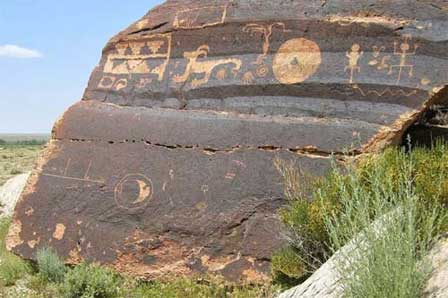
Newspaper Rock contains over 650 ancient petroglyphs.
Puerco Pueblo was occupied approximately 1250 to 1380 AD.
The park preserves evidence of Paleo-Indian, Archaic, Basketmaker, and ancestral Puebloan cultures.
Where To See Petroglyphs In Petrified Forest National Park
The park's best-known collection of ancient rock art is found at Newspaper Rock, located near Puerco Pueblo. More than 650 petroglyphs have been carved into dark desert varnish on sandstone boulders, with many created between 650 and 2,000 years ago. Visitors can easily view these remarkable carvings from a short paved trail and overlook. Additional archaeological sites throughout the park preserve pueblo ruins, ancient campsites, and artifacts that provide valuable insight into the lives of the region's earliest inhabitants.
Artifacts Found Throughout The Petrified Forest
Archaeologists have documented more than 1,000 archaeological sites within Petrified Forest National Park. Discoveries include painted pottery, projectile points, stone knives, metates used for grinding corn, manos, shell jewelry, bone tools, woven basket fragments, and the remains of pithouses and masonry pueblos. These artifacts reveal an evolving culture that became increasingly skilled in farming, architecture, craftsmanship, and long-distance trade throughout the American Southwest.
Visiting Ancient Sites Responsibly
Ancient archaeological sites are irreplaceable cultural resources protected by federal law. Visitors should remain on designated trails, avoid climbing on pueblo walls, never touch or trace petroglyphs, and leave all artifacts exactly where they are found. Even small disturbances can damage archaeological evidence that has survived for centuries. By practicing Leave No Trace principles, visitors help preserve these remarkable sites for future generations.
Petroglyphs at Petrified Forest National Park
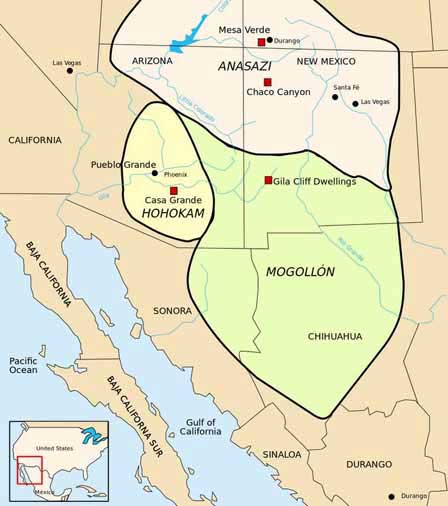
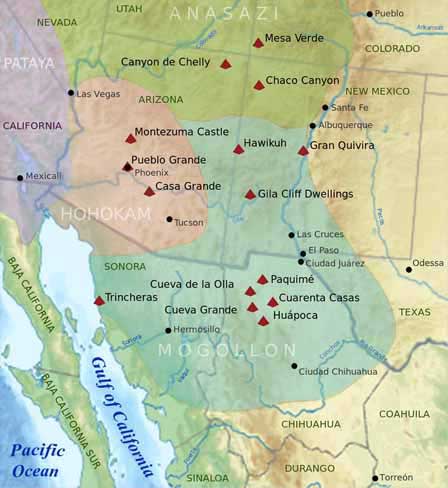
Archaeological discoveries throughout Petrified Forest National Park provide remarkable insight into the ancient civilizations that occupied the region over the past 13,000 years. Evidence shows that ancestral Puebloan, Mogollon, and Hohokam cultures all influenced this landscape during different periods of history. While these names describe archaeological cultures rather than specific tribes, many modern Southwestern tribes, including the Hopi, Zuni, and other Pueblo peoples, trace important aspects of their ancestry and cultural heritage to these early inhabitants.
Over thousands of years, dramatic climate changes transformed the landscape, vegetation, and wildlife of northeastern Arizona. As temperatures warmed following the last Ice Age, grasslands gradually gave way to today's high-desert environment, while many large Ice Age mammals disappeared. Each successive culture adapted by developing new hunting methods, farming techniques, tools, and settlement patterns suited to changing environmental conditions.
Today the Petrified Forest appears dry, rugged, and sparsely populated, making it difficult to imagine that generations of Native peoples successfully lived here for thousands of years. How did they find food and water? What animals did they hunt? Which crops could be grown in such an arid climate? How were their homes built, and why did many eventually leave? Archaeological discoveries throughout the park continue to answer many of these fascinating questions while leaving others open to interpretation.
Ancient cultural regions of the ancestral Puebloan, Mogollon and Hohokam peoples. - Creative Commons
Paleo-Indian Era: 13,500 to 8,000 BC
At the end of the last ice-age, the Paleo People roamed the Southwest including the Petrified Forest, Painted Desert and its surrounding area. It was much cooler back then with heavy grasslands and more diverse plant. These nomadic people were hunter-gatherers meaning they gathered wild plants and hunted forms of bison and other large wild animals that are now extinct.
Less is known about the Paleo Indians than future civilizations because fewer of their artifacts have been uncovered. If they left petroglyphs, they either eroded away over the course of thousands of years or remain deeply buried in yet to be discovered archeological sites.
Archaic Culture Period: 8,000 to 500 BC
Over this period climate gradually warmed and rainfall diminished. Prior period flora and fauna either gradually became extinct or migrated to other areas. The land become progressively more barren with differing species of plant life and smaller animals. People adapted. Farming and people became less nomadic and began to settle into villages with slightly more advanced sheltering.
Agricultural farming began in this era particularly as corn was brought into the region from the south. Evidence has been unearthed indicating advancement of tool making including flaking tools and metates for grinding corn. No evidence of pottery has been discovered from the Archaic Culture Era.
Basketmaker II and III Era: 500 BC to 650 AD
People became much less nomadic and moved from high mesas down to more fertile farm land. Farming adapted to wider varieties of squash and beans that augment the primary diet of corn. Creation of new tools were broadened and others were improved.
The introduction of basket weaving and simple brown pottery came during this era along with the introduction of the bow and arrow. Most of the petroglyphs which depict humans, animals and other symbols are tied to this period.
Basketmaker III - Pueblo Era: 650 to 950 AD
Progression of more advanced architecture occurred during this 300-year era. Village settlements created deeper pithouses with walls, floor pits and entries. Above ground architecture expanded from storage to communal dwellings. Farming techniques advanced. Advancement tool-making made great strides. Artisan baskets became more ornately decorated and pottery was painted with black on white designs.
Ancestral Pueblo II and III: 950 to 1300 AD
During the latter part of this period, climate became closely similar to what it is today. Shelter evolved into multilevel pueblos with subterranean ceremonial rooms called kivas. Farming, cooking and hunting tools continued to advance as did more artistically colorful pottery.
Unearthed artifacts from the era show very similar traits to those found in Flagstaff, Sedona, and Hopi Mesas as well as areas around Gallup, NM and even the Arizona White Mountains area. This would indicate the existence of extensive trade routes and/or heritage commonality with other ancient Indian tribes.
Ancestral Pueblo IV Period: 1300 to 1450 AD
Pueblo people began to aggregate into larger communities often in pueblos with hundreds of rooms. Images on petroglyphs and kiva murals indicate that Kachinas became wide-spread during this 150-year period and pottery became substantially more elaborate.
Similar to the ancient Sinagua Indians that settled farther east, Pueblo people mysteriously disappeared from the Petrified Forest and Painted Desert area by 1450. A sustained drought adversely effecting food supply was likely the reason they left the area. They could also likely joined other ancient tribal communities in more distant areas.
Today's Indian Tribes
The Indian Tribes of today in Northern Arizona and Western New Mexico including the Navajo, Hopi and Zuni claim the ancient Pueblo Indians are their ancestor predecessors. Most archaeologists and researches agree. The artifact similarity to those discovered in those other tribal lands are substantially similar.
More than 1,000 archeological sites have been identified and studied in both the Petrified Forest and the Painted Desert. Less than half of the National Park has been surveyed so who knows what future discoveries will be uncovered that remain secretly buried under the surface.
How interesting would it be to stand in the quiet solitude of the Petrified Forest National Park and imagine what life must have been like thousands upon thousands of years before? And how would those ancient civilizations react if they could be here today to see what modern life has become?
Frequently Asked Questions
How old are the petroglyphs in Petrified Forest National Park?
Most of the visible petroglyphs were created approximately 650 to 2,000 years ago by ancestral Puebloan peoples, although human occupation of the region extends back more than 13,000 years.
Where is Newspaper Rock?
Newspaper Rock is located near Puerco Pueblo along the park's main road. A short paved trail leads to an overlook where visitors can view hundreds of ancient petroglyphs.
Who lived in the Petrified Forest?
Over thousands of years, the region was occupied by Paleo-Indians, Archaic peoples, Basketmaker cultures, ancestral Puebloans, and other groups that contributed to the rich cultural history of northeastern Arizona.
Can visitors enter the ancient pueblos?
Visitors may explore designated archaeological areas from established trails but should never climb on walls or enter protected ruins.
How many archaeological sites are in the park?
More than 1,000 archaeological sites have been identified within Petrified Forest National Park, with additional discoveries still being made.
Why did the ancestral Puebloans leave the area?
Researchers believe prolonged drought, changing climate, and shifting resources contributed to migration into larger communities elsewhere in the Southwest during the late 1200s and early 1300s.
Historical Note: Information presented on this page is based on archaeological research conducted within Petrified Forest National Park together with historical interpretations published by the National Park Service and other recognized archaeological authorities. As ongoing discoveries continue to expand our understanding of the region, interpretations of prehistoric cultures may evolve as new evidence becomes available.