
How Big Is The Grand Canyon?
Reviewed and updated by AZ Leisure Staff Writers on
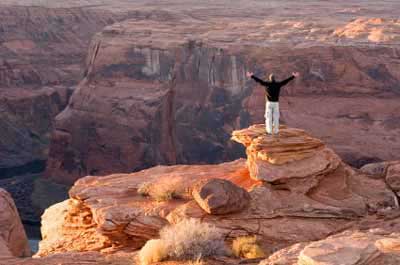
How big is the Grand Canyon? Grand Canyon National Park encompasses approximately 1,218,375 acres, or 1,904 square miles, but the canyon itself is usually measured along the Colorado River. From Lees Ferry in the east to Grand Wash Cliffs in the west, the Grand Canyon extends about 277 river miles. It averages roughly 10 miles across from rim to rim near many developed areas, reaches as much as 18 miles wide and plunges as much as 6,000 vertical feet from rim to river at its deepest points.
- Grand Canyon Size At A Glance
- How Long Is The Grand Canyon?
- How Wide Is The Grand Canyon?
- How Deep Is The Grand Canyon?
- South Rim & North Rim
- Grand Canyon Elevations
- Colorado River Through The Canyon
- How Long Does It Take To Cross?
- Putting The Size In Perspective
- FAQ
Grand Canyon Size At A Glance
- National park area: Approximately 1,218,375 acres
- National park area in square miles: Approximately 1,904 square miles
- Canyon length: Approximately 277 river miles
- Typical rim-to-rim width: About 10 miles near Grand Canyon Village
- Maximum width: Approximately 18 miles
- Average canyon depth: Approximately 4,000 feet
- Maximum depth: Approximately 6,000 feet
- South Rim elevation: Approximately 7,000 feet
- North Rim elevation: Approximately 8,000 feet
- South Rim to North Rim by road: More than 200 miles
How Long Is The Grand Canyon?
The Grand Canyon extends approximately 277 miles along the Colorado River. For measuring purposes, the canyon begins at Lees Ferry, designated river mile 0, and continues downstream to Grand Wash Cliffs at approximately river mile 277.
The Colorado River itself is much longer than the Grand Canyon. It flows through several canyon systems across the Colorado Plateau, but only the 277-mile section between Lees Ferry and Grand Wash Cliffs is considered the Grand Canyon.
Colorado River Through The Grand Canyon
The Colorado River is the geographic reference used to measure the Grand Canyon's length. It flows approximately 277 miles through the canyon from Lees Ferry to Grand Wash Cliffs.
Within Grand Canyon National Park, NPS statistics describe the river as averaging about 300 feet wide and approximately 40 feet deep, although both width and depth vary considerably. The river descends steadily through the canyon, creating the rapids that make multi-day Grand Canyon rafting trips possible.
How Wide Is The Grand Canyon?
The width of the Grand Canyon varies greatly depending on location. Near Grand Canyon Village, the distance from the South Rim to the North Rim is approximately 10 miles in a straight line. At its widest, the canyon spans approximately 18 miles from rim to rim.
The canyon becomes much narrower toward Marble Canyon and other constricted sections, so there is no single width that describes its entire 277-mile length.
How Deep Is The Grand Canyon?
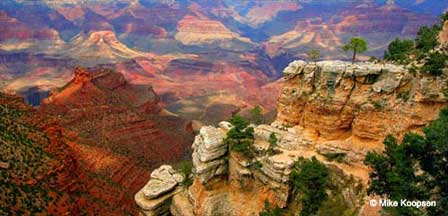
The Grand Canyon averages approximately 4,000 feet deep along its length and reaches about 6,000 feet from rim to river at its deepest points. Near Grand Canyon Village on the South Rim, the vertical distance from rim to the Colorado River is roughly one mile, or about 5,000 feet.
This enormous vertical range is one reason temperatures, vegetation and wildlife can differ so dramatically between the rims and the inner canyon.
Grand Canyon South Rim And North Rim
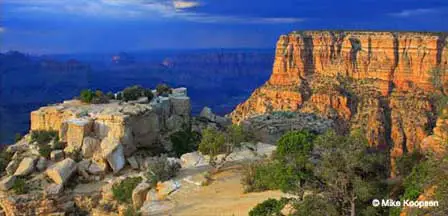
The Colorado River divides the developed South Rim and North Rim. Although the two rims may be only about 10 miles apart when viewed across the canyon near Grand Canyon Village, there is no road directly across the canyon.
Driving between the developed South Rim and North Rim areas requires a journey of more than 200 miles around the eastern end of the canyon. Hiking rim to rim is approximately 21 miles by the primary corridor-trail route and involves descending roughly one vertical mile before climbing back to the opposite rim.
This difference between straight-line distance and actual travel distance is one of the clearest examples of the Grand Canyon's immense scale.
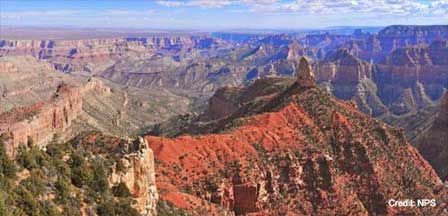
Grand Canyon Rim Elevations
The South Rim averages approximately 7,000 feet above sea level, while the North Rim averages approximately 8,000 feet. That roughly 1,000-foot difference helps make the North Rim cooler and contributes to differences in snowfall, forests and seasonal access.
The elevation drops thousands of feet from either rim into the inner canyon. Near Grand Canyon Village, the Colorado River lies roughly 5,000 vertical feet below the South Rim.
How Long Does It Take To Cross The Grand Canyon?
Distance across the canyon depends on how you travel. A straight-line view from the South Rim to North Rim may span only about 10 miles near Grand Canyon Village, but there is no direct road across the canyon.
- By car: The developed South Rim and North Rim are more than 200 road miles apart.
- On foot: A typical rim-to-rim corridor hike is approximately 21 miles and includes major elevation loss and gain.
- To the Colorado River: Trails from the South Rim descend roughly one vertical mile to the river.
- By raft: A complete river journey through Grand Canyon covers approximately 277 river miles and normally requires multiple days.
The National Park Service does not recommend hiking from the rim to the Colorado River and back in a single day. Rim-to-rim travel should be treated as a serious backcountry undertaking rather than simply a 10-mile crossing.
Putting The Grand Canyon's Size In Perspective
The Grand Canyon's immense scale can be difficult to appreciate from photographs alone. A visitor standing at the South Rim may be looking approximately 10 miles across the canyon while the Colorado River lies about a vertical mile below.
The park itself covers approximately 1,904 square miles, yet its enormous area is only one measure of size. The combination of a 277-mile-long canyon, widths reaching 18 miles, depths approaching 6,000 feet and major differences in elevation creates thousands of cliffs, side canyons, mesas, buttes and remote landscapes.
For a visual comparison of the rims, roads and surrounding region, see the Grand Canyon map and directions.
Frequently Asked Questions About The Size Of The Grand Canyon
How long is the Grand Canyon?
The Grand Canyon is approximately 277 river miles long from Lees Ferry to Grand Wash Cliffs.
How wide is the Grand Canyon?
The canyon is approximately 10 miles wide from rim to rim near Grand Canyon Village and reaches as much as 18 miles wide in some areas.
How deep is the Grand Canyon?
The Grand Canyon averages approximately 4,000 feet deep and reaches about 6,000 feet at its deepest points.
How many square miles is Grand Canyon National Park?
Grand Canyon National Park encompasses approximately 1,904 square miles.
How many acres are in Grand Canyon National Park?
The park contains approximately 1,218,375 acres.
How high is the Grand Canyon South Rim?
The South Rim averages approximately 7,000 feet above sea level.
How high is the Grand Canyon North Rim?
The North Rim averages approximately 8,000 feet above sea level, roughly 1,000 feet higher than the South Rim.
How far apart are the North Rim and South Rim?
Near Grand Canyon Village, the rims are approximately 10 miles apart in a straight line. Driving between the developed rim areas requires more than 200 miles because no road crosses the canyon.
Where does the Grand Canyon begin and end?
For river-mile measurements, the Grand Canyon begins at Lees Ferry and ends approximately 277 miles downstream at Grand Wash Cliffs.
Can you hike from the South Rim to the North Rim in one day?
Some highly experienced and properly prepared hikers undertake long single-day crossings, but the National Park Service describes rim-to-rim hiking as an overnight trip for most visitors and warns against underestimating the distance, elevation and heat.
More Grand Canyon Facts And Trip Planning
- Grand Canyon National Park
- Grand Canyon Map & Directions
- Where Is The Grand Canyon?
- Grand Canyon South Rim
- Grand Canyon North Rim
- Grand Canyon History
- Grand Canyon Rafting
- Grand Canyon Pictures
- Grand Canyon Weather & Climate
The Spectacular Grand Canyon