
Lost Dutchman Mine Legend
Updated by AZ Leisure Staff Writers on
The Lost Dutchman Mine is one of Arizona's most famous legends, centered on a supposedly rich gold mine hidden somewhere in the rugged Superstition Mountains east of Phoenix. The story became closely associated with German immigrant Jacob Waltz, whose name, alleged clues and supposed gold discoveries inspired generations of treasure hunters.
No location has ever been conclusively verified as the legendary Lost Dutchman Mine, and many details of the story conflict from one version to another. The mystery nevertheless remains a major part of Arizona folklore and continues to draw visitors interested in the history, legends and dramatic scenery of the Superstitions.
- The Lost Dutchman Legend
- Who Was Jacob Waltz?
- The Peralta Story
- The Dutchman's Clues
- Weaver's Needle
- Treasure Hunters & The Search
- Visiting The Superstitions Today
- FAQ
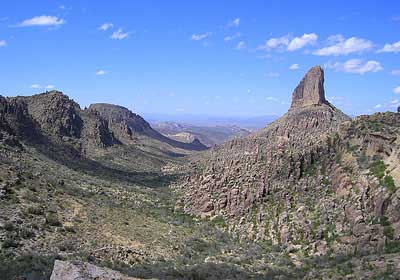 Weaver's Needle, Superstition Mountains. Creative Commons
Who Was Jacob Waltz?
Jacob Waltz was a German immigrant and prospector whose name became permanently linked to the Lost Dutchman Mine legend. He lived in Arizona Territory during the nineteenth century and died in Phoenix in 1891. Later accounts claimed Waltz had discovered or knew the location of a rich gold deposit somewhere in the Superstition Mountains.
Much of what is repeated about Waltz's supposed mine comes from stories told after his death rather than from documentation that can be independently verified. According to the legend, Waltz either worked a hidden mine himself or knew of a rich deposit connected to earlier mining activity in the Superstitions.
Arizona State Parks notes that Waltz was said to have located the mine in the 1870s with help from a Peralta descendant and may have worked it with a partner named Jacob Weiser. These details remain part of the legend rather than conclusively established history.
The Lost Dutchman Mine Legend
The Lost Dutchman story combines Arizona mining history, oral tradition, treasure hunting and decades of speculation. Some versions describe a single rich gold mine, while others refer to hidden caches of ore or gold connected to earlier Mexican mining activity.
Over the years, maps, directions, coded clues and eyewitness stories have surfaced, but none has produced universally accepted proof of the mine's location. The changing details are part of what has kept the mystery alive for more than a century.
The Peralta Gold Mine Story
One major branch of the Lost Dutchman legend involves the Peralta family of northern Mexico. According to traditional accounts, members of the family supposedly operated rich gold mines in the Superstition Mountains during the 1840s.
The legend says that a Peralta expedition was attacked while transporting gold from the mountains in 1848, and that only a few members escaped. Later versions of the Lost Dutchman story connect Jacob Waltz to a surviving Peralta descendant who supposedly helped him locate one of the hidden mines.
These accounts are an important part of Superstition Mountain folklore, but historians and researchers continue to debate how much of the story can be supported by documentary evidence.
The Dutchman's Clues
Many versions of the Lost Dutchman legend include supposed clues describing how to recognize the mine. Commonly repeated clues mention a north-trending canyon, a military trail, distinctive rock formations and sunlight reaching the mine entrance late in the day.
Because these clues were passed down through retellings and were not preserved in a single verified document written by Waltz, they should be treated as part of the legend rather than as authenticated directions to a known mine.
Weaver's Needle & The Lost Dutchman Legend
Weaver's Needle is one of the most recognizable landmarks in the Superstition Mountains and appears in many versions of the Lost Dutchman story. The dramatic volcanic formation rises above the surrounding wilderness and has long been used by hikers and treasure hunters as an important visual reference point.
Arizona State Parks notes that many versions of the legend place the supposed gold somewhere in the vicinity of Weaver's Needle, although no verified mine location has ever been established there.
Treasure Hunters & The Search For The Mine
Generations of treasure hunters have searched the Superstition Mountains for the Lost Dutchman Mine, relying on maps, oral histories, geological theories and supposed clues attributed to Jacob Waltz. Some searchers believed the mine was connected to the Peralta story, while others proposed entirely different locations and origins.
The rugged terrain, extreme heat and remoteness of the Superstitions have made searching dangerous. The wilderness now encompasses roughly 160,000 acres, adding to the difficulty of locating any specific historical site within its maze of mountains, canyons and desert terrain.
Can You Still Prospect For Gold In The Superstition Wilderness?
The Superstition Wilderness is protected federal wilderness. New mining claims generally cannot be established on wilderness lands withdrawn from mineral entry, although valid pre-existing mineral rights may be treated differently under federal law. Visitors should not assume that recreational treasure hunting gives them permission to dig, disturb archaeological sites or conduct mining activity.
Visiting The Superstition Mountains Today
The Superstition Mountains rise east of the Phoenix metropolitan area near Apache Junction, Arizona. Visitors interested in the Lost Dutchman legend can explore the scenery from Lost Dutchman State Park, nearby trailheads and designated routes in Tonto National Forest and the Superstition Wilderness.
Weaver's Needle can be seen from several areas within the Superstitions, but reaching remote wilderness locations requires proper hiking preparation. Carry adequate water, avoid extreme summer heat, check current weather and trail conditions and do not rely on old treasure maps or informal directions as wilderness navigation.
Best Time To Explore The Superstition Mountains
Fall through spring generally provides the most comfortable weather for hiking and sightseeing in the Superstition Mountains. Spring can also bring desert wildflowers after favorable winter rainfall.
Summer heat can be severe and dangerous, particularly in exposed wilderness terrain. Visitors should avoid strenuous midday hiking during hot weather and carry significantly more water than they expect to need.
Places To Explore The Lost Dutchman Legend
- Lost Dutchman State Park — Hiking, camping and Superstition Mountain scenery.
- Superstition Mountains — Background on the mountains, scenery and recreation.
- Goldfield Ghost Town — Old West mining-themed attraction near Apache Junction.
- Apache Junction Arizona — Gateway community for the western Superstition Mountains.
- Apache Trail — Historic scenic route through rugged central Arizona terrain.
Lost Dutchman Mine FAQ
Where Is The Lost Dutchman Mine?
No verified location has ever been established. The legendary mine is generally associated with the Superstition Mountains east of Phoenix and Apache Junction, Arizona.
Was The Lost Dutchman Mine Ever Found?
No discovery has been universally accepted as the legendary Lost Dutchman Mine. Numerous people have claimed to locate it or identify its likely location, but none has conclusively proved the claim.
Who Was The Lost Dutchman?
The name refers to Jacob Waltz, a German immigrant and prospector who became associated with stories of a rich hidden gold mine in the Superstition Mountains.
Why Was Jacob Waltz Called The Dutchman?
Waltz was German, but English speakers commonly used the term Dutchman in connection with him, likely reflecting confusion between the German word Deutsch and Dutch.
What Does Weaver's Needle Have To Do With The Lost Dutchman Mine?
Weaver's Needle is one of the Superstition Mountains' most prominent landmarks, and many versions of the legend place the supposed gold somewhere in its vicinity.
What Is The Peralta Connection To The Lost Dutchman Mine?
According to legend, the Peralta family of Mexico operated rich mines in the Superstitions during the 1840s, and a Peralta descendant supposedly helped Jacob Waltz locate one of them.
Can You Search For The Lost Dutchman Mine Today?
Visitors can hike and explore designated public lands, but wilderness, archaeological and mining regulations apply. Digging, disturbing cultural resources or establishing new mining claims in protected wilderness areas is not generally permitted.
Is There Really Gold In The Superstition Mountains?
Gold mining occurred in parts of central Arizona, but the existence of the fabulously rich Lost Dutchman Mine described in legend has never been conclusively proven.
What Is The Best Place To Learn About The Lost Dutchman Legend?
Lost Dutchman State Park, the Superstition Mountains area and local historical attractions near Apache Junction provide good starting points for learning about the legend and its setting.
When Is The Best Time To Visit The Superstition Mountains?
Fall through spring generally offers the most comfortable weather for hiking and sightseeing. Summer temperatures can be dangerously hot.
Related Apache Junction Interest
Apache Junction Arizona
Apache Trail
Apache Junction Horseback Riding
Apache Junction Map
Apache Junction Renaissance Festival
Fishing Near Apache Junction
Goldfield Ghost Town
Lost Dutchman State Park
Superstition Mountain
Metro Phoenix