Phoenix Weather, Climate & Average Temperatures
Updated by AZ Leisure Staff Writers on
Phoenix has a hot desert climate characterized by abundant sunshine, very hot summers, mild winters and relatively low annual rainfall. At Phoenix Sky Harbor International Airport, NOAA's 1991–2020 climate normals show an average annual temperature of 75.6°F and average annual precipitation of about 7.22 inches. Seasonal conditions vary significantly, making winter and spring especially popular for outdoor recreation while summer requires careful planning around extreme daytime heat.
- Phoenix Climate Overview
- Weather By Season
- Summer Heat
- Monsoon Season
- Best Time To Visit
- Monthly Temperatures & Rainfall
- Weather Planning Tips
- FAQ
Phoenix Climate Overview
Phoenix sits in the Sonoran Desert at an elevation of roughly 1,100 feet. The city receives little precipitation compared with most U.S. destinations, while sunshine and warm temperatures dominate much of the year. December through February brings the coolest weather, spring warms quickly, summer temperatures routinely exceed 100°F, and fall gradually returns more comfortable conditions for outdoor activities.
- Average annual temperature: 75.6°F based on 1991–2020 Phoenix climate normals.
- Average annual rainfall: Approximately 7.22 inches.
- Hottest period: June through August, with July normally the hottest month.
- Coolest period: December through February.
- Wettest normal months: July and August receive some of the highest average monthly rainfall because of monsoon thunderstorms.
- Driest normal month: June, averaging only about 0.02 inch of rain.
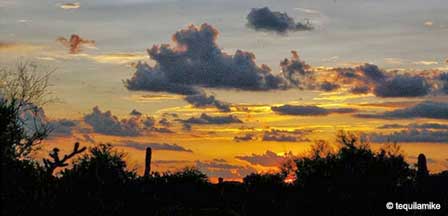
Phoenix Weather By Season
Phoenix weather changes dramatically through the year. Winter generally brings mild afternoons and cool mornings, while spring warms rapidly and is popular for hiking, golf and sightseeing. Summer is extremely hot, with daytime temperatures frequently above 100°F, and outdoor activities are best planned for early morning. Fall remains hot at first but becomes progressively more comfortable during October and November.
Phoenix Summer Heat
June through September is exceptionally hot in Phoenix, and July's 1991–2020 normal average high is about 106.5°F. Although humidity is often relatively low before monsoon moisture arrives, low humidity does not make extreme heat harmless. Visitors should avoid strenuous outdoor activity during the hottest part of the day, drink plenty of water and plan hiking, sightseeing and exercise for early morning whenever possible.
Summer can still be a good season for swimming, water parks, boating and indoor attractions, and lodging rates may be lower than during peak winter and spring travel periods. Outdoor plans, however, should always account for excessive heat.
Phoenix Monsoon Season
Arizona's official monsoon season runs from June 15 through September 30. During this period, increases in atmospheric moisture can produce thunderstorms, lightning, strong winds, blowing dust and localized heavy rain. Phoenix does not receive rain every day during the monsoon; storms are often scattered and conditions can vary considerably across the metropolitan area.
July and August normally receive significantly more rainfall than June, but annual monsoon rainfall can vary widely. Visitors should pay attention to weather forecasts and avoid driving through flooded roadways or washes during thunderstorms.
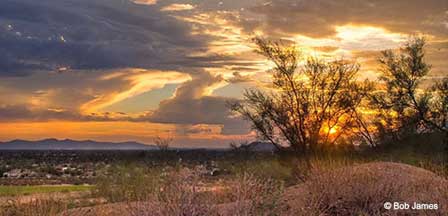
Summer is typically a lower-demand season for Phoenix tourism because of the extreme heat, so travelers may find more competitive hotel and resort rates than during the peak winter and spring seasons. Rates vary by property, event schedules and travel dates.
Best Time To Visit Phoenix
The best time to visit Phoenix depends largely on the activities you have planned. Winter and early spring offer the most comfortable conditions for hiking, golf, sightseeing and outdoor dining, while late spring brings warmer temperatures before the peak summer heat arrives. Summer is best suited to swimming, resorts, indoor attractions and early-morning outdoor activities. Fall becomes increasingly pleasant as temperatures decline.
- December through February: Mild afternoons and cool mornings make this one of the best periods for outdoor recreation.
- March and April: Warm, generally comfortable weather is excellent for hiking, sightseeing and spring events.
- May: Hotter conditions develop rapidly, particularly during the afternoon.
- June through September: Extreme heat dominates, with monsoon thunderstorms possible during summer.
- October and November: Temperatures gradually become more comfortable for outdoor activities.
Phoenix Average Monthly Temperatures & Rainfall
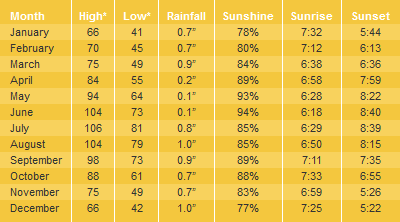
The Phoenix climate chart below provides a month-by-month overview of typical high and low temperatures, rainfall and approximate sunrise and sunset times. Monthly climate averages are useful for trip planning, but actual weather can vary considerably from year to year. For temperature and precipitation comparisons, NOAA's current standard climate-normal period is 1991–2020.
Phoenix Weather Planning Tips
- Check the current Phoenix forecast before outdoor activities rather than relying only on historical averages.
- Plan summer hiking and exercise for early morning and avoid the hottest part of the day.
- Carry more drinking water than you expect to need during warm-weather outdoor activities.
- Use sunscreen, sunglasses and a hat throughout the year.
- Expect large temperature differences between winter mornings and afternoons.
- Watch for thunderstorm, lightning, blowing-dust and flash-flood conditions during monsoon season.
- Never drive through a flooded roadway or desert wash.
- Remember that Phoenix-area temperatures vary somewhat with elevation and location across the metropolitan area.
Phoenix Weather & Climate FAQ
What Is The Average Annual Temperature In Phoenix?
NOAA's 1991–2020 climate normals show an average annual temperature of 75.6°F at Phoenix Sky Harbor International Airport.
How Hot Does Phoenix Get In Summer?
Phoenix summers are extremely hot. July's normal average high is about 106.5°F, and temperatures above 100°F are common throughout much of the summer.
What Is The Best Time Of Year To Visit Phoenix?
Winter and early spring are generally the most comfortable seasons for outdoor activities, sightseeing, hiking and golf. Fall also becomes increasingly pleasant as temperatures cool.
How Much Rain Does Phoenix Get Each Year?
Phoenix averages approximately 7.22 inches of precipitation annually based on NOAA's 1991–2020 climate normals.
When Is Monsoon Season In Phoenix?
Arizona's official monsoon season runs from June 15 through September 30. Thunderstorms are most common during portions of the summer, but rainfall varies considerably from year to year.
Does It Rain Every Day During Phoenix Monsoon Season?
No. Monsoon thunderstorms are often scattered, and some areas of Greater Phoenix may receive rain while nearby communities remain dry.
What Is The Hottest Month In Phoenix?
July is typically the hottest month based on long-term climate normals, with an average high of approximately 106.5°F.
Does Phoenix Get Cold In Winter?
Phoenix winters are generally mild compared with much of the United States, but mornings and nights can be cool. Visitors should bring layers for winter travel.
Is Phoenix Humid?
Phoenix is usually dry compared with humid climates, but atmospheric moisture increases during the summer monsoon season and can make conditions feel noticeably more humid.
Does Phoenix Get Snow?
Measurable snow is extremely rare in central Phoenix, although higher-elevation mountains and communities elsewhere in Arizona receive regular winter snowfall.
Related Phoenix Interest
Phoenix Arizona
Greater Phoenix Map
Rawhide Western Town
Roosevelt Lake Map & Directions
South Mountain Park
Phoenix To South Rim
Greater Phoenix Things To Do
Hiking Papago Park
Phoenix Dude Ranches
Phoenix Events & Festivals
Desert Botanical Garden
Piestewa Peak Hiking
Phoenix Weather Info
Phoenix Boat Tours
Mystery Castle
Phoenix Horseback Riding
Camelback Mountain
Phoenix Area Museums
Phoenix Zoo
Phoenix Arts & Theatre
Japanese Friendship Garden
Phoenix Fishing Guides
Phoenix Area Attractions
Metro Phoenix