Arizona Gila Monster
Updated by AZ Leisure Staff Writers on
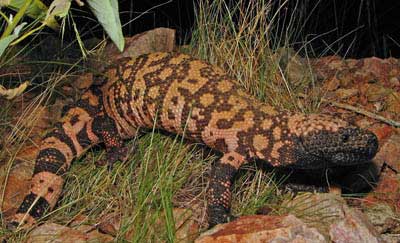
The Gila monster (Heloderma suspectum) is Arizona's largest native lizard and the only venomous lizard native to the United States. Recognizable by its heavy body, bead-like scales and striking black markings mixed with orange, pink or yellow, this secretive desert reptile spends most of its life underground. Gila monsters occur primarily across western and southern Arizona and usually avoid people unless disturbed or handled. Seeing one in the wild is a memorable Arizona wildlife experience, but these protected reptiles should always be observed from a safe distance.
- Gila Monster Facts
- Habitat & Where They Live
- When Gila Monsters Are Active
- Venom & Bites
- What To Do If Bitten
- Diet & Behavior
- Reproduction & Young
- Protection & Safe Viewing
- FAQ
Gila Monster Facts
- Scientific name: Heloderma suspectum
- Pronunciation: Gila is pronounced “HEE-lah.”
- Type: Venomous lizard
- Length: Adults can approach about 20 to 22 inches.
- Appearance: Heavy body with bead-like scales and black markings mixed with orange, pink or yellow.
- Range: Southwestern United States and northwestern Mexico, with much of the U.S. range centered in western and southern Arizona.
- Activity: Most of the animal's life is spent underground in shelters and burrows.
- Diet: Eggs, nestling birds, young mammals, reptiles and occasionally carrion.
- Defense: Powerful bite combined with venom produced in glands of the lower jaw.
- Arizona status: Protected wildlife that should never be captured, harmed or handled.
When Gila Monsters Are Most Active In Arizona
- Spring: One of the best periods for surface activity as temperatures warm and animals emerge from underground shelters.
- Early summer: Gila monsters may remain active during favorable morning and evening temperatures.
- Monsoon season: Cooler temperatures and rainfall can occasionally bring additional surface activity.
- Fall: Surface activity generally declines as temperatures cool.
- Winter: Gila monsters spend most of their time underground and are rarely encountered.
Even during favorable seasons, sightings are uncommon because these reptiles spend the great majority of their lives below ground or sheltered from view.
Gila Monster Habitat In Arizona
Gila monsters occur across much of western and southern Arizona, particularly in Sonoran Desert and foothill environments. Typical habitat includes rocky slopes, desert washes, foothills, bajadas and areas where burrows, rock shelters and other protected retreats are available.
They can occur in natural desert areas around central and southern Arizona, but sightings are uncommon because Gila monsters spend most of their lives underground. Never move rocks, reach into burrows or disturb wildlife in an attempt to find one.
How Venomous Is A Gila Monster?
Gila monsters are venomous, and their bite can cause intense pain and significant medical symptoms. Unlike many venomous snakes, a Gila monster does not inject venom through hollow fangs. Venom is produced in glands in the lower jaw and moves into the bite wound along grooves in the teeth as the animal maintains its grip and chews.
Gila monster bites are uncommon because the animals normally avoid people. Most reported bites occur when someone intentionally handles or restrains the lizard. An envenomation can cause severe local pain and swelling as well as nausea, weakness, dizziness, sweating and other systemic symptoms. Serious reactions, including airway swelling and breathing difficulty, have occurred.
A Gila monster bite should therefore be treated as a medical emergency even though fatal bites are extremely uncommon.
What To Do If Bitten By A Gila Monster
- Seek emergency medical evaluation immediately after a Gila monster bite.
- If the lizard remains attached, it should be removed as soon as practical while avoiding additional injury.
- A strong object may be used carefully to help pry open the animal's jaws while it has secure footing.
- Once released, move away and leave the Gila monster alone.
- Irrigate the bite wound thoroughly with plenty of clean water.
- Keep the affected limb relatively still and near heart level while awaiting medical care.
- Do not cut the wound or attempt to suck out venom.
- Medical professionals should evaluate the wound for broken teeth and confirm that tetanus protection is current.
- Do not wait for severe symptoms before obtaining medical assistance.
There is currently no antivenom specifically available for Gila monster bites. Treatment is based on wound care, monitoring and management of symptoms and complications.
Gila Monster Diet And Behavior
Gila monsters are carnivores that locate food using a highly developed sense of smell and their forked tongue. Their diet includes bird and reptile eggs, nestling birds, young rodents and rabbits, lizards and other small prey. Because food can be seasonal in the desert, they are capable of eating large meals and storing substantial energy as fat in their thick tail.
Gila Monster Reproduction And Young
Gila monsters mate during the warmer part of the year, and females lay their eggs underground during summer. Clutch size varies, with several eggs typically deposited in a protected nest or burrow. Unlike most North American lizards, Gila monster eggs can remain underground through fall and winter, with young emerging the following spring.
Newly emerged Gila monsters are already equipped with venom and the distinctive bead-like scales and patterned coloring of the species. The unusually long period between egg laying and spring emergence is one of the more remarkable features of Gila monster reproduction.
Gila Monsters Are Protected In Arizona
Gila monsters are protected by Arizona law. It is illegal to harass, harm, capture, collect or kill them without lawful authorization. Their greatest human-related threats include illegal collection, deliberate killing, road mortality and loss or alteration of habitat.
If you encounter a Gila monster, give it space and enjoy the sighting without touching, feeding or attempting to move it. Photographs can be taken from a respectful distance as long as the animal is not disturbed.
What To Do If You See A Gila Monster
- Stop and give the animal plenty of space.
- Do not touch, pick up, chase or attempt to relocate it.
- Keep children and pets away from the animal.
- Allow the Gila monster a clear escape route.
- Photograph it only from a distance that does not change its behavior.
- Watch where you place your hands and feet when hiking in rocky desert habitat.
- Never reach into a burrow, rock crevice or other space you cannot clearly see.
Gila Monster Video
Frequently Asked Questions About Arizona Gila Monsters
Are Gila monsters venomous?
Yes. The Gila monster is a venomous lizard. Venom is produced in glands in its lower jaw and enters a bite wound along grooves in the teeth while the animal maintains its grip.
Are Gila monsters aggressive?
No. Gila monsters generally avoid people and spend most of their lives hidden underground. Most bites occur when someone attempts to handle or restrain the animal.
Where do Gila monsters live in Arizona?
They occur primarily across western and southern Arizona in desert and foothill habitats that provide rocky slopes, washes, burrows and protected shelter sites.
When are Gila monsters most active?
Surface activity is most common during warmer parts of the year, especially spring and early summer. They may also emerge during favorable monsoon weather.
What do Gila monsters eat?
Their diet includes bird and reptile eggs, nestling birds, young mammals, lizards and other small animals.
How big do Gila monsters get?
Adults can reach approximately 20 to 22 inches in length, making the Gila monster the largest lizard native to the United States.
Can a Gila monster bite kill a person?
Fatal Gila monster bites are extremely rare, but bites can cause severe pain and potentially serious medical complications. Anyone bitten should obtain immediate medical evaluation.
Are Gila monsters protected in Arizona?
Yes. Gila monsters are protected by Arizona law and should never be captured, handled, harmed or collected.
What should I do if I see a Gila monster?
Stay several feet away, do not handle or disturb it, keep pets and children back and allow the animal to move away on its own.
Arizona Animals
Arizona Critters
Gila Monster
Arizona Bat Species
Arizona Tarantulas
Chuckwalla Lizard
Horned Toad
Arizona Bark Scorpions
Rattlesnakes
Coral Snake
Articles
Your Neighbor's A Rat
The Stinging Truth
Arachnophobes
Desert Tarantula
Desert Wild