

Golden Eagle In Arizona
Updated by AZ Leisure Staff Writers on
Golden eagles in Arizona (Aquila chrysaetos) are powerful birds of prey found across open deserts, grasslands, canyon country, foothills and mountain landscapes. Adults are mostly dark brown with distinctive golden feathers on the back of the head and neck, while their broad wings can span roughly six to seven feet. Golden eagles hunt rabbits, ground squirrels and other animals across large territories and frequently nest on remote cliffs and rocky ledges. Although they occur across much of Arizona, their wide-ranging habits and preference for rugged country can make every wild sighting a memorable Arizona wildlife experience.
- Golden Eagle Facts
- Identification
- Arizona Habitat
- Diet & Hunting
- Nesting & Breeding
- Flight & Behavior
- Where To See Golden Eagles
- Golden Eagle vs Bald Eagle
- Protection & Conservation
- Wildlife Viewing Tips
- FAQ
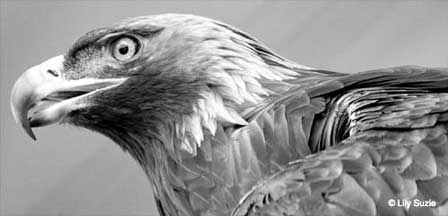
Golden Eagle Facts
- Scientific name: Aquila chrysaetos
- Type: Large bird of prey or raptor
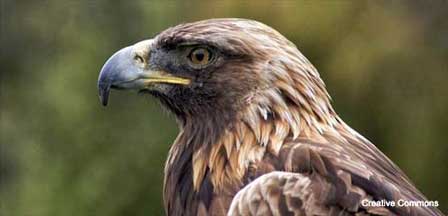
- Color: Primarily dark brown with golden feathers on the back of the head and neck
- Wingspan: Commonly about 6 to 7 feet
- Length: Approximately 28 to 40 inches depending on the individual
- Primary prey: Rabbits, hares, ground squirrels and other small to medium-sized animals
- Habitat: Open desert, grasslands, mountains, canyonlands, cliffs and foothills
- Nesting: Large stick nests placed primarily on cliffs, rock ledges and occasionally trees or other elevated structures
- Lifespan: Golden eagles can live for decades under favorable conditions
- Protection: Golden eagles and their nests are protected under federal law
How To Identify A Golden Eagle
Adult golden eagles are large, dark-brown raptors with a noticeable golden or tawny wash across the back of the head and neck. Their wings are broad and long, and their tails are proportionally longer than those of many other large soaring raptors.
Immature golden eagles can show conspicuous white areas in the wings and a mostly white tail with a dark terminal band. Those markings gradually disappear as the bird matures. At a distance, younger golden eagles are sometimes confused with immature bald eagles, so overall wing shape, tail pattern and flight behavior can help with identification.
Golden Eagle Habitat In Arizona
Golden eagles favor open landscapes where they can hunt over large areas while remaining close to cliffs, rocky ledges or other elevated nesting sites. In Arizona, suitable habitat includes desert mountain ranges, grasslands, canyon country, foothills, mesas, rimrock terrain and open woodland edges.
Unlike bald eagles, which are often associated with rivers, reservoirs and other large bodies of water, golden eagles are strongly associated with drier open country. They frequently use rising warm air along cliffs and mountain slopes to soar efficiently while searching for prey.
Golden Eagle Diet And Hunting
Golden eagles are powerful predators that hunt primarily from the air or from elevated perches. Rabbits, hares and ground squirrels make up an important part of their North American diet, although they also take other mammals, birds, reptiles and carrion when opportunities arise.
While searching for prey, golden eagles may soar high above open terrain before folding their wings and descending rapidly. Their strong feet and long talons are adapted for capturing and killing prey, while the hooked bill is used for tearing food.
Golden Eagle Nesting And Breeding In Arizona
Golden eagle pairs often maintain large territories containing more than one nest. Their nests are substantial structures built from sticks and other vegetation and are frequently placed on inaccessible cliff ledges or rocky outcrops. Some pairs may use alternate nests in different years and add material to the structures over many seasons.
For golden eagles in Arizona and other western areas south of 40 degrees latitude, the U.S. Fish and Wildlife Service currently recognizes December 1 through July 31 as the breeding season for disturbance-management purposes. Nesting eagles can be sensitive to human activity, particularly during courtship, egg laying, incubation and when young are present.
Golden Eagle Flight And Behavior
Golden eagles spend considerable time soaring above open country, using rising columns of warm air and wind deflected upward by ridges and canyon walls. Their broad wings allow them to cover large territories while using relatively little energy.
When pursuing prey, golden eagles are capable of extremely fast dives and impressive aerial maneuvering. They are commonly seen alone or in pairs rather than in large groups, particularly in established breeding territories.
Golden Eagle Video
Where To Look For Golden Eagles In Arizona
- Petrified Forest National Park: Open grasslands, mesas and badlands provide documented golden eagle habitat.
- Grand Canyon Region: Extensive cliffs, canyonlands and open plateaus provide classic golden eagle habitat.
- Colorado Plateau: Open mesas, cliffs and canyon country across northern and northeastern Arizona provide excellent habitat.
- Mogollon Rim Country: Rimrock cliffs, open forest edges, grasslands and mountain slopes can provide hunting and nesting habitat.
- White Mountains: Open meadows, forest edges, rocky ridges and surrounding grasslands provide suitable eagle country.
- Central Arizona Desert Mountains: Remote ridges, cliffs and foothills provide nesting sites overlooking open hunting terrain.
- Sonoran Desert Mountain Ranges: Rugged desert peaks and broad valleys can support resident and traveling golden eagles.
Golden eagles range over very large territories, so sightings are never guaranteed. Look for large dark raptors soaring above cliffs, ridges and open terrain, particularly where rising air currents concentrate birds.
Golden Eagle vs Bald Eagle
Adult golden eagles and adult bald eagles are relatively easy to distinguish. Mature bald eagles have a white head and tail with a dark body, while adult golden eagles remain predominantly brown and show golden feathers on the back of the head and neck.
Young birds can be more challenging. Immature bald eagles have irregular white mottling across the body and wings, while young golden eagles commonly show more distinct white patches in the wings and white at the base of the tail. Golden eagles also tend to favor dry, open mountain and desert country, while bald eagles are more often associated with rivers, lakes and reservoirs.
Golden Eagles Are Federally Protected
Golden eagles are protected under the federal Bald and Golden Eagle Protection Act. Without proper authorization, federal law prohibits killing, capturing, possessing or disturbing golden eagles and protects their feathers, eggs and nests.
An eagle nest remains legally protected even when it is not currently occupied. Visitors should never approach, climb toward or attempt to photograph an active eagle nest at close range. If an eagle changes its normal behavior because of your presence, move farther away.
Tips For Watching Golden Eagles In Arizona
- Scan cliffs, ridgelines, utility structures and isolated high perches from a safe distance.
- Watch open skies above mountain slopes and canyon walls for soaring birds using thermals.
- Use binoculars or a spotting scope instead of approaching an eagle.
- Never climb toward an eagle nest or attempt to locate nestlings for photographs.
- Avoid repeatedly approaching a perched eagle if it becomes alert or prepares to fly.
- Stay on established roads and trails where required and respect seasonal wildlife closures.
- Early morning and periods of rising daytime air can provide good opportunities to scan for soaring raptors.
- Photograph eagles with a telephoto lens rather than reducing your distance from the bird.
Frequently Asked Questions About Golden Eagles In Arizona
Do golden eagles live in Arizona?
Yes. Golden eagles occur across Arizona in suitable open desert, grassland, canyon, foothill and mountain habitat.
How big is a golden eagle?
Golden eagles are among North America's largest raptors. Adults commonly have wingspans of approximately six to seven feet.
How can you identify a golden eagle?
Adult golden eagles are predominantly dark brown with golden feathers on the back of the head and neck. Young birds often show distinct white patches in the wings and white at the base of the tail.
What do golden eagles eat in Arizona?
Golden eagles primarily hunt mammals such as rabbits, hares and ground squirrels, but they can also take birds, reptiles and other prey and may feed on carrion.
Where do golden eagles nest?
Golden eagles commonly build large stick nests on cliffs and rocky ledges, although nests may also be constructed in large trees or other elevated locations.
When do golden eagles nest in Arizona?
The U.S. Fish and Wildlife Service currently identifies December 1 through July 31 as the golden eagle breeding season for Arizona and similar western areas south of 40 degrees latitude.
What is the difference between a golden eagle and a bald eagle?
Adult bald eagles have white heads and tails, while adult golden eagles remain mostly brown with golden feathers on the back of the head and neck. Golden eagles also favor dry, open country more strongly than bald eagles.
Are golden eagles protected?
Yes. Golden eagles and their nests, eggs and feathers are protected under federal law. Disturbing an eagle sufficiently to interfere with breeding, feeding or sheltering behavior can violate federal law.
Where can you see golden eagles in Arizona?
Golden eagles may be encountered in open mountain, canyon, grassland and desert country across Arizona. Petrified Forest National Park is one documented location where golden eagles occur and breed.
Should you approach a golden eagle nest?
No. Keep well away from eagle nests and observe with binoculars or a spotting scope. Nest disturbance can disrupt breeding and is prohibited under federal eagle-protection law.
Arizona Animals