
Arizona Rattlesnakes: Species, Habitat & Safety
Reviewed and updated by AZ Leisure Staff Writers on .
Arizona is home to 13 species of rattlesnakes, more than any other state in the United States. These native venomous snakes occupy habitats ranging from Sonoran Desert valleys and rocky foothills to grasslands, canyons and high-elevation mountain country. Species most often encountered vary by region, but Western diamondbacks, sidewinders, Mojave rattlesnakes and black-tailed rattlesnakes are among Arizona's better-known species.
Rattlesnakes play an important ecological role by feeding on rodents and other animals, and they generally prefer to avoid people. Knowing when snakes are active, where they may shelter and how to react during an encounter can greatly reduce the risk of a bite. Never handle, harass or attempt to move a rattlesnake yourself.
- Arizona Rattlesnake Species
- Identifying Rattlesnakes
- Where Rattlesnakes Live
- When Rattlesnakes Are Active
- How To Avoid Encounters
- What To Do If You See One
- What To Do If Bitten
- Rattlesnakes Around Homes
- FAQ
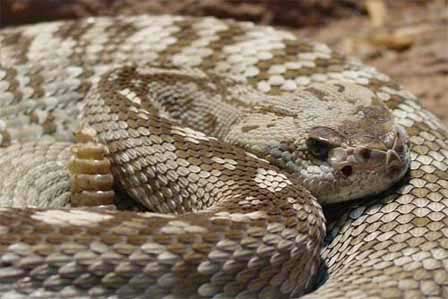 Black-tailed Rattlesnake. © Paul Morris
Arizona Rattlesnake Species
Arizona has 13 species of rattlesnakes, the greatest rattlesnake diversity of any U.S. state. Different species occupy different elevations and habitats, from low Sonoran Desert flats to wooded mountain ranges. The species people encounter most often depend heavily on location.
Western diamondback, sidewinder, Mojave and black-tailed rattlesnakes are among the species most commonly encountered in Arizona. Other Arizona rattlesnakes include highly specialized desert, canyon, grassland and mountain species, some of which have much more restricted ranges.
How To Identify An Arizona Rattlesnake
Rattlesnakes are pit vipers with heat-sensing facial pits between the eyes and nostrils, hinged venom-delivering fangs and typically a rattle at the end of the tail. Color and markings vary considerably by species and habitat, so identification should never depend on color alone.
A rattlesnake may also have an incomplete, damaged or very small rattle and may not rattle before striking. For safety, never approach an unidentified snake closely enough to examine its head, tail or markings. Observe wildlife only from a safe distance.
How To Avoid Rattlesnake Encounters
- Stay on established trails and remain aware of where you place your hands and feet.
- Never reach blindly into rock crevices, brush, wood piles or other concealed spaces.
- Wear closed-toe shoes or hiking boots in natural areas.
- Use a flashlight when walking outdoors at night during warm weather.
- Keep dogs leashed and away from rocks, brush and holes.
- Do not step directly over a log or rock when you cannot see the ground on the other side.
- Never approach, touch, tease, capture or attempt to move a rattlesnake.
- Give any snake enough room to retreat on its own.
Video: Close-Up Of A Western Diamondback Rattlesnake
Western diamondbacks are among the rattlesnake species commonly encountered in Arizona. Never approach a rattlesnake for a closer view or photograph; use distance and zoom instead.
Where Rattlesnakes Live In Arizona
Rattlesnakes occur across much of Arizona, although individual species have different ranges and habitat preferences. They can inhabit Sonoran Desert valleys, rocky foothills, washes, canyon country, grasslands, woodlands and mountain environments.
In developed areas, snakes may use landscaping, block walls, wood piles, sheds, shaded patios and other places that provide shelter or attract rodents. On trails, watch carefully around rocks, brush, ledges and shaded areas where a snake may be resting.
When Are Rattlesnakes Most Active In Arizona?
In Arizona's warmer desert areas, rattlesnakes are generally most active from March through October, although warm winter weather can occasionally bring snakes out earlier. Spring activity often occurs during daylight hours as snakes emerge from winter shelter.
As daytime temperatures become hotter, rattlesnakes shift more activity into evening and nighttime hours. During summer, hikers and homeowners should be particularly alert after sunset and on warm nights. Activity patterns vary with elevation, weather and species.
Video: Rattlesnake Bite Incident In Tucson, Arizona
A rattlesnake may strike without first giving an audible rattle. Any suspected rattlesnake bite requires prompt medical evaluation because symptoms and venom effects can vary considerably.
What To Do If You See A Rattlesnake
If you encounter a rattlesnake, stop and determine where the snake is before moving closer. Give it plenty of space and allow it an escape route. Most rattlesnakes do not want to interact with people and defensive coiling or rattling usually means the animal feels threatened.
- Back away slowly and give the snake plenty of room.
- Do not throw objects at it or attempt to make it move.
- Keep children and pets away.
- Do not assume a snake will rattle before striking.
- Never attempt to catch or kill the snake.
- If a snake is creating a problem at a home or business, contact an experienced wildlife-removal professional.
What To Do If Bitten By A Rattlesnake
A rattlesnake bite is a medical emergency. Get to a hospital promptly even if symptoms initially appear mild. Venom effects can develop or change after the bite. See our complete guide to rattlesnake bites, first aid and treatment for additional information.
- Call 911 for emergency assistance when appropriate and arrange immediate medical care.
- Call Poison Control at 1-800-222-1222 for expert guidance.
- Reduce physical activity, but walk if necessary to reach help.
- Remove rings, watches, tight clothing and restrictive footwear near the bitten area before swelling develops.
- Keep the bitten limb approximately level with the heart if possible.
- Do not cut the bite or attempt to suck out venom.
- Do not use a tourniquet or tight pressure bandage.
- Do not apply ice, heat, electricity, alcohol or herbal remedies.
- Do not try to capture, handle or kill the snake.
- If it can be done safely from a distance, note the snake's appearance for medical personnel.
Rattlesnakes Around Arizona Homes
Homes bordering desert, washes, open space or undeveloped land are more likely to occasionally encounter rattlesnakes. Properties can be made less attractive to snakes by reducing shelter and controlling the rodents that many rattlesnakes prey upon.
- Keep weeds, tall grass and dense ground cover trimmed.
- Remove clutter, unused boards, debris and unnecessary wood piles.
- Seal openings beneath doors and around structures where practical.
- Control rodents and remove spilled birdseed or pet food that attracts them.
- Use outdoor lighting and a flashlight when walking outside at night.
- Check around patios, garages and gates before allowing pets into enclosed yards.
- Use a qualified wildlife professional when a snake must be removed.
Arizona's State Reptile
The Arizona ridge-nosed rattlesnake (Crotalus willardi) is Arizona's official state reptile. It is a relatively small mountain rattlesnake associated with wooded and rocky habitats in southeastern Arizona and nearby regions.
Arizona Rattlesnake FAQ
How Many Rattlesnake Species Live In Arizona?
Arizona is home to 13 species of rattlesnakes, more than any other U.S. state.
What Rattlesnakes Are Most Commonly Encountered In Arizona?
Depending on location, Western diamondback, sidewinder, Mojave and black-tailed rattlesnakes are among the species most often encountered.
When Are Rattlesnakes Most Active In Arizona?
In warm desert areas, rattlesnakes are generally most active from March through October. Spring activity often occurs during daylight, while hotter summer weather shifts more activity into evening and nighttime hours.
Do Rattlesnakes Always Rattle Before Striking?
No. A rattlesnake may remain silent or may have a small or damaged rattle. Never depend on hearing a rattle as a warning that a snake is nearby.
Where Do Rattlesnakes Live In Arizona?
Rattlesnakes occupy habitats ranging from low deserts and rocky foothills to grasslands, canyons, woodlands and mountain areas, depending on species.
What Should I Do If I See A Rattlesnake On A Trail?
Stop, locate the snake and give it plenty of space. Back away slowly and allow the snake to leave. Never attempt to move, handle or kill it.
What Should I Do If A Rattlesnake Bites Me?
Seek emergency medical care immediately. Reduce activity, remove restrictive jewelry or clothing, keep the bitten limb approximately level with the heart if possible and contact Poison Control at 1-800-222-1222. Do not cut the wound, suck out venom, apply ice or use a tourniquet.
Are All Arizona Rattlesnakes Venomous?
Yes. All rattlesnake species are venomous, although venom composition and medical effects vary among species and individual bites.
Are Rattlesnakes Aggressive Toward People?
Rattlesnakes generally prefer to avoid people. Rattling, coiling and striking are defensive behaviors that are more likely when a snake feels threatened or cannot escape.
Can Rattlesnakes Climb?
Some rattlesnakes can climb low vegetation, rocks and other structures, although climbing ability varies by species and habitat.
Are Rattlesnakes Active At Night?
Yes. During hot weather, desert rattlesnakes often become more active after sunset when temperatures are cooler.
What Is Arizona's State Reptile?
The Arizona ridge-nosed rattlesnake is Arizona's official state reptile.
Arizona Animals