Arizona Coral Snake Facts & Safety
Updated by AZ Leisure Staff Writers on
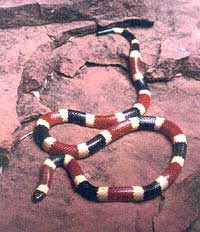
The Arizona coral snake, also known as the Sonoran coralsnake (Micruroides euryxanthus), is Arizona's only native member of the elapid snake family, which also includes cobras and mambas. This small venomous snake is recognized by rings of red, yellow or cream, and black that completely encircle the body, along with a black snout and head. Coral snakes are secretive and are most often encountered in rocky washes, canyons and desert habitats in southern Arizona. Bites are uncommon, but the venom affects the nervous system and any suspected bite requires immediate medical evaluation.
Arizona Coral Snake Facts
- Scientific Name: Micruroides euryxanthus.
- Common Names: Arizona coral snake and Sonoran coralsnake.
- Family: Elapidae.
- Adult Size: Usually less than 2 feet long, with some individuals reaching about 24 inches.
- Venom: Neurotoxic venom delivered through fixed front fangs.
- Diet: Primarily small snakes and occasionally small lizards.
- Activity: Mainly nocturnal or crepuscular, although activity can occur at other times when conditions are favorable.
- Arizona Range: Much of southern Arizona, generally below about 6,000 feet.
Warm evenings, humid monsoon conditions and periods following rainfall can increase surface activity. If you see a coral snake, observe it from a safe distance and allow it to move away on its own.
How To Identify An Arizona Coral Snake
Arizona coral snakes are small, slender snakes with red, yellow or cream, and black rings that completely encircle the body. The snout and head are black, the head is only slightly wider than the neck, and the tail is short and blunt. Arizona specimens often show black edging or mottling within the red bands.
Several harmless Arizona snakes can also display red, black and light-colored markings. Because color patterns can vary and identification mistakes are possible, never handle or approach a wild snake based only on a color rhyme or band pattern.
When Coral Snakes Are Most Active In Arizona
- Spring: Activity increases as temperatures warm.
- Summer: Warm nights and monsoon humidity can produce increased surface activity.
- Fall: Activity continues during mild weather before colder conditions arrive.
- Winter: Activity is lowest, with most snakes remaining sheltered underground.
Arizona Coral Snake Habitat & Range
Sonoran coral snakes occur across much of southern Arizona, generally below about 6,000 feet elevation. They inhabit Sonoran, Mojave and Chihuahuan desertscrub, semidesert grassland and lower woodland habitats. They are especially associated with rocky or gravelly drainages, mesquite-lined washes, canyon slopes and areas where loose soil, rocks and debris provide shelter.
Their distribution in portions of western Arizona is patchier and less well documented. Most people rarely see coral snakes because they spend much of their time hidden underground, beneath rocks or within protected crevices.
Where To See Coral Snakes In Arizona
Coral snakes are most likely to be encountered in southern Arizona where rocky desert terrain, washes and canyon habitat remain intact. Suitable habitat occurs around portions of the Tucson area, southern Arizona mountain foothills and desert regions extending into central Arizona. Sightings are uncommon because the snakes are secretive and spend much of their time underground or beneath cover.
Coral Snake Behavior & Activity
Arizona coral snakes are primarily ground-dwelling and secretive. They are most active at night or around dawn and dusk, although they may appear during daylight when temperature and moisture conditions are favorable. During colder months they spend extended periods sheltered underground.
When threatened, a coral snake may hide its head beneath its coils, raise or curl its tail and produce a popping sound as a defensive distraction. Its diet consists mainly of other small snakes, including threadsnakes and ground snakes, along with occasional small lizards.
Arizona Coral Snake Venom & Bite Risk
Arizona coral snakes possess neurotoxic venom that can interfere with normal nerve and muscle function. Bites are uncommon because the snakes are small, secretive and rarely involved in human encounters. The Arizona Poison and Drug Information Center reports no deaths attributed to the Arizona species, but any bite should still be treated as a medical emergency because symptoms may be delayed.
A bite may initially produce very little pain or swelling. Neurologic symptoms can develop later, so a person who may have been bitten should not wait for symptoms before seeking medical care.
What To Do If Bitten By A Coral Snake
- Call 911 or go to the nearest medical facility immediately.
- Do not wait for symptoms to appear.
- Stay calm and move as little as practical.
- Remove rings, watches, tight shoes or restrictive clothing from the affected limb.
- Do not apply ice.
- Do not use a tourniquet or constricting band.
- Do not cut the bite or attempt to suction venom.
- Do not use electrical shock treatments.
- Do not drink alcohol or take medication unless directed by medical professionals.
- Do not attempt to catch or kill the snake.
How To Avoid Coral Snake Encounters
- Never reach blindly beneath rocks, logs or debris.
- Wear shoes or boots when walking outdoors after dark.
- Use a flashlight on trails, patios and around yards at night.
- Keep outdoor debris and stacked materials away from frequently used areas.
- Never handle a wild snake, even if you believe it is harmless.
- Give any snake you encounter plenty of room to leave.
Arizona Coral Snake Video
Arizona Coral Snake vs. King Snake
Arizona coral snakes may be confused with harmless snakes that also have red, black and light-colored markings. Coral snakes are typically small and slender, have a black snout and head, and have rings that completely encircle the body. Some kingsnakes and other harmless species can show similar colors but differ in size, head markings and pattern arrangement.
Do not rely exclusively on traditional color rhymes when identifying a snake. Geographic variation and unusual patterns can make those sayings unreliable outside limited situations. The safest approach is to leave any unidentified snake alone and observe it from a distance.
Arizona Coral Snake FAQ
Are Arizona coral snakes venomous?
Yes. The Arizona coral snake has neurotoxic venom and should be considered dangerous, although bites are uncommon.
How big do Arizona coral snakes get?
They are small snakes that usually remain under 2 feet long, although some individuals can reach about 24 inches.
Where do coral snakes live in Arizona?
They occur across much of southern Arizona in desert scrub, grassland, rocky washes, canyon habitat and lower woodland areas, generally below about 6,000 feet elevation.
When are Arizona coral snakes most active?
They are primarily active at night or around dawn and dusk, with increased activity during warm and humid conditions.
What do Arizona coral snakes eat?
They feed mainly on small snakes and occasionally small lizards.
Has anyone died from an Arizona coral snake bite?
The Arizona Poison and Drug Information Center reports no deaths attributed to the Arizona species, but any suspected bite still requires immediate medical evaluation.
Can you identify a coral snake by the red-and-yellow rhyme?
The rhyme may describe some Arizona specimens, but it should not be relied upon as the only identification method. Color patterns can vary, so wild snakes should never be handled based solely on band colors.
What should I do if a coral snake bites me?
Seek emergency medical care immediately. Do not wait for symptoms, use a tourniquet, apply ice, cut the wound, suction venom or attempt to catch the snake.
Arizona Animals
Arizona Critters
Coral Snake
Arizona Bat Species
Arizona Tarantulas
Chuckwalla Lizard
Horned Toad
Arizona Bark Scorpions
Rattlesnakes
Gila Monster
Articles
Your Neighbor's A Rat
The Stinging Truth
Arachnophobes
Desert Tarantula
Desert Wild