Grand Canyon Summer Hiking Safety & Tips
Updated by AZ Leisure Staff Writers on
Summer hiking at the Grand Canyon can be spectacular, but hiking below the rim during hot weather requires careful planning. Temperatures rise rapidly as trails descend into the Inner Canyon, where summer temperatures can exceed 110°F. Hikers should start early, avoid strenuous hiking during the hottest part of the day, carry sufficient water and food, know current trail conditions and choose a route that matches their fitness and experience.
- Summer Heat Below The Rim
- Best Time To Hike
- Water & Food
- How To Prepare
- Heat Illness Warning Signs
- Essential Safety Tips
- FAQ
Summer Heat Below The Grand Canyon Rim
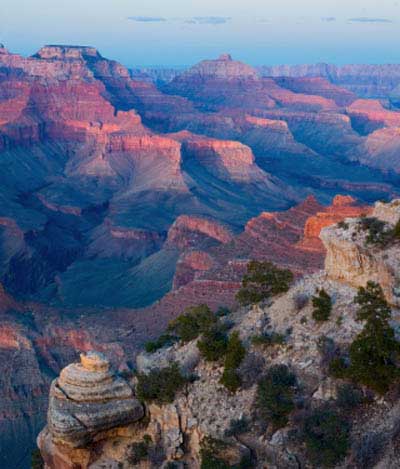
The South Rim sits at about 7,000 feet above sea level, where summer temperatures are often relatively comfortable. Hiking into the canyon is very different. As elevation drops, temperatures increase, and conditions near the Colorado River can be about 30°F warmer than on the rim. Summer daytime temperatures in the Inner Canyon routinely exceed 100°F and can rise above 110°F during periods of extreme heat.
The hike into the canyon is downhill, which can make the first part of a trip feel deceptively easy. The difficult portion comes when hikers must climb back toward the rim, often after temperatures have increased and fatigue has begun to set in. There are no easy trails into or out of the Grand Canyon, so choose your turnaround point conservatively.
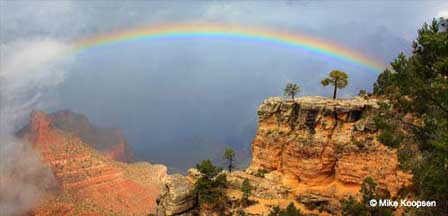
Best Time To Hike In Summer
Timing is one of the most important parts of summer hiking at the Grand Canyon. During hot weather, begin hiking very early and plan your route so strenuous climbing is not occurring during the hottest hours of the day. The National Park Service strongly discourages hiking in the Inner Canyon between 10 AM and 4 PM during extreme summer heat.
If your itinerary requires hiking before sunrise or after sunset, carry a reliable headlamp or flashlight with spare batteries. Do not depend on moonlight for trail illumination.
Water & Food For Summer Hiking
Carry sufficient drinking water and enough food to replace calories and salts lost while hiking. Drink according to your needs and eat regularly rather than consuming large amounts of plain water without food. Heat, elevation gain, direct sun and individual conditioning can significantly affect fluid requirements.
Never assume drinking water will be available along a trail. Grand Canyon water systems can be temporarily shut down because of pipeline breaks, maintenance or other conditions. Check current National Park Service water availability before beginning your hike and carry enough water to safely complete your planned route.
Prepare Before Hiking Below The Rim
Choose a route based on the ability of the least-experienced person in your group and remember that climbing back to the rim will take considerably more effort than hiking downhill. Check the weather forecast, trail conditions, water availability and current park alerts before leaving.
- Wear sturdy hiking footwear with good traction.
- Carry a hat, sunscreen and clothing appropriate for intense sun and changing weather.
- Bring a headlamp even when planning a daytime hike in case your return takes longer than expected.
- Carry adequate food, water and basic first-aid supplies.
- Leave your hiking route and expected return time with someone who is not on the hike.
- Turn around before exhaustion, overheating or dwindling supplies become a problem.
Heat Illness Warning Signs
Heat exhaustion and heat stroke can become life-threatening during a Grand Canyon hike. Warning signs can include unusual fatigue, weakness, dizziness, nausea, headache, confusion, fainting or changes in normal behavior. Stop strenuous activity and seek a cooler or shaded location if a member of your group begins showing signs of heat illness.
Confusion, fainting or altered mental status can indicate a serious medical emergency. Seek emergency assistance when possible and begin cooling the person immediately. Do not continue hiking simply to stay on schedule.
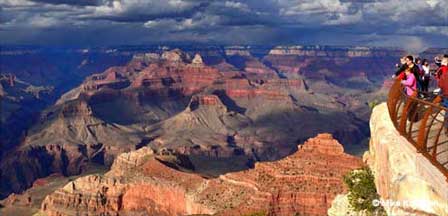
Essential Grand Canyon Summer Hiking Safety
Never underestimate the difficulty of returning to the rim. Hiking downhill can feel relatively easy, encouraging inexperienced visitors to descend farther than planned, but every foot of elevation lost must later be regained. Turn around early enough to preserve the strength, water and daylight needed for the climb back.
Do not attempt to hike from the rim to the Colorado River and back in one day. This is especially dangerous during the hot months from May through September. Choose a shorter hike, know your turnaround time and be prepared to change your plans when temperatures, weather or trail conditions make continuing unsafe.
Emergency assistance may not be immediately available in the Inner Canyon. Carry the supplies you need, know your limits and make decisions that allow you and everyone in your group to return safely.
Grand Canyon Summer Hiking FAQ
Is it safe to hike the Grand Canyon in summer?
Summer hiking can be done safely with careful planning, but extreme Inner Canyon heat creates significant risks. Choose a realistic route, hike during cooler hours, carry sufficient food and water and check current National Park Service conditions before leaving.
How hot does the Grand Canyon get in summer?
Summer temperatures on the South Rim are generally much cooler than temperatures inside the canyon. Near the Colorado River, daytime temperatures often exceed 100°F and can rise above 110°F during extreme heat.
What time should I start hiking the Grand Canyon in summer?
Begin as early as practical and avoid strenuous Inner Canyon hiking during the hottest part of the day. The National Park Service strongly discourages hiking in the Inner Canyon between 10 AM and 4 PM during extreme summer heat.
Should I hike from the South Rim to the Colorado River and back in one day?
No. The National Park Service advises visitors not to attempt a rim-to-river-and-back day hike, particularly from May through September when extreme heat can make the return climb especially dangerous.
Is drinking water available on Grand Canyon hiking trails?
Drinking water is available at some locations, but availability can change because of pipeline breaks, maintenance and seasonal conditions. Always check current water status before hiking and carry sufficient water for your planned route.
Why is hiking back up the Grand Canyon more difficult?
Most hikes below the rim begin downhill and end with a long uphill climb. The return requires hikers to regain all of the elevation they lost, often when they are already tired and temperatures are warmer.
What should I carry on a summer Grand Canyon hike?
Carry sufficient water and food, sun protection, appropriate clothing, sturdy footwear, a headlamp and basic first-aid supplies. Longer or more remote hikes require additional emergency and navigation equipment.
Are summer thunderstorms a concern at the Grand Canyon?
Yes. Summer monsoon storms can bring lightning, heavy rain, flash flooding and rapidly changing conditions. Check the forecast before hiking and be prepared to alter your plans when thunderstorms threaten.
Check Conditions Before You Hike
Trail conditions, drinking-water availability, weather and closures can change quickly at Grand Canyon National Park. Before hiking below the rim, review the National Park Service Grand Canyon Hike Smart information and current park alerts.
The Spectacular Grand Canyon
Related Grand Canyon Interest
Grand Canyon National Park
Average Temperatures South Rim
Bright Angel Trail
Desert View Watchtower
Grand Canyon Camping
Grand Canyon Desert View Map
Grand Canyon Pictures By Koopsen
Grand Canyon Mule Ride
Grand Canyon Rafting
Grand Canyon South Rim Trail
Grand Canyon Winter Pictures By Koopsen
Grandview Point South Rim
Havasu Falls Pictures
Havasupai Indians
Lipan Point South Rim
Mather Point South Rim
Moran Point South Rim
Navajo Point South Rim
North Rim Map
Robert Body Grand Canyon Pictures
Shoshone Point South Rim
South Rim Grand Canyon Directions
South Rim Hours & Entrance Fees
Grand Canyon Summer Hiking
Trail Of Time South Rim
West Rim Map
Yaki Point Grand Canyon
Yavapai Point Geology Museum